
Want your business to appear when potential customers search “near me”? Local SEO is how you make that happen. It’s the difference between being found by ready-to-buy customers and being invisible to the people who matter most.
In this guide, we’ll walk you through a complete local SEO checklist that covers everything from Google Business Profile optimisation to review management and mobile performance.
How Local Search Works
Google ranks local businesses based on three primary factors:
- Relevance: How closely your business matches what someone is searching for
- Distance: How far your business is from the searcher’s location
- Prominence: How well-known and trusted your business appears online
You can’t change your location, but you can absolutely improve relevance and prominence. That’s where this checklist comes in.
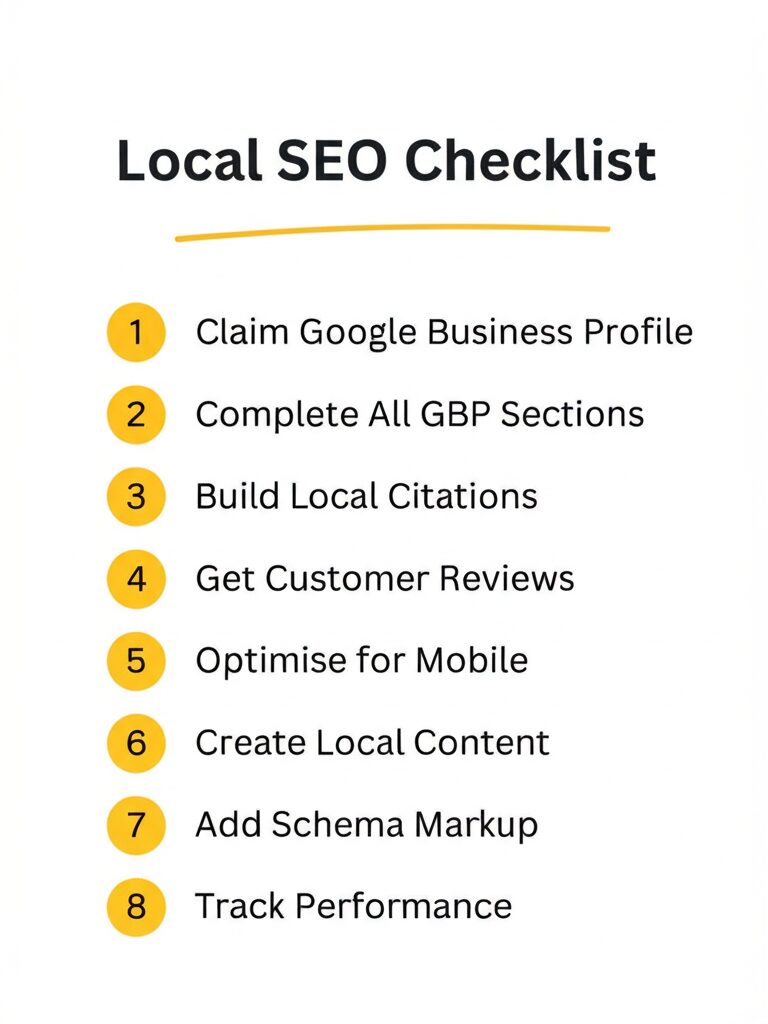
Your Complete Local SEO Checklist
Follow these steps systematically and you’ll see improvements in your local search visibility. Some yield quick wins; others build long-term authority.
1. Claim and Verify Your Google Business Profile
Your Google Business Profile (GBP) is the most important local SEO asset you control. If you haven’t claimed yours, that’s step one.
- Go to business.google.com and claim your listing
- Complete the verification process (usually by postcard or phone)
- Ensure you’re listed as the owner, not just a manager
Many businesses have unclaimed profiles sitting in search results. Take control of yours.
2. Complete Every Section of Your GBP
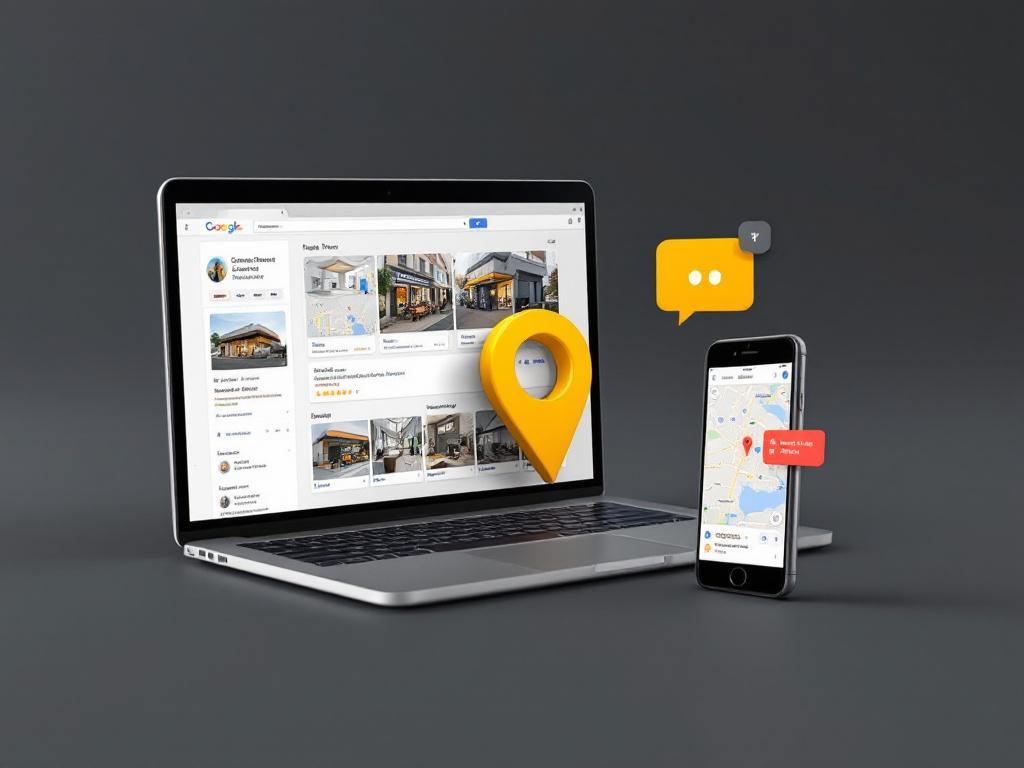
A half-filled profile signals a half-committed business. Google rewards completeness:
- Business name: Exact legal name (no keyword stuffing)
- Categories: Choose precise primary and secondary categories
- Address: Exact match to your website and other listings
- Phone: Local number with area code
- Hours: Accurate and updated for holidays
- Website: Link to your homepage or location page
- Services/Products: Detailed listings with descriptions
- Attributes: All relevant features (parking, accessibility, payment methods)
- Description: Natural, benefit-focused copy
Profiles that behave like living brand hubs perform significantly better than static listings.
3. Add High-Quality Photos Regularly
Businesses with photos receive 42% more requests for directions and 35% more website clicks. Google tracks photo engagement as a ranking signal.
- Upload at least 10 photos initially
- Add new photos monthly (minimum)
- Include exterior, interior, team, and product/service photos
- Use high-resolution images (at least 720px wide)
- Geo-tag photos with your location metadata when possible
Fresh visual content signals an active, thriving business.
4. Build NAP Consistency Across the Web
NAP stands for Name, Address, and Phone number. This information must be identical everywhere it appears online.
- Your website: Footer, contact page, about page
- Google Business Profile: Must match exactly
- Directories: Yellow Pages, True Local, Yelp, Hotfrog
- Social profiles: Facebook, LinkedIn, Instagram
- Industry directories: Relevant to your business type
Even minor inconsistencies hurt your rankings. “Street” versus “St.” or different phone formats create confusion for search engines.
5. Build Local Citations Strategically
Citations are mentions of your business on other websites. Quality matters more than quantity in 2026.
Priority citation sources:
- True Local
- Yellow Pages
- Yelp
- Hotfrog
- Local chamber of commerce
- Industry-specific directories
- Local business associations
Clean up duplicate or incorrect listings—they hurt more than they help. Prioritise accuracy over volume.
6. Generate and Manage Reviews

Reviews are no longer just social proof—they’re direct ranking signals. Google evaluates:
- Review freshness: Recent activity matters more than total count
- Review velocity: Steady growth, not sudden spikes
- Review content: Keywords mentioned naturally in reviews
- Response rate: How often and how well you respond
Review generation best practices:
- Ask satisfied customers at the moment of delight
- Send follow-up emails with direct review links
- Make it easy—provide the exact link to your review page
- Train staff to ask as part of the customer journey
- Never buy fake reviews—Google detects and penalises this
Respond to every review within 24-48 hours. Thank positive reviewers personally. Address negative feedback professionally and offer resolution.
7. Optimise Your Website for Local Search
Your website reinforces your GBP signals and captures traffic from local searches.
Essential on-page elements:
- NAP in website footer (matching GBP exactly)
- Embedded Google Map on contact page
- Location-specific title tags and meta descriptions
- Local keywords used naturally in content
- Service area pages if you serve multiple locations
Check out our 15 local SEO hacks for more website optimisation tips.
8. Create Location Pages (If Relevant)
If you serve multiple suburbs or cities, create dedicated pages for each:
- Unique, valuable content for each location
- Local landmarks and area references
- Embedded Google Map for that location
- Testimonials from customers in that area
- Specific contact details where applicable
Avoid thin duplicate content. Each page must provide genuine value to visitors from that specific area.
9. Implement Local Schema Markup
Schema markup helps search engines understand your business better. Add LocalBusiness schema including:
- Business name, address, phone
- Opening hours
- Price range
- Service areas
- Geo coordinates
- Social profile links
While schema alone won’t rank you, it reinforces trust signals and enables rich results in search.
10. Ensure Mobile Excellence
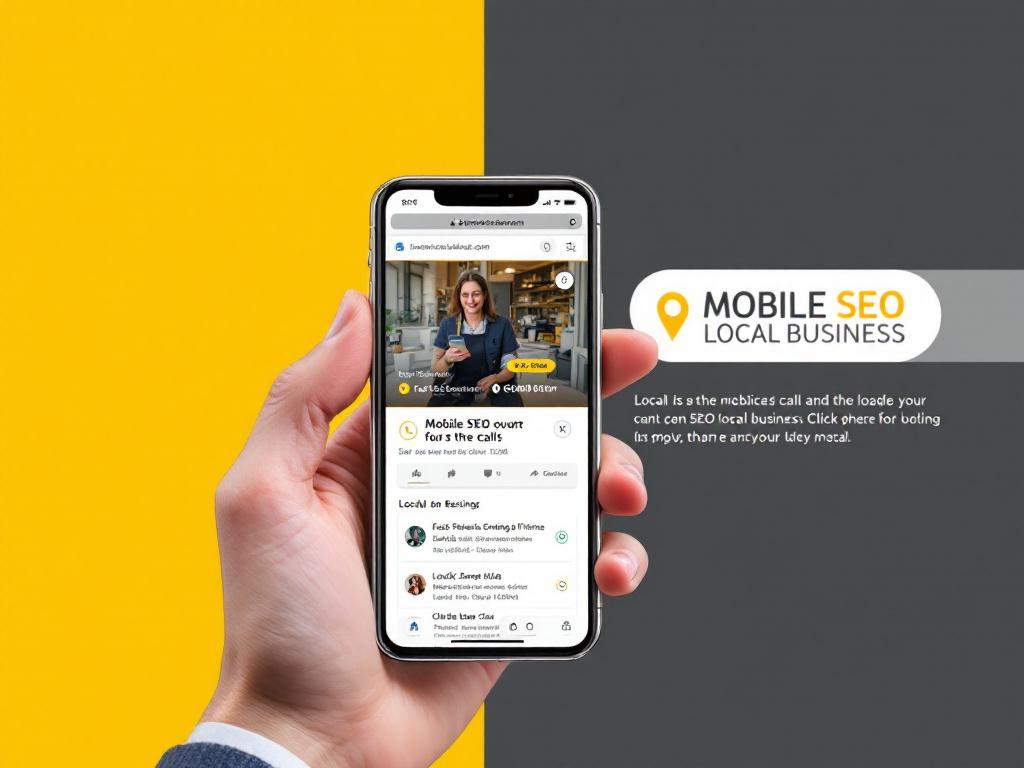
Most local searches happen on mobile devices. A poor mobile experience undermines all your other efforts.
- Fast loading: Under 3 seconds
- Click-to-call: Phone number tappable on mobile
- Easy navigation: Thumb-friendly menus
- Above-the-fold info: Contact details visible immediately
- Short forms: Minimal fields for enquiries
Test your site on actual mobile devices, not just browser emulators.
11. Use Google Posts Regularly
Google Posts appear directly in your Business Profile. Use them for:
- Special offers and promotions
- Events and announcements
- New products or services
- Timely updates
Post at least weekly. Fresh posts signal an active business and give searchers more reasons to engage.
12. Monitor and Answer Q&A
Your GBP includes a Q&A section where anyone can ask—and answer—questions about your business.
- Check Q&A regularly and respond promptly
- Seed common questions yourself with helpful answers
- Upvote accurate answers from customers
- Report and correct any misleading information
Unanswered questions look neglected. Stay on top of them.
13. Build Local Backlinks
Links from locally relevant websites boost your authority. Pursue opportunities like:
- Sponsor local events, sports teams, or charities
- Contribute to local news publications
- Partner with complementary local businesses
- Join local business associations
- Create link-worthy local resources
One quality local link beats dozens of irrelevant ones. Learn more about effective backlink strategies.
14. Track Your Performance
What gets measured gets improved. Monitor your local SEO using:
- GBP Insights: Views, searches, actions taken
- Google Analytics: Traffic from local searches
- Google Search Console: Local keyword performance
- Rank tracking: Position in map pack and local results
Review monthly and adjust based on data, not assumptions.
Common Local SEO Mistakes to Avoid
Some outdated tactics will hurt rather than help:
- Keyword-stuffed business names: Google penalises this
- Fake or incentivised reviews: Destroys trust when detected
- Bulk low-quality citations: Quality over quantity
- Exact-match domain tricks: No longer effective
- AI-generated location pages: Thin content gets filtered
- Ignoring negative reviews: Silence looks like guilt
Focus on genuine value, consistency, and engagement. The fundamentals work better than tricks.
Your Local SEO Action Plan
Week 1: Claim and complete your Google Business Profile
Week 2: Audit and fix NAP consistency across all platforms
Week 3: Set up review generation process
Week 4: Optimise your website for local search
Ongoing: Add photos, post updates, respond to reviews, track performance
Get Expert Help
Local SEO takes consistent effort over time. If you’re ready to accelerate your local visibility, our local SEO services can help you dominate local search and attract more customers.
Combine local SEO with Google Ads for maximum local visibility—capturing both organic and paid traffic in your service area.
Why Local SEO Matters More Than Ever
Local search behaviour has fundamentally changed. When someone needs a plumber, restaurant, or accountant, they don’t flip through phone books anymore. They pull out their phone and search.
“Near me” searches have grown dramatically year over year. Voice assistants make local queries even more common—people ask for recommendations constantly. If you’re not visible in local search, you’re invisible to a huge portion of your potential customers.
The businesses that invest in local SEO today build an asset that compounds over time. Strong local visibility means steady enquiries, phone calls, and foot traffic without paying for every click. It’s the difference between renting attention and owning it.
Whether you’re a tradie serving suburbs across a city, a restaurant hoping to fill tables, or a professional service firm targeting local businesses, local SEO is how you get found by people ready to buy.
Start with this checklist, stay consistent, and watch your local visibility grow.