
Waking up to a sudden traffic drop is every website owner’s nightmare. Google algorithm updates can devastate rankings overnight, but recovery is possible with the right approach.
This guide explains how to identify what happened, diagnose the problem, and recover your search visibility after a Google algorithm update.
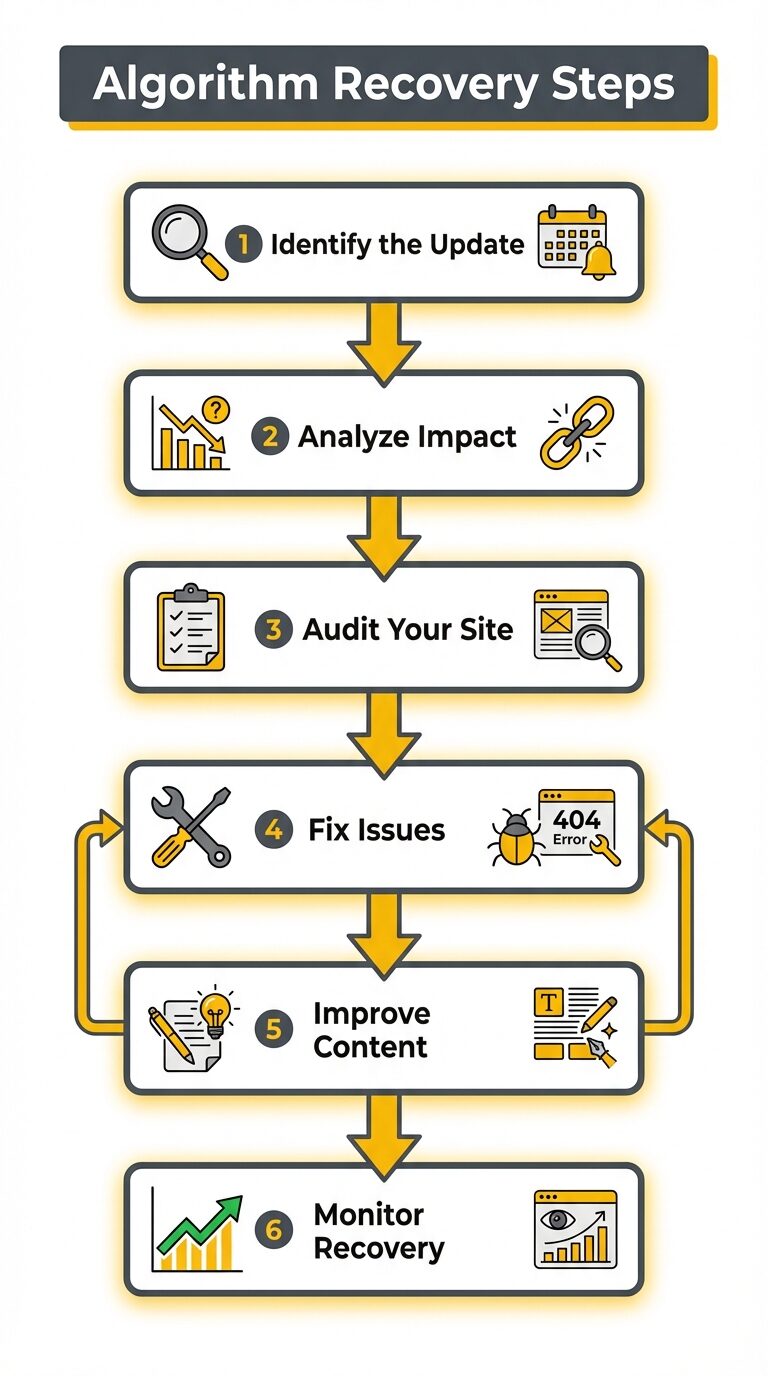
Understanding Google Algorithm Updates
Google makes thousands of algorithm changes yearly. Most are minor, but several major updates each year can significantly impact rankings. In recent years, updates have become more frequent and more impactful.
Types of Updates
- Core updates: Broad changes affecting how Google evaluates content quality across the web
- Spam updates: Target manipulative SEO practices and policy violations
- Helpful content system: Integrated into core algorithm, rewards genuinely useful content
- Product reviews system: Affects review content specifically, now part of core
- Link spam updates: Target unnatural link building and link schemes
- Site reputation abuse: Targets third-party content hosted to manipulate rankings
Recent Google Algorithm Updates (2024-2025)
Understanding recent updates helps you identify what may have affected your site:
2025 Updates
- December 2025 Core Update: Rolled out December 11-29, 2025. Took approximately 18 days to complete. Focused on content quality and user experience signals.
- June 2025 Core Update: June 30 to July 17, 2025. One of the larger core updates in recent memory. Some sites previously hit by the September 2023 Helpful Content Update saw partial recoveries.
- March 2025 Core Update: March 13-27, 2025. Completed in about 14 days. Continued emphasis on helpful, people-first content.
2024 Updates
- December 2024 Core Update: December 12-18, 2024. Notably fast rollout at just 6 days.
- December 2024 Spam Update: December 19-26, 2024. Targeted various spam techniques.
- November 2024 Core Update: Part of Google’s shift toward more frequent, continuous updates.
- August 2024 Core Update: Significant volatility reported across many industries.
- March 2024 Core Update: Major update with simultaneous spam update and new spam policies.
Google has signalled a shift toward “routine and continuous” updates, meaning ranking volatility may become more constant rather than tied to specific update announcements.
Identifying If You’ve Been Hit
Before panicking, confirm an algorithm update actually caused your traffic drop.
Signs of an Algorithm Hit
- Sudden, significant traffic drop (not gradual decline)
- Timing correlates with announced Google updates
- Multiple pages affected simultaneously
- Rankings dropped but no manual actions in Search Console
- Competitors also reporting changes
Alternative Causes to Rule Out
- Technical issues (site down, crawl errors, indexing problems)
- Manual penalties (check Search Console for messages)
- Seasonal traffic patterns
- Lost backlinks from authoritative sites
- Tracking or analytics problems
- SERP feature changes (featured snippets, AI overviews taking clicks)
Diagnosing the Problem

Understanding what the update targeted helps focus your recovery efforts.
Analyse the Update
- Research what the specific update targets
- Read Google’s official announcements and documentation
- Follow trusted SEO news sources for analysis
- Look for patterns in which sites recovered or declined
- Check SEO tracking tools for industry-wide volatility data
Audit Your Site
- Content quality: Is your content genuinely helpful and comprehensive?
- E-E-A-T signals: Does your site demonstrate experience, expertise, authority, trust?
- Technical health: Any crawl errors, speed issues, mobile problems?
- Link profile: Any spammy or unnatural backlinks?
- User experience: How do visitors actually interact with your site?
- Site reputation: Any third-party content that could trigger site reputation abuse policies?
Recovery Strategies

Recovery requires addressing whatever the update targeted. Common approaches include:
Improving Content Quality
- Remove or substantially improve thin, low-value content
- Add depth, detail, and original insights to existing content
- Ensure content demonstrates genuine first-hand expertise
- Update outdated information with current facts and figures
- Add author bios and credentials where appropriate
- Remove AI-generated content that adds no original value
Building E-E-A-T
- Highlight author expertise and real-world credentials
- Add comprehensive “About” pages with real team information
- Include contact details and physical address
- Get featured on authoritative industry sites
- Build genuine brand mentions and citations
- Showcase case studies and real results
Technical Improvements
- Fix crawl errors and broken links
- Improve Core Web Vitals significantly
- Ensure perfect mobile experience
- Implement proper schema markup
- Clean up site architecture and internal linking
- Remove duplicate content issues
Link Profile Cleanup
- Identify potentially harmful backlinks
- Request removal from spammy sites
- Use Google’s disavow tool if necessary
- Focus on earning quality links going forward
- Avoid any link schemes or paid link building
Recovery Timeline
Algorithm recovery typically takes time and patience:
- Weeks 1-4: Identify issues and implement fixes
- Months 2-3: Wait for Google to recrawl and reassess
- Months 4-6: Begin seeing recovery signs
- Months 6-12: Full or substantial recovery for many sites
Some sites recover at the next core update. The June 2025 core update, for example, saw some sites recover that had been hit by the September 2023 Helpful Content Update—nearly two years later. Others see gradual improvement. Some sites with fundamental quality issues never fully recover.
What Doesn’t Work
Avoid these common mistakes:
- Quick fixes: There’s no magic button to undo algorithm impacts
- Panic changes: Making random changes without proper diagnosis
- Deleting everything: Removing all content instead of improving it
- Buying links: This makes things worse, not better
- Giving up too soon: Recovery takes months, not days
- Chasing every update: Focus on fundamentals, not reacting to every change
Preventing Future Hits
Build a site that’s resilient to algorithm changes:
- Focus on genuinely helping users, not gaming algorithms
- Create comprehensive, expert content with original insights
- Build a real brand that people recognise and trust
- Diversify traffic sources beyond just Google
- Stay informed about SEO best practices and Google guidelines
- Monitor your site’s performance continuously, not just after updates
Tools for Monitoring Algorithm Impacts
Several tools help you track algorithm updates and their effects:
- Google Search Console: Your primary source for understanding how Google sees your site. Check performance reports, coverage issues, and any manual actions.
- SEO tracking tools: Semrush Sensor, Moz, Algoroo, and others track search volatility and can help correlate your traffic changes with broader update patterns.
- Google Analytics: Monitor organic traffic trends, user behaviour, and conversion patterns.
- Rank tracking tools: Track keyword positions over time to identify which terms were affected.
When to Get Help
Consider professional assistance when:
- You can’t identify what caused the drop
- Recovery efforts aren’t working after several months
- The impact is severely affecting your business
- You lack time or expertise for comprehensive audits
Our SEO services team has helped many businesses recover from algorithm updates. We diagnose issues systematically, implement proven recovery strategies, and build sites that are more resilient to future changes.
Algorithm recovery isn’t about tricks—it’s about becoming the site Google wants to rank. Focus on genuine quality, user value, and sustainable practices. The sites that thrive long-term are those built on solid foundations, not quick wins.
If you’ve been hit by an algorithm update, don’t wait. The sooner you address issues, the sooner recovery can begin. Contact us for a comprehensive audit and recovery strategy tailored to your situation.
]]>Understanding Helpful Content Signals
Since 2022, Google has emphasised “helpful content” as a key ranking factor. The helpful content system is now integrated into the core algorithm. Sites should demonstrate:
- People-first content: Written primarily for humans, not search engines
- Demonstrated expertise: Content shows real knowledge and experience
- Satisfying experience: Visitors find what they’re looking for
- Primary purpose: Content exists to help users, not just to rank
- Original value: Offers insights or information not easily found elsewhere
If your site was hit after a helpful content-related update, audit your content against these criteria. Remove or substantially rewrite content that fails to meet these standards.
AI Content and Algorithm Updates
Google’s position on AI-generated content has evolved. While not inherently against guidelines, AI content must still meet quality standards:
- AI content with no human review or expertise added often performs poorly
- Mass-produced AI content designed purely for search rankings violates spam policies
- AI-assisted content that adds genuine human expertise can perform well
- The key is whether content provides real value, regardless of how it was created
If you’ve published significant AI-generated content, review it critically. Does it genuinely help users? Does it demonstrate expertise? If not, it may be contributing to algorithm-related declines.
Building Long-Term Resilience
The most algorithm-resistant sites share common characteristics:
- Strong brand: People search for them by name, not just generic keywords
- Diversified traffic: Don’t rely solely on Google organic search
- Genuine expertise: Real people with real credentials creating content
- User focus: Decisions made based on user needs, not SEO tactics
- Technical excellence: Fast, mobile-friendly, accessible sites
- Continuous improvement: Regular updates and enhancements, not reactive fixes
Think of algorithm updates not as threats to defend against, but as opportunities. When competitors cut corners, quality-focused sites often benefit when updates roll out.
Recovery is possible. It requires patience, systematic effort, and commitment to genuine improvement. But businesses that do the work often find their search presence more stable and sustainable than ever before. Start your recovery journey today.
Don’t let an algorithm hit define your site’s future. Use it as motivation to build something genuinely valuable. The sites that recover strongest often emerge better than before—with a more solid foundation and sustainable growth trajectory.