

Google’s August 2026 spam update targeted websites publishing mass-generated AI content designed to manipulate search rankings, according to reports from multiple online communities and a recently published Google research paper on detecting automated content networks, Search Engine Journal reported August 25, 2026.
TL;DR: Google rolled out its August spam update on August 18, 2026, with user reports suggesting the update specifically filtered sites using automated AI tools like Claude and Codecat to mass-produce SEO content, while a Google research paper on “Scalable Cluster Termination System” provided technical context for detecting AI spam networks.
The update, which began rolling out August 18, has sparked discussions across SEO forums about which AI-generated content practices triggered ranking losses. Twitter user OkaTakuma1 reported that sites automatically posting content through tools like Claude Code and Codecat experienced broad ranking drops, while sites that established manual posting histories before switching to AI automation appeared to retain rankings in some cases.
Research Paper Provides Technical Context
Google published a research paper on Scalable Cluster Termination System (S-CTS) designed to identify and remove networks of mass-generated AI spam, according to the Search Engine Journal report. The paper’s publication timing aligns with the spam update deployment, suggesting Google implemented detection systems specifically calibrated for AI-generated content clusters.
The distinction between AI-generated content and spam content lies in intent, according to seiichi_satoweb, who noted on Twitter that Google defines malicious mass-generated content as “generating a large number of pages primarily for manipulating search rankings, not for supporting users.” The focus appears to be on production method rather than the AI tool itself.
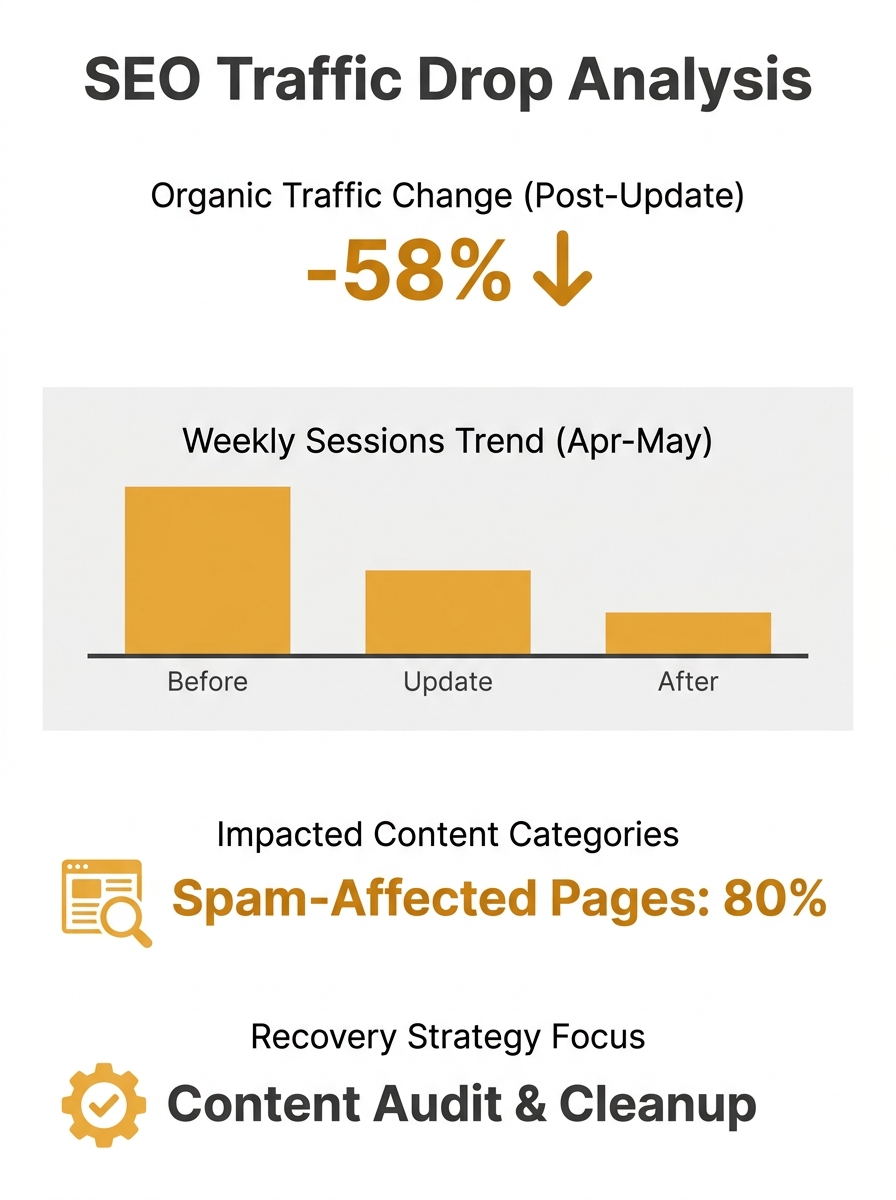
Sites that built domain authority through manual content creation before adopting AI automation retained what OkaTakuma1 described as “trust savings”, accumulated user engagement data that acts as a buffer against immediate spam classifications. This observation aligns with Google’s emphasis on organizational expertise over individual page optimization.
User Communities Report Mixed Impact
Blackhat World Forums members reported widespread frustration with AI-generated content dominating search results before the update. One member described encountering “4 back to back sites clearly spun up with AI to create articles answering that, all looked exactly the same, same AI slop formatting of subheadings and bullets, poor spacing between the sections, 3 sentences basically expanded into a 500 words.”
Not all AI-generated content sites experienced ranking drops. Members of the private Google SEO Mastermind Facebook group reported that some AI-generated content improved after the update, according to the Search Engine Journal report. A Japanese publication using AI-generated content maintained rankings by implementing human editorial review before publishing and using social media distribution to build engagement signals.
The varied outcomes suggest Google’s systems evaluate multiple factors beyond content generation method. Sites that combined AI content with manual quality checks, social media promotion, and established user engagement patterns appeared more likely to maintain rankings compared to pure automation approaches.
Mass Production Method Drew Enforcement
The spam update appears to target content creation volume and intent rather than AI usage alone. Seiichi_satoweb advised companies operating media sites to examine rankings between August 18 and August 21, 2026, noting that drops likely indicate issues with “the method of mass production” rather than article quality.
Content strongly focused on keyword manipulation has underperformed in Google’s algorithm for the past two years, a trend that predates widespread AI content adoption. The August update extends existing quality signals to detect automated content generation patterns, particularly when sites produce large volumes of template-driven pages targeting search queries without supporting user needs.
OkaTakuma1 speculated that Google may attach AI credits or detection markers similar to systems used for AI-generated images and videos, though Google has not confirmed this mechanism. The observation remains anecdotal based on ranking pattern analysis rather than official documentation.
What Happens Next
Australian businesses evaluating AI content tools for organic growth strategies face a clear signal: volume-focused automation targeting search rankings rather than user needs carries enforcement risk. The August spam update demonstrates Google’s capacity to identify mass-generated content patterns at scale, particularly when sites lack established authority or user engagement signals.
The practical threshold separates AI as a production tool from AI as a spam mechanism. Sites combining AI content generation with editorial oversight, established domain authority, and genuine user engagement signals showed greater resilience during the update. Pure automation approaches, particularly those launching new domains with immediate high-volume AI content, faced the broadest ranking drops.
Companies already using AI content creation should audit their production processes against Google’s stated definition: whether content serves users or primarily exists to manipulate search rankings. AI search tools now synthesize recommendations rather than simply listing options, placing additional pressure on content quality beyond keyword optimization. The spam update reinforces that Google’s systems evaluate intent and production scale alongside content quality when classifying automated content.