

A three-component internal linking template addressing orphan pages, anchor text planning, and link equity distribution became available June 26 from content intelligence platform Averi, according to the resource release. The template implements HubSpot’s topic cluster model through spreadsheet-based mapping, a three-tier priority system, and descriptive anchor text rules that replace generic “click here” language with keyword-rich phrases.
TL;DR: Averi released an internal linking strategy template June 26 providing cluster mapping, orphan page audits, and anchor text frameworks to help content teams systematically distribute link equity and signal topical authority to search engines.
The template targets content teams treating internal linking as an afterthought rather than a systematic practice. Internal links govern how search engines discover pages, understand site hierarchy, and distribute ranking power from high-authority pages to deeper content, the template documentation notes. Pages receiving more internal links get crawled more frequently and signal higher importance to Google’s indexing systems.
Template Components and Implementation Steps
The strategy template includes three primary tools: a cluster map spreadsheet tracking pillar-to-cluster relationships, a link opportunity matrix categorizing fixes by urgency, and an anchor text framework specifying keyword-rich descriptive phrases over generic link text.
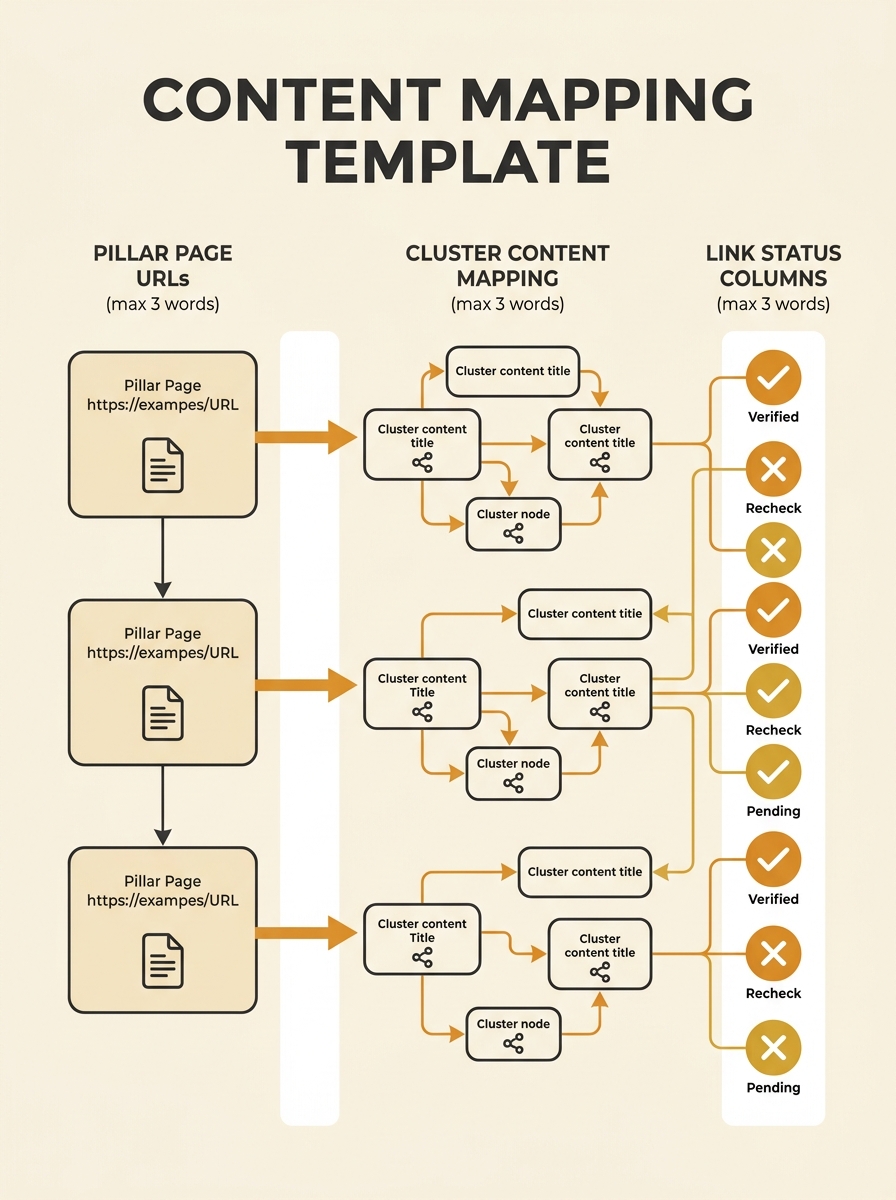
The cluster map spreadsheet requires six columns per content piece: pillar page title, pillar URL, cluster post title, cluster URL, target keyword, and binary fields tracking whether the cluster links to the pillar and whether the pillar links back. Any unchecked field becomes an action item for the content team to address.
Topic clusters organize content into comprehensive pillar pages covering 2,000 to 4,000 words on broad topics, supported by cluster content of 800 to 2,000 words addressing specific subtopics. Every cluster piece links to its pillar page with relevant anchor text; pillar pages link outward to each cluster piece, the template documentation specifies.
Three-Tier Priority System for Link Gap Remediation
The template categorizes internal linking gaps into three urgency tiers based on traffic impact and content freshness. Tier 1 fixes demand immediate attention: high-value pages with strong organic traffic or conversion rates that lack topically relevant internal links, pillar pages receiving fewer than 15 internal links, and new content published within 30 days that has fewer than five internal links from established pages.
Tier 2 issues require quarterly remediation: cluster content linking to pillars but not to related cluster pieces, and evergreen pages published more than six months ago with fewer than three internal links. Tier 3 covers ongoing maintenance including routine linking from new content and monthly orphan page audits.
The framework explicitly bans generic anchor text including “click here,” “read more,” and “this post.” Approved anchor text uses descriptive, keyword-rich phrases matching the target page’s focus, with natural variations permitted. For a page targeting “content calendar template,” acceptable anchors include “editorial calendar template,” “content planning template,” and “how to build a content calendar,” the documentation states.
Reading Between the Lines
Australian SMEs operating content sites without dedicated SEO teams face a practical constraint: internal linking typically gets handled ad-hoc during final editorial review rather than through systematic architecture planning. The Averi template shifts internal linking from a publishing-day checklist item to a standing structural audit—the cluster map becomes a living document showing which pillar pages need reinforcement and which new posts lack discovery pathways.
The 15-internal-link threshold for pillar pages is particularly relevant for Australian businesses that have published sporadically over several years without maintaining site architecture documentation. A pillar page attracting external backlinks but receiving only five internal links wastes the link equity those backlinks generate. The three-tier priority system gives resource-constrained teams a sequencing logic: fix high-traffic pages first, then address cluster connectivity, then maintain going forward.
The anchor text framework addresses a second common gap: Australian SMEs frequently write “learn more” or “read our guide” links because those phrases feel natural in Australian business writing. The template’s insistence on keyword-rich descriptive anchors—”B2B content marketing tactics” rather than “this article”—converts every internal link into a signal telling Google what the target page covers, a meaningful advantage when competing against larger sites with established topical authority.