

Google’s John Mueller said businesses need no special optimization tactics for generative AI search results because Google pulls AI answers from its regular crawled index, according to a Bluesky exchange reported August 24 by Search Engine Journal.
TL;DR: Google’s John Mueller told a Bluesky user that no industry-specific GEO tactics are required for AI search visibility because Google’s generative results derive directly from the standard search index.
The statement contradicts the positioning of a growing consultancy sector selling dedicated Generative Engine Optimization services to Australian and international businesses. Mueller’s comment came in response to a question from Bluesky user @galloni.net, who asked whether certain industries—specifically adult content and gambling sectors—could skip GEO and focus solely on traditional SEO because “Google still seems to drive most discovery” in those categories.
Mueller’s Position: Standard SEO Covers AI Search
Mueller responded that Google sees no distinction between optimizing for traditional search and optimizing for generative AI results. “I’m not quite sure what you’re asking; from our POV there’s nothing really special you need to do for generative AI responses in search,” Mueller wrote in the Bluesky thread.
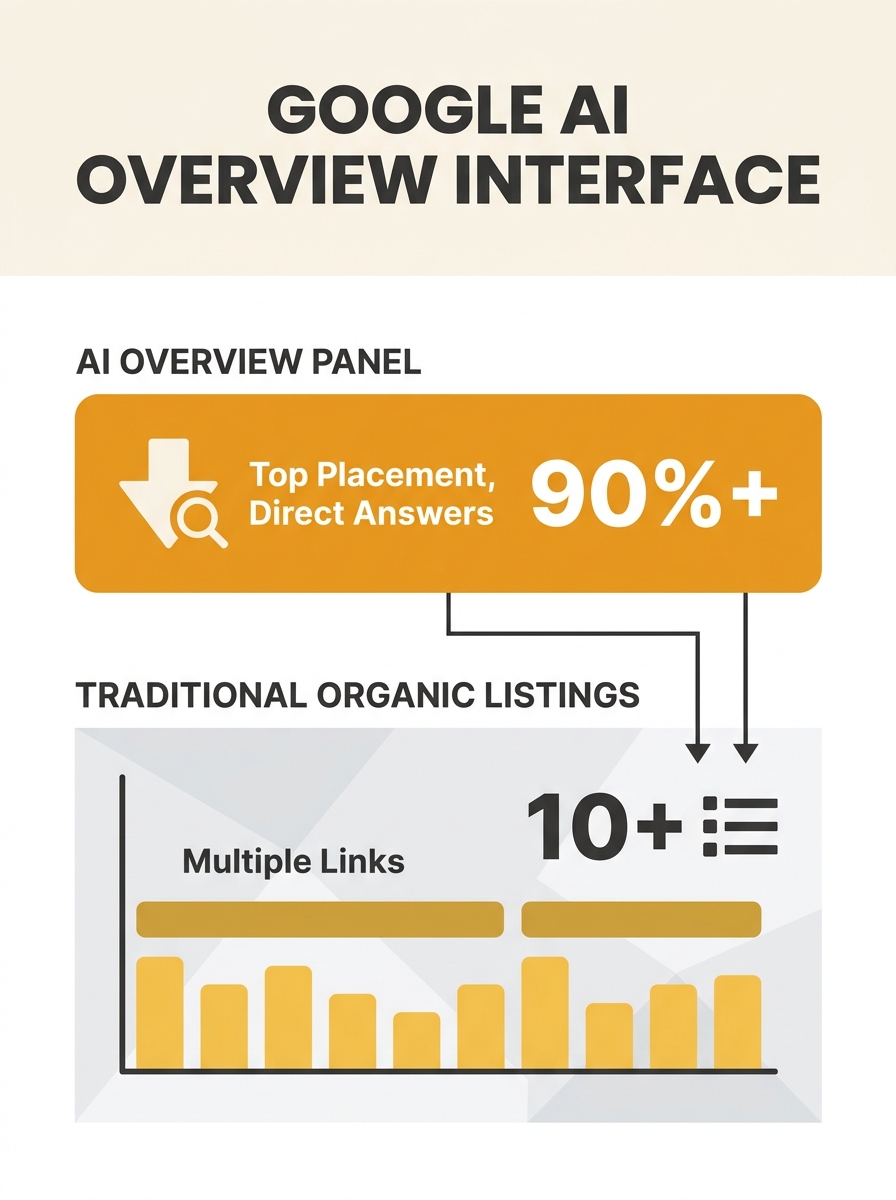
The comment reflects Google’s technical architecture for AI Overviews and generative search features. Google’s AI search results pull content directly from the company’s crawled index, selecting from top-ranking pages for a given query plus additional results for related query fan-outs. The system does not maintain a separate optimization pathway or ranking system for AI-generated responses.
Mueller’s statement makes no industry exceptions. The question specifically referenced adult and gambling sectors, but his answer applied to all business categories.
GEO Services Market Expands Despite Google Guidance
The response comes as consultants have launched services specifically targeting AI search visibility. SEO plugin developers now offer features to generate LLMs.txt files—a format that points large language models to LLM-optimized markdown content—though Search Engine Journal notes that no search engine or AI chat platform currently uses the file format.
Australian businesses evaluating local SEO services face messaging from two directions. Established SEO practitioners have begun offering AI search optimization while maintaining that the tactics are identical to standard SEO practices. A separate category of consultants positions GEO as a distinct discipline requiring specialized approaches.
The debate parallels earlier discussions documented in industry coverage. Three SEO practitioners told this site in April 2026 that AI search strategy debates miss fundamental SEO principles, a position now echoed by Mueller’s Bluesky response.
Research published by Princeton and Georgia Tech in 2024 identified specific tactics that increase citation rates in generative search engines, including quotation density and statistics addition. Those findings, however, examined third-party AI platforms like ChatGPT and Perplexity rather than Google’s AI Overviews feature, which draws from a different technical architecture.
Index Architecture Determines Optimization Requirements
Google’s AI search features derive content through query fan-outs—a process that identifies related searches and additional information a user would likely need. The system then pulls answers from pages already ranking for those primary and secondary queries within Google’s standard index.
This architecture means a page’s visibility in AI search results depends on the same ranking factors that determine traditional search visibility: relevance signals, authority indicators, content quality, and technical SEO fundamentals. Businesses ranking well for target queries in standard search will appear in related AI Overview panels without additional optimization work.
The statement aligns with Google’s public documentation on AI Overviews, which has not identified industry-specific optimization requirements or carve-outs for particular business sectors. Adult content and gambling sites face the same content policy restrictions in AI search features as they do in traditional search results, but no separate optimization pathway exists for these or any other vertical.
The Takeaway
Australian businesses evaluating whether to invest in dedicated GEO services can allocate those resources to standard SEO fundamentals instead, according to Google’s direct guidance. Mueller’s statement indicates that businesses already investing in quality content, technical SEO, and authority-building for traditional search will capture AI search visibility as a byproduct.
The emerging GEO consultancy market may reflect genuine demand from businesses seeking certainty in a shifting search landscape, but Google’s technical implementation does not support a distinct optimization discipline. Businesses in regulated industries including gambling and adult content face the same conclusion: AI search visibility follows from the same ranking factors that drive traditional organic performance.
For Australian SMBs deciding between broad SEO investment and specialized GEO tactics, Google’s guidance points to a single answer. The crawled index remains the source for both traditional search results and generative AI responses, making standard SEO the only optimization path that matters.