

Australian digital marketing firm Sumy Designs published mobile website design guidelines on August 14, 2026, warning that sites with incomplete mobile versions lose rankings under Google’s mobile-first indexing even when desktop content is complete, according to the analysis.
TL;DR: Sumy Designs published mobile design guidance August 14, 2026, stating Google ranks sites based on mobile versions, penalizing those missing content present on desktop.
The firm’s guidance emphasizes that mobile-first indexing evaluates sites based on mobile page content rather than desktop versions, meaning missing links, structured data, or text on mobile pages prevents Google from indexing that information regardless of desktop presence. The analysis identifies navigation overload, intrusive popups, and content parity gaps as recurring issues that reduce rankings.
Mobile Traffic Share Drives Index Priority
Mobile devices generate more than half of global website traffic, the firm stated, with some industries reporting higher mobile shares. Google completed mobile-first indexing rollout to assess mobile page quality for ranking decisions across all search queries, including desktop searches.
“If your mobile pages are missing content, links, or structured data that exists on your desktop version, Google may never see it, and that content simply won’t help you rank,” the firm wrote in the published guidelines. The analysis warns site owners treating mobile versions as secondary risk ranking losses.
Navigation and Popup Density Identified as Problem Areas
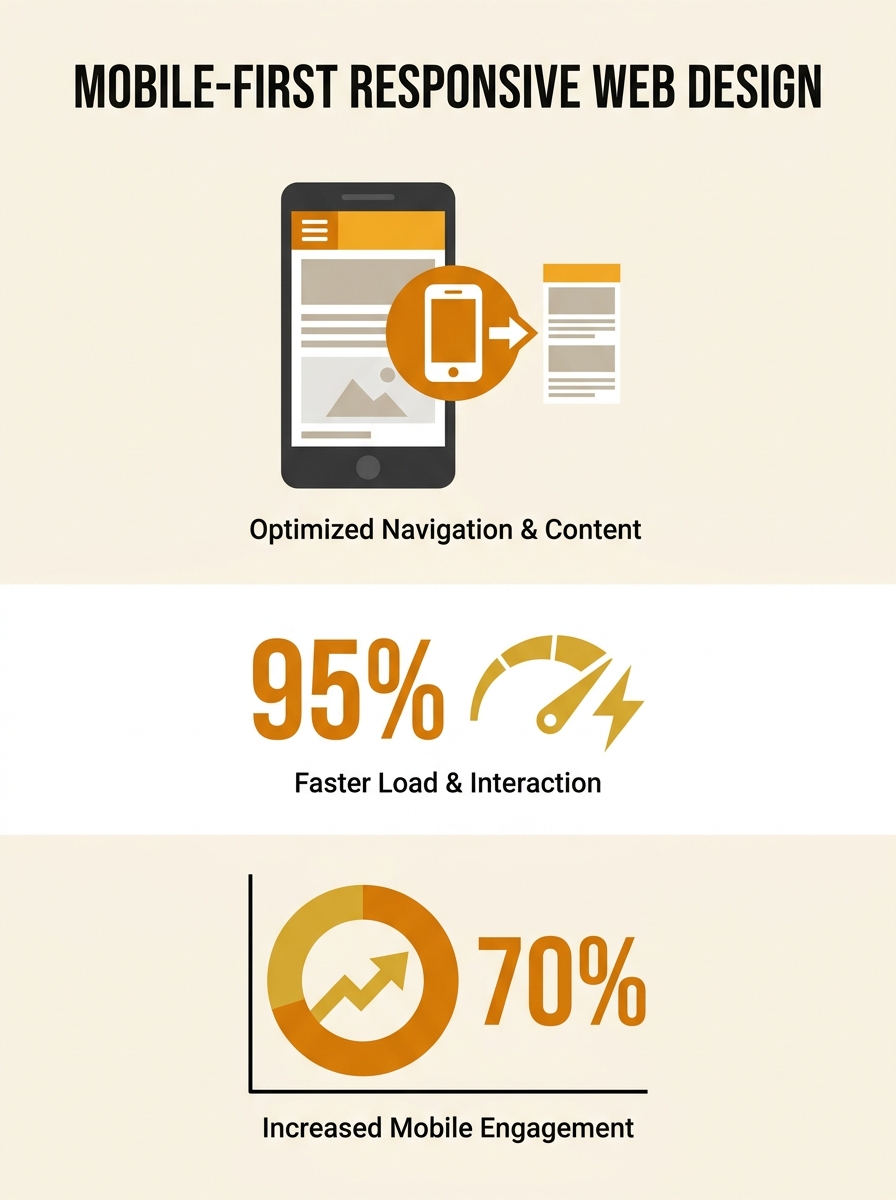
The guidance recommends limiting mobile navigation menus to three or four primary items rather than replicating full desktop navigation structures. Desktop homepages carrying fifteen menu items should not compress all options into mobile hamburger menus without prioritization, according to the recommendations.
Intrusive popups on mobile devices reduce rankings beyond frustrating users, the firm stated, citing Google’s treatment of intrusive interstitials as a ranking factor for mobile search results. Full-screen popups with difficult-to-close exit buttons create usability barriers on small screens. The firm recommends placing calls to action above or below content instead of interrupting reading with overlays.
Content Parity Gaps Create Index Blind Spots
The analysis identifies content differences between desktop and mobile versions as a persistent technical SEO issue. Sites removing secondary content from mobile pages to reduce clutter inadvertently hide that content from Google’s index under mobile-first crawling.
Responsive design frameworks adjust layouts, images, and navigation based on screen size without requiring separate mobile URLs, the firm noted. The approach differs from mobile sites that technically load on phones without optimized user experience design, according to the published guidelines.
The firm stated phone users demonstrate different conversion patterns than desktop visitors, including higher rates of direct calls from search results and form completions during task transitions. Sites with non-clickable phone numbers or checkout processes requiring mouse navigation create conversion barriers for the mobile majority, the analysis found.
What Happens Next
Australian SMBs relying on organic search visibility face ranking pressure if mobile page content lags behind desktop equivalents, particularly as AI search tools increasingly prioritize mobile-formatted information. The mobile-first index shift means technical audits must verify content parity across device versions rather than treating desktop as the canonical source.
Businesses tracking machine-readable technical factors should extend audits to compare mobile and desktop content inventories, checking for missing schema markup, internal links, or text blocks that exist only on desktop versions. Sites undergoing redesigns or migration projects must validate mobile versions carry equivalent indexable content before launch to avoid post-migration ranking drops.
The guidance reinforces that Core Web Vitals measurements and user experience signals increasingly weight mobile performance over desktop metrics for ranking calculations, aligning technical optimization priorities with the device majority rather than legacy desktop-first workflows.