

Schema markup is the secret weapon that separates websites appearing as plain blue links from those commanding attention with star ratings, prices, FAQs, and rich visual elements directly in Google’s search results. Yet despite its proven impact on click-through rates, only 31.2% of websites have implemented proper structured data—leaving a massive opportunity for Australian businesses ready to stand out.
This comprehensive guide breaks down everything you need to know about schema markup: what it is, why it matters for SEO, the most valuable types for your business, and exactly how to implement it for maximum search visibility.
What is Schema Markup?
Schema markup is a standardised vocabulary of code (structured data) that you add to your website to help search engines understand your content more precisely. Developed collaboratively by Google, Bing, Yahoo, and Yandex through Schema.org, this markup acts as a translator between your website content and search engine algorithms.
Think of it this way: while humans can easily understand that “Dr Sarah Mitchell” on your dental practice page is a dentist with 15 years of experience, search engines need explicit signals to make these connections. Schema markup provides those signals in a language search engines speak fluently.
When implemented correctly, schema markup enables rich results (also called rich snippets)—enhanced search listings that display additional information like:
- Star ratings and review counts
- Price ranges and availability
- Event dates and locations
- Recipe cooking times and calorie counts
- FAQ accordions directly in search results
- How-to steps with images
Why Schema Markup Matters for SEO
The impact of schema markup on search performance is substantial and well-documented. According to research compiled from Google case studies, websites with rich results see click-through rate improvements ranging from 20% to 82%, with Nestlé achieving an impressive 82% CTR improvement through structured data implementation.
The numbers paint a compelling picture:
- 58% average CTR for rich results compared to 41% for standard listings (Milestone Research)
- 22% median increase in AI citations for websites with comprehensive schema markup
- Up to 40% CTR improvement from comprehensive structured data implementation
Beyond click-through rates, schema markup has become increasingly important for visibility in AI-powered search experiences. As Google’s AI Overviews and other generative search features expand, structured data helps your content get cited in AI-generated responses—a competitive advantage that will only grow more valuable.
Essential Schema Types for Australian Businesses
While Schema.org defines hundreds of markup types, certain schemas deliver the most value for most businesses. Here are the essential types to prioritise:
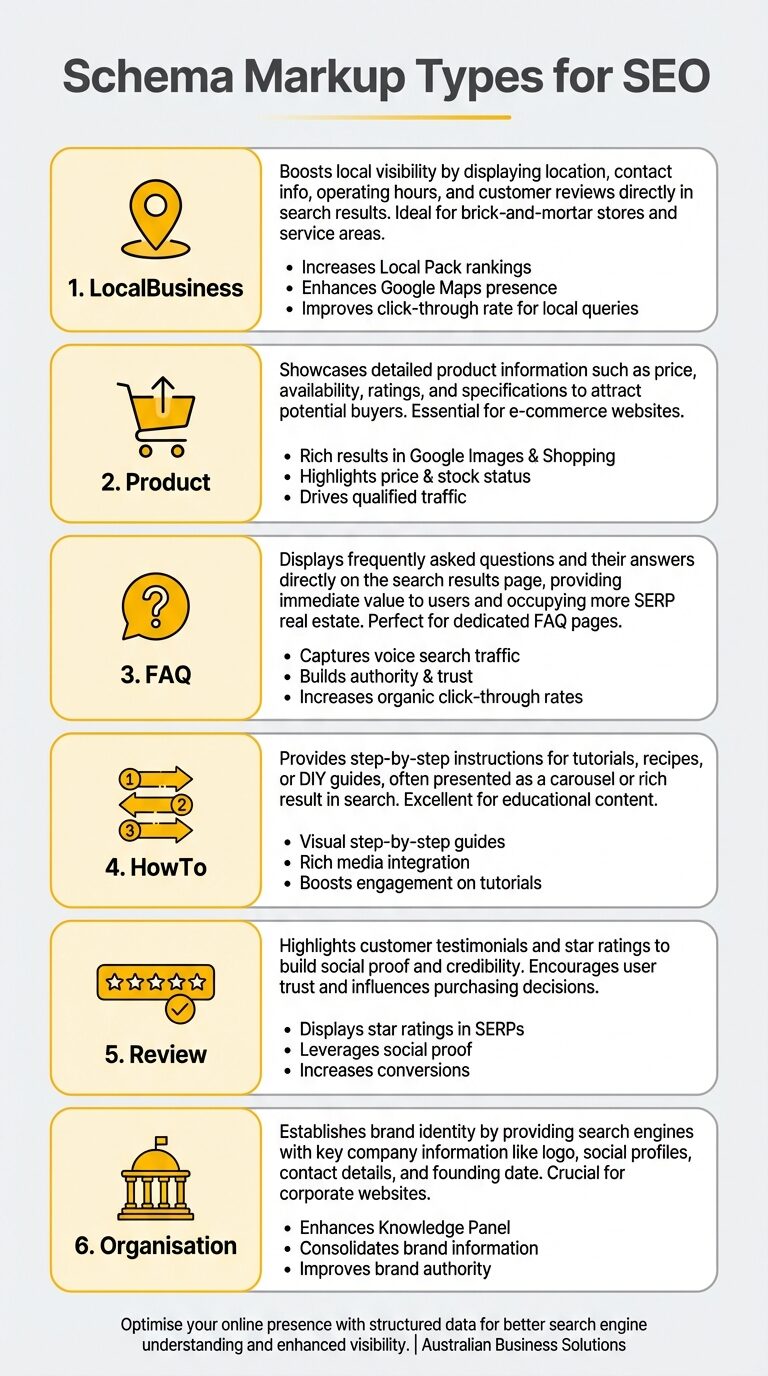
LocalBusiness Schema
For any business serving customers in specific geographic areas, LocalBusiness schema is foundational. According to HTTP Archive’s 2024 structured data report, LocalBusiness schema appears on only 3.97% of mobile pages—meaning most local businesses are missing this opportunity.
LocalBusiness schema should include:
- Business name, address, and phone number (NAP)
- Operating hours (including special holiday hours)
- Geographic coordinates
- Payment methods accepted
- Price range indicators
- Service areas
This structured data directly supports your local SEO efforts by helping Google understand exactly what your business offers and where.
Organisation Schema
Organisation schema establishes your brand’s digital identity. It tells search engines your official name, logo, social profiles, and contact information. This schema type appears on 7.16% of mobile pages and is particularly important for building brand recognition in search results.
FAQ Schema
FAQ schema transforms your frequently asked questions into expandable accordions directly in Google’s search results. This markup is particularly powerful because it can dramatically increase your SERP real estate—pushing competitors further down the page while providing immediate value to searchers.
For FAQ schema to appear as rich results, your page must genuinely contain frequently asked questions with helpful answers. Google’s guidelines specifically prohibit using FAQ schema for advertising purposes or content that contradicts itself.
Product Schema
E-commerce websites should implement Product schema to display prices, availability, ratings, and reviews directly in search results. This schema type is essential for competing in product searches, where rich results can be the difference between earning a click and being overlooked.
Product schema works hand-in-hand with your e-commerce SEO strategy to maximise visibility for your product catalogue.
HowTo Schema
HowTo schema displays step-by-step instructions with images directly in search results. This schema type is valuable for service businesses, educational content, and any page explaining a process. It can appear both in standard search results and in Google’s AI Overviews.
Review and AggregateRating Schema
Those coveted star ratings in search results come from Review and AggregateRating schema. These markup types can significantly boost CTR by providing social proof before users even visit your page. However, Google has strict guidelines—self-serving reviews and fake ratings can result in manual actions.
How to Implement Schema Markup
There are three main formats for implementing schema markup: JSON-LD, Microdata, and RDFa. Google recommends JSON-LD as the preferred format because it’s easier to implement and maintain—the code sits in your page’s head section rather than being intertwined with your HTML content.
JSON-LD Implementation
JSON-LD (JavaScript Object Notation for Linked Data) is inserted as a script tag in your page’s HTML. Here’s an example of LocalBusiness schema for an Australian dental practice:
<script type="application/ld+json">
{
  "@context": "https://schema.org",
  "@type": "Dentist",
  "name": "Sydney Smile Dental",
  "image": "https://example.com/logo.png",
  "address": {
    "@type": "PostalAddress",
    "streetAddress": "123 George Street",
    "addressLocality": "Sydney",
    "addressRegion": "NSW",
    "postalCode": "2000",
    "addressCountry": "AU"
  },
  "telephone": "+61 2 1234 5678",
  "openingHoursSpecification": {
    "@type": "OpeningHoursSpecification",
    "dayOfWeek": ["Monday", "Tuesday", "Wednesday", "Thursday", "Friday"],
    "opens": "09:00",
    "closes": "17:00"
  },
  "priceRange": "$$"
}
</script>
Using Google Tag Manager
For websites where editing HTML directly isn’t practical, Google Tag Manager offers a flexible solution for deploying schema markup. You can create custom HTML tags containing your JSON-LD code and trigger them on specific pages.
WordPress Plugins
Popular SEO plugins like Yoast SEO, Rank Math, and Schema Pro can automatically generate common schema types. These tools simplify implementation but may require manual configuration for more complex markup requirements.
Testing and Validating Your Schema
Before celebrating your schema implementation, validation is crucial. Google provides two essential testing tools:
Rich Results Test
Google’s Rich Results Test shows whether your structured data is eligible for rich results in Google Search. It identifies errors and warnings that could prevent your markup from generating enhanced listings.
Schema Markup Validator
The Schema.org Validator checks your markup against the complete Schema.org vocabulary, identifying any syntax errors or missing required properties.
For comprehensive technical SEO audits, regularly test your schema implementation across key page templates—homepage, product pages, blog posts, and location pages.

Common Schema Markup Mistakes to Avoid
Even well-intentioned schema implementations can backfire. Here are the most common mistakes:
Marking Up Hidden Content
Schema markup must describe content that’s actually visible on the page. Marking up information that users can’t see violates Google’s guidelines and can result in penalties.
Using Incorrect Schema Types
Choosing the wrong schema type—like using Article schema for a product page—confuses search engines and wastes the opportunity for appropriate rich results.
Incomplete Implementation
Schema with missing required properties won’t generate rich results. Always check Google’s documentation for each schema type’s required and recommended properties.
Self-Serving Reviews
Marking up reviews you’ve written about yourself or your own products violates Google’s guidelines. Review schema should only be used for genuine third-party reviews.
Duplicate Schema Issues
Having multiple instances of the same schema type on a single page—such as two LocalBusiness schemas—creates confusion for search engines. Audit your pages regularly, especially if you use both a plugin and manual implementation, to ensure no duplicate markup exists.
Not Keeping Schema Updated
Schema markup that becomes outdated—showing old business hours, discontinued products, or expired events—damages trust with both users and search engines. Establish processes to update your structured data whenever underlying business information changes.
Measuring Schema Markup Success
Track the impact of your schema implementation through:
- Google Search Console: Monitor rich result impressions and clicks in the Performance report
- CTR changes: Compare click-through rates before and after implementation
- Rich result appearance: Use Search Console’s Enhancements reports to see which rich results are appearing
- Error monitoring: Check for schema errors that could prevent rich results
Integration with your broader on-page SEO tracking ensures you understand schema’s contribution to overall search performance.
Schema Markup and the Future of Search
As search evolves toward AI-driven experiences, structured data becomes increasingly valuable. Google’s AI Overviews, Bing’s Copilot, and other generative search features rely heavily on structured data to understand and cite sources accurately.
Websites with comprehensive schema markup are better positioned to:
- Appear in AI-generated summaries
- Get cited as authoritative sources
- Maintain visibility as traditional rankings evolve
For Australian businesses, investing in schema markup today builds a foundation for visibility in tomorrow’s AI-powered search landscape.
Get Expert Help with Schema Implementation
While basic schema markup is accessible to most website owners, comprehensive implementation across an entire website requires technical expertise. Complex scenarios—multi-location businesses, large e-commerce catalogues, dynamic content—benefit from professional implementation.
If you’re ready to leverage structured data for competitive advantage, our SEO specialists can audit your current implementation and develop a schema strategy aligned with your business goals.
Supporting your local SEO checklist with proper structured data, optimising your Google Business Profile, and building comprehensive schema coverage positions your website for maximum search visibility—both today and as search technology continues to evolve.