

An SEO migration planning guide published August 27, 2026, by GadgetsFarms documents how retailers moving 3,200 URLs can expect 5% to 12% organic traffic declines with proper redirect planning, but face 40% crashes without tested 301 redirect maps, according to the technical framework.
TL;DR: The framework outlines URL inventory requirements, one-to-one redirect mapping, and pre-launch crawl checks businesses must complete before domain or platform migrations to preserve search rankings.
Migration Risk Scales With Simultaneous Changes
Website migrations that change domains, platforms, and URL structures at once carry greater SEO risk than phased moves, the guide states. Domain migrations, protocol changes from HTTP to HTTPS, platform switches to new CMS systems, URL structure alterations, and design rebuilds each introduce separate ranking risks that compound when executed together.
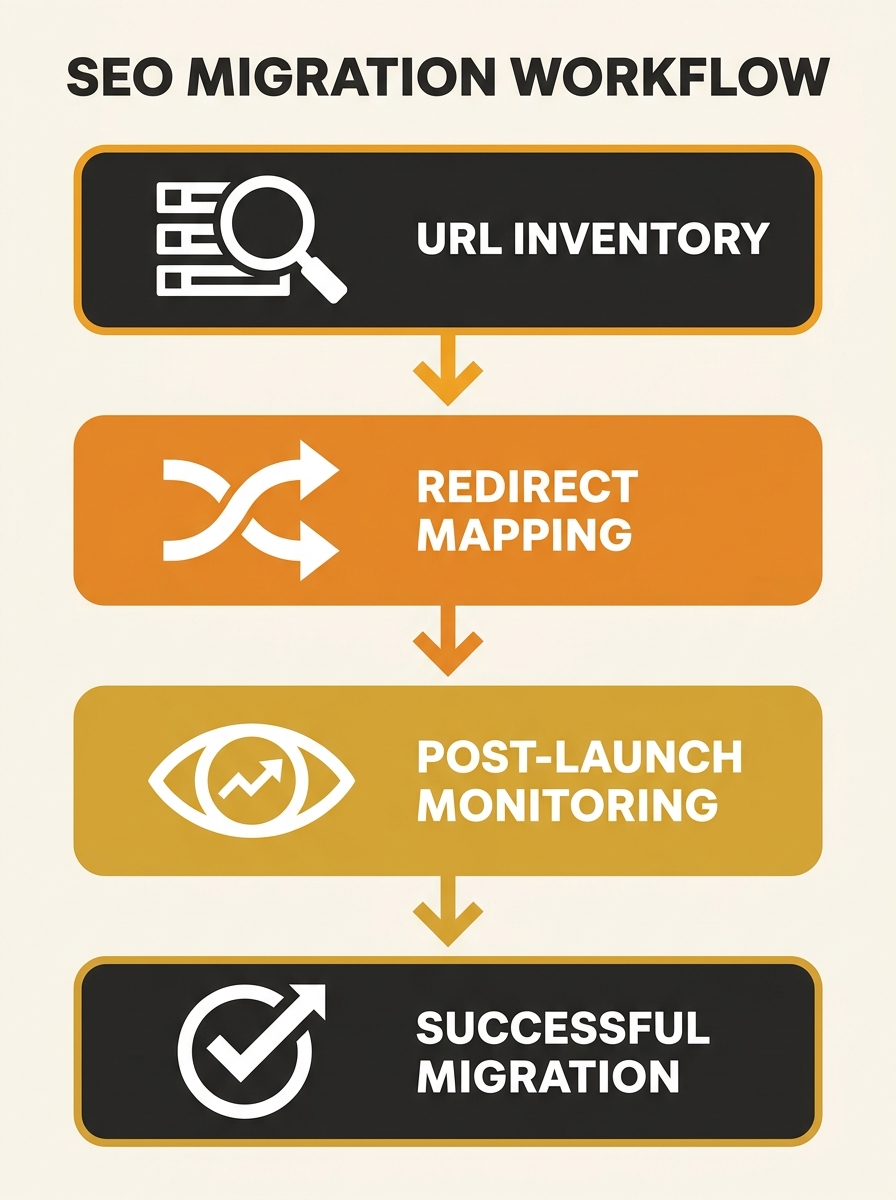
The framework identifies seven data sources teams should use to build complete URL inventories before launch: current XML sitemaps, Google Search Console exports, analytics landing pages from the previous 12 to 18 months, backlink tool data, server logs, current-site crawl data, and paid search landing pages. Each URL in the master file should include status code, organic sessions, conversions, backlink count, target keyword group, canonical URL, and the planned new destination.
The publication notes that migration problems often remain invisible during design reviews. “A page may look fine but return the wrong status code,” the guide states. “A redirect may work in a browser but create a chain behind the scenes.”
Redirect Mapping Requirements
The framework specifies that each old URL should point to the closest matching new URL using 301 redirects rather than dumping removed pages onto homepages. Old product pages should redirect to the same product if it still exists, removed products should redirect to the closest category or replacement item, and old blog posts should redirect to the same article or closely related guide.
Deleted low-value pages may return 410 status codes when no useful replacement exists, according to the guide. Redirect chains—where one old URL points to a staging URL, then to a temporary URL, then to the final page—waste crawl time and dilute ranking signals, the framework warns.
The publication documents cases where entire sites launched with staging “disallow all” rules still active in robots.txt files. “That single line can damage organic visibility fast,” the guide states.
Pre-Launch Technical Checks
Before launch, staging sites should be crawled while blocked from indexation to allow internal testing, the framework recommends. Every key template should be reviewed for indexability, status codes, canonical tags, pagination, hreflang tags, robots directives, and mobile rendering.
New XML sitemaps should include only final indexable URLs, and robots.txt files should not block key sections, according to the publication. The guide notes that 900 broken canonical tags have appeared in post-launch crawls when teams skipped template-level reviews.
Core Web Vitals require separate review because new designs that add heavy scripts, large hero images, or slow third-party tags can hurt both users and search performance, the framework states. Speed should be tested on real page templates rather than only homepages.
The guide recommends launch checklists that confirm DNS settings, hosting configurations, SSL certificates, CDN settings, final redirect rules, removal of staging noindex rules, XML sitemap uploads, robots.txt verification, and analytics tracking before sites go live.
Post-Launch Monitoring Protocol
After launch, the framework advises tracking rankings for top landing pages, monitoring crawl errors in Google Search Console, checking organic traffic patterns, reviewing server logs for bot activity, and keeping old domain data for comparison. The publication notes that short-term traffic dips of 5% to 12% can occur even with clean redirects as search engines recrawl and re-evaluate pages.
Teams should fix crawl issues immediately rather than waiting for weekly reports, according to the guide. The framework does not specify a monitoring duration but implies ongoing checks until traffic stabilizes at or above pre-migration levels.
Australian businesses managing website transitions can apply the framework’s URL inventory and redirect mapping protocols to platform upgrades, domain changes, or content restructuring projects. The guide’s emphasis on technical SEO monitoring aligns with ongoing Core Web Vitals requirements that affect both user experience and search visibility.
The Takeaway
Website migrations remain high-risk technical projects where execution errors compound quickly. The GadgetsFarms framework’s 40% traffic-loss warning underscores why Australian SMBs planning platform changes or domain moves need tested redirect maps before launch rather than post-launch fixes. The publication’s URL inventory requirements—pulling data from seven separate sources including server logs and backlink tools—reveal how many businesses underestimate the scope of pages that need mapping. For marketing managers evaluating CMS upgrades or domain consolidations, the framework’s redirect-chain warnings and staging-rule errors show where invisible technical problems create visible ranking drops.