

Fuel Online’s AI Index, released May 15, 2026, found that 62% of enterprise brands are technically invisible to generative AI models despite ranking well on Google. The technical SEO audit gap between traditional search optimisation and AI search visibility is now measurable, documented, and growing.
March 2026: The Traditional Audit Started Cracking
Sprintzeal published findings in March arguing that the traditional 40-hour technical SEO audit had become obsolete. The audit format most agencies still run checks crawlability, indexation, page speed, and schema basics. It was built for Googlebot. It was never built for GPTBot, PerplexityBot, or ClaudeBot.
These AI crawlers behave differently. As Matthew Edgar wrote on his site, generative AI “is designed to create new, unique responses related to a prompt,” which means the system doesn’t just index your page and rank it. It reads your content, evaluates its authority, and decides whether to synthesise it into an answer. If your content fails that evaluation, no amount of clean HTML will save you.
The March 2026 Google core update reinforced this split. Google began weighting information gain as a dominant ranking signal, rewarding pages that add something the index hasn’t already seen. AI systems apply the same logic, but more aggressively. They pull from sources they trust, sources that provide structured claims, and sources that other credible entities reference.
By this point, SEO professionals on Reddit’s r/digital_marketing were reporting that topical authority and interconnected content clusters of 15 to 20 pieces per topic significantly increased citation likelihood in AI-generated answers. Social proof signals, community mentions, and consistent brand presence across platforms were surfacing as ranking factors for AI systems in ways they never were for traditional search.
Five Authority Gaps Surface Across 50 Audits
On May 11, 2026, AI Search Engineers published results from more than 50 AI Visibility Audits conducted across law firms, financial advisors, and B2B service providers. The findings revealed a consistent pattern. Businesses that passed traditional technical SEO audits with flying colours were failing AI search visibility checks at five specific points.
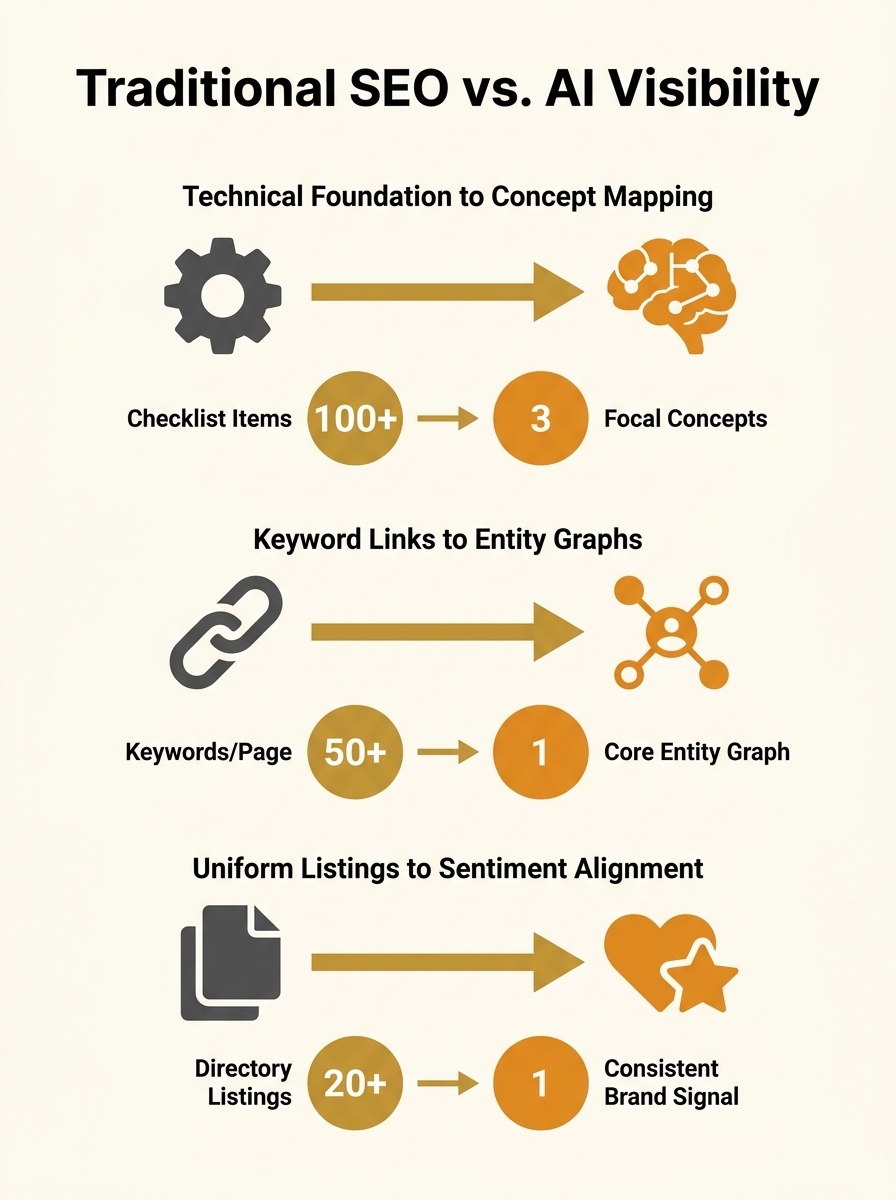
Gap one: absent entity recognition. When a business describes itself differently across its website, Google Business Profile, LinkedIn, and directory listings, AI systems treat it as ambiguous. The AI can’t confidently identify what the business does or who it serves, so it skips the citation entirely.
Gap two: missing structured data. Fewer than 1 in 5 of the audited businesses used FAQ or service-specific schema markup. Without this, AI systems can’t efficiently parse what questions a business answers or what services it provides.
Gap three: no trusted third-party citations. Businesses without press coverage, industry mentions, or third-party validation scored poorly. AI platforms apply a higher authority bar for professional services because the stakes of a wrong recommendation are high.
Gap four: inconsistent brand signals. Variations in business name, service categories, or descriptions across directories created uncertainty. This connects directly to the citation consistency problems that already plague local SEO but hit harder in AI contexts.
Gap five: outdated SEO assumptions. Tactics like keyword density optimisation and backlink volume accumulation don’t translate to AI visibility. AI systems evaluate whether your content answers a query with authority, not whether you’ve repeated a keyword phrase 14 times.
The study found that the fastest path to AI search visibility involved simultaneously deploying structured data and securing at least one trusted external citation, with measurable results appearing within 30 to 90 days.
Fewer than 1 in 5 audited businesses used the schema markup that AI systems need to confidently cite them in generated answers.
Google Responds, Sort Of
As of May 16, Google published a new AI Search guide that explicitly calls AEO (Answer Engine Optimisation) and GEO (Generative Engine Optimisation) “still SEO.” The guide names several tactics that site owners can safely ignore, including llms.txt files, content chunking specifically for AI, and special schema types.
This is Google drawing a boundary. The message is clear: don’t build a parallel optimisation strategy from scratch. Instead, extend what you already do.
But the Fuel Online data, published the same day, tells a different story on the ground. In 81% of test queries, enterprise brands that ranked in Google’s top 10 did not appear in AI-generated responses from ChatGPT, Gemini, or Perplexity. The disconnect between Google’s advice and actual AI visibility outcomes is significant. Google says GEO is still SEO. The data says your SEO alone won’t get you cited.
Search Engine Land’s GEO coverage frames the discipline as “the practice of positioning your brand and content so that AI platforms cite, recommend, or mention you” when users search. That positioning work happens partly on your website and partly across every platform where your brand shows up, which is where social marketing becomes central to the equation.
Where AI Crawler Indexing Actually Fails
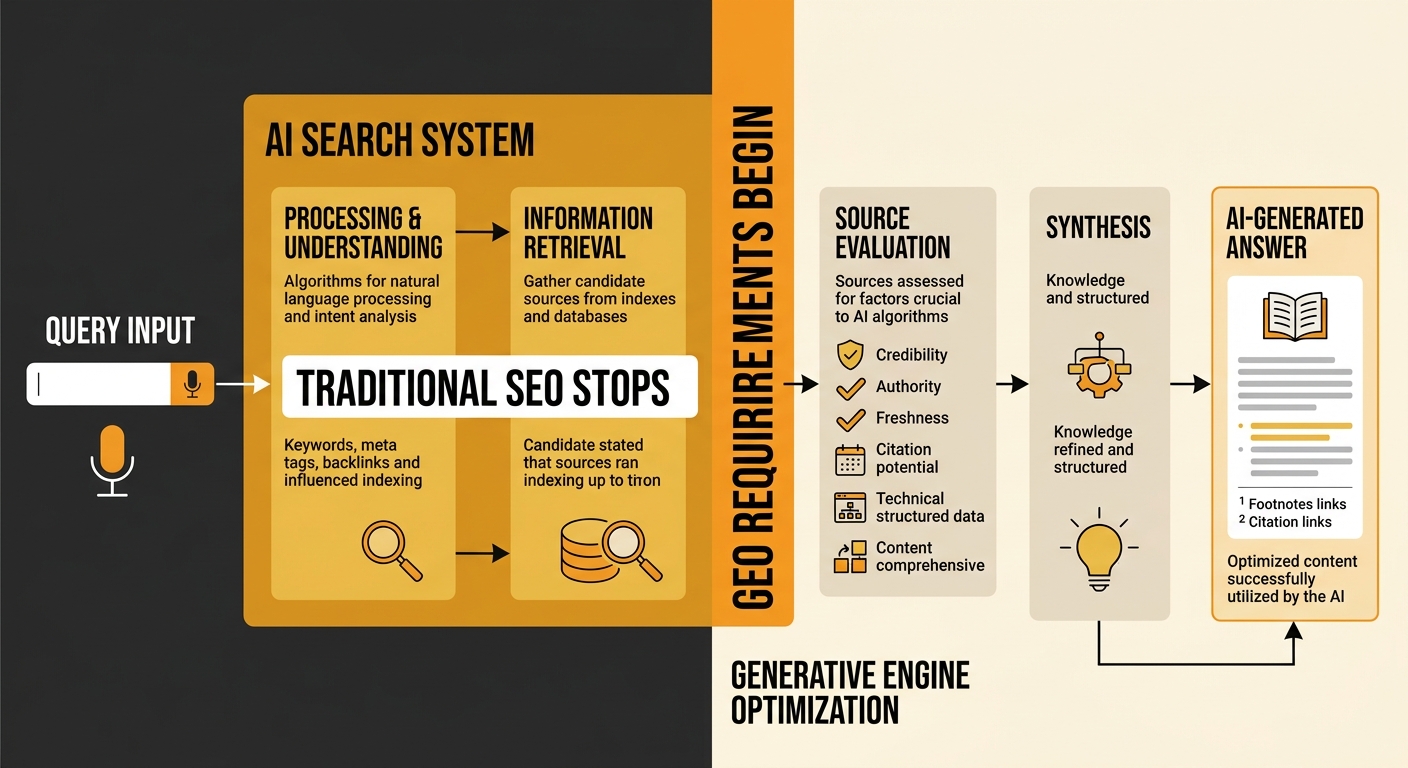
The Women in Tech SEO research on AI crawlability makes the technical layer concrete. As their analysis states, “before an answer engine can mention or cite your brand, its crawlers first have to be able to find and understand your content.”
This is a different problem from Googlebot access. Many sites block GPTBot, PerplexityBot, or other AI crawlers through robots.txt rules they set up months ago and forgot about. Others rely on client-side JavaScript rendering that AI crawlers don’t execute. Discovered Labs’ research recommends server-side rendering or pre-rendering specifically for bot traffic, and confirms that AI crawlers use XML sitemaps to discover and prioritise content for indexing.
For Australian businesses, the growing gap in standard technical SEO checklists is already documented. A traditional crawl audit checks whether Googlebot can access your pages. An AI visibility audit checks whether GPTBot, ClaudeBot, and PerplexityBot can access them too, whether your content is structured for extraction, and whether your brand signals across the web are consistent enough for an AI system to trust.
Warning: Check your robots.txt right now. If you added rules to block AI crawlers in 2024, those rules are actively preventing your content from appearing in AI-generated answers across ChatGPT, Perplexity, and other platforms.
The GEO vs traditional SEO distinction becomes sharpest here. Traditional SEO optimises for a system that lists websites. Generative engine optimization, as Semrush defines it, optimises for systems that generate answers. The technical requirements overlap, but the authority and trust requirements diverge sharply.
The Social Layer Most Audits Ignore
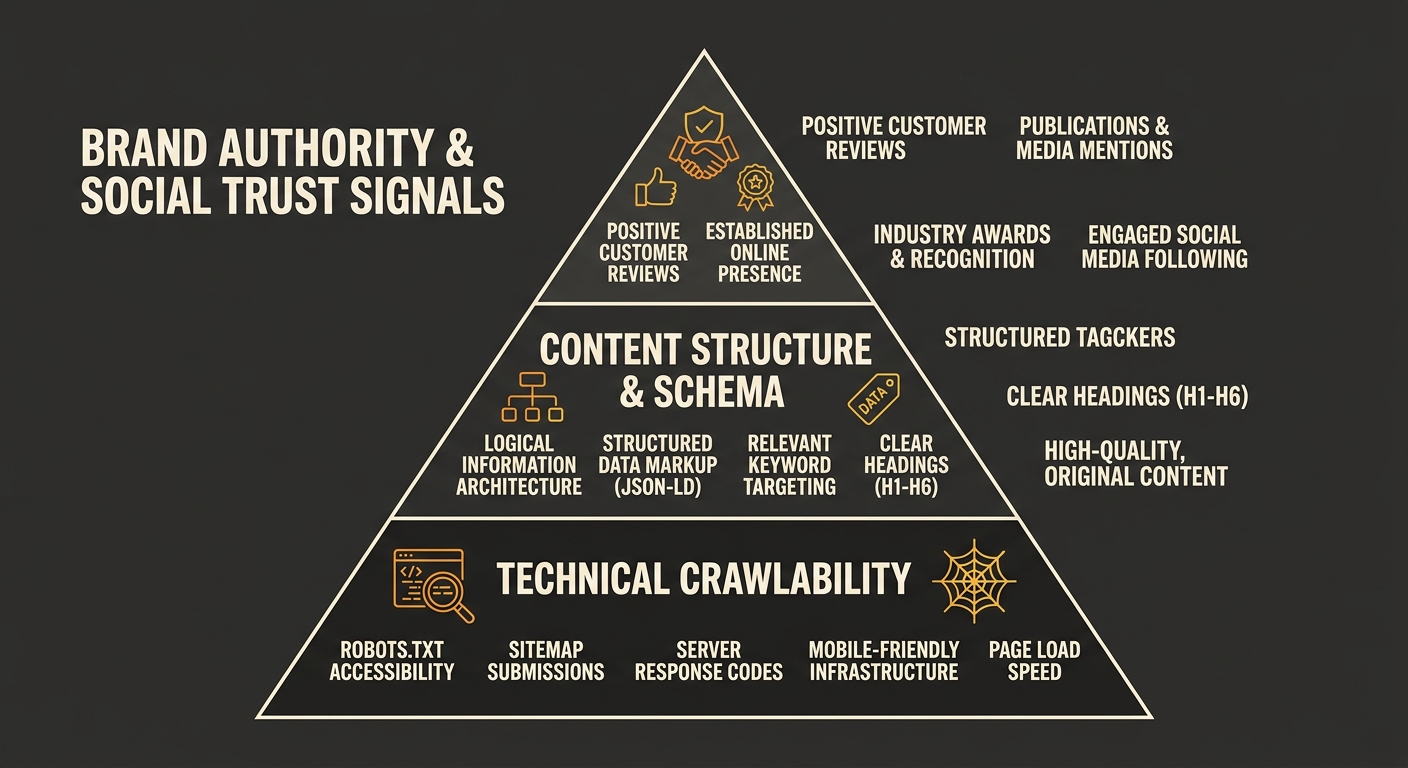
Search Engine Journal’s coverage from May 14 argues that AI visibility breaks into three distinct layers, each with different failure modes and different fixes. The third layer, brand authority and trust signals, sits squarely in social marketing territory.
AI systems evaluate brand credibility by scanning third-party mentions, review platforms, social media profiles, and community discussions. IDC Research projects that 79% of buyers will use AI tools for purchasing decisions by 2028. When those AI tools compile recommendations, they pull from the same social signals that marketing teams manage daily.
Siteimprove’s April 20, 2026, launch of AEO Insights at Adobe Summit reflects this convergence. The tool tracks AI citations, prompt mentions, share of voice, and sentiment across generative search platforms in a single dashboard. It treats social mentions and AI citations as part of the same visibility ecosystem.
For Australian businesses already building their AI search visibility strategy, this means social marketing isn’t separate from search anymore. Your LinkedIn posts, your industry forum contributions, your Google Business Profile updates, and your review responses all feed into the authority signals that AI systems evaluate before citing you.
The State of Play
Google says generative engine optimization is still SEO. The audit data says 62% of enterprise brands are invisible to the AI systems that increasingly shape purchasing decisions. Both statements are true. The tools and frameworks carry over from traditional SEO, but the implementation requirements have expanded into territory that standard technical audits don’t cover.
The Princeton and Georgia Tech GEO research measured which content modifications actually boost AI citation rates. Adding attributed quotes to content delivered a 42.6% lift. Adding specific statistics delivered 32.8%. Citing authoritative sources delivered 27.7%. These aren’t abstract recommendations. They’re measured effects that Australian businesses can apply to existing content this month.
The audit gap is real. Your robots.txt might be blocking AI crawlers. Your schema might stop at basic Organisation markup when AI systems need FAQ and service-level detail. Your brand signals across directories, social platforms, and review sites might contradict each other in ways that make AI systems hesitate to recommend you. And the meta descriptions you spent hours writing might be getting ignored entirely by AI Overviews that extract answers from deeper in your content.
None of this replaces traditional technical SEO. All of it extends the audit checklist into areas that didn’t exist two years ago. The businesses that close this gap first will be the ones that AI systems trust enough to cite, recommend, and surface when Australian buyers ask their next question.