

Digital marketing firm DigiPix published a site speed optimization framework June 27 identifying four loading measurements that directly affect search rankings, according to the published guidance. The framework targets businesses whose pages load slowly enough to trigger elevated bounce rates and weakened mobile search visibility, with Time to First Byte, First Contentful Paint, Time to Interactive, and full page load time flagged as the primary metrics search engines evaluate when assessing page quality.
TL;DR: DigiPix’s June 27 framework links site speed to SEO through four measurable loading stages, with mobile performance and bounce-rate signals identified as direct ranking factors.
The framework release arrives as Australian SMEs continue fixing performance metrics that don’t address actual ranking factors, with many businesses optimizing total load time while ignoring the interaction delays and first-paint measurements Google’s Core Web Vitals prioritize. The DigiPix guidance shifts focus to the stages of loading that shape visitor behavior before a page finishes rendering completely.
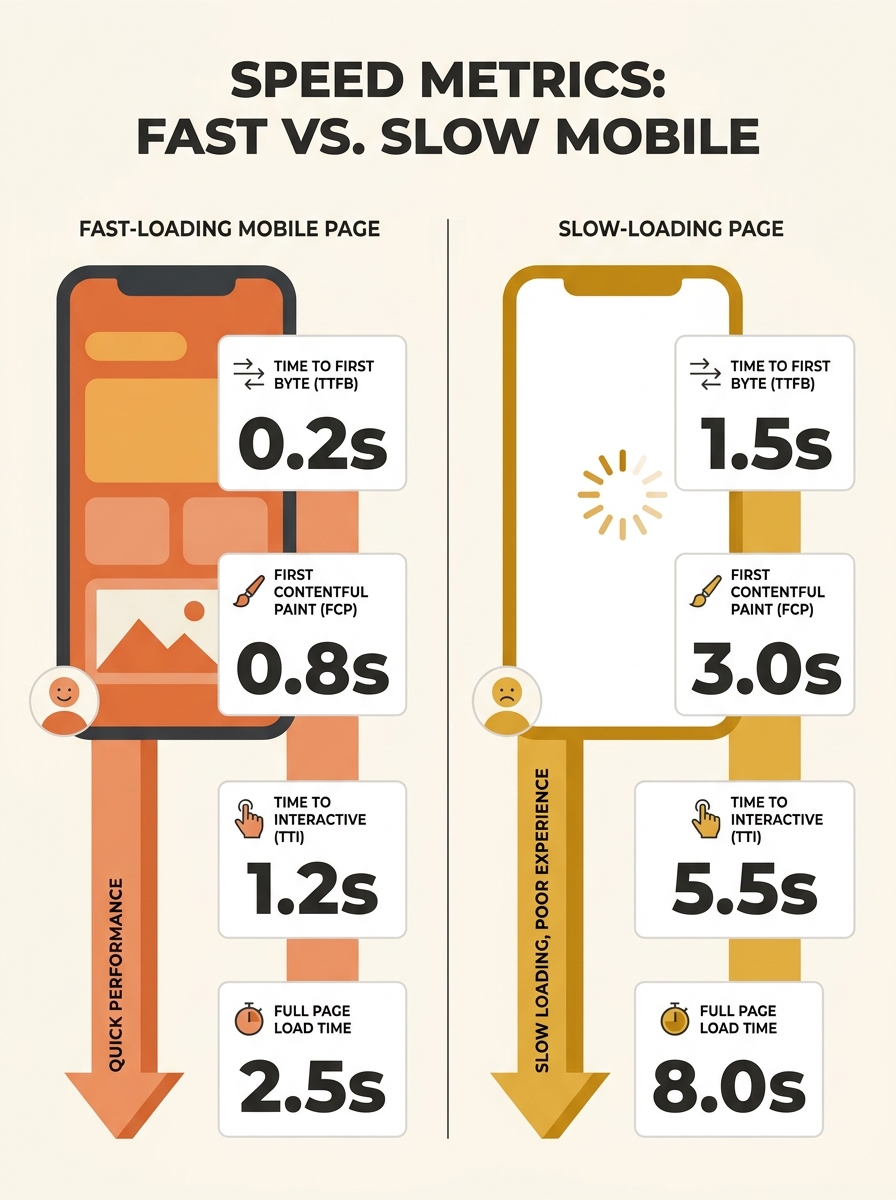
What the Framework Measures
The framework breaks site speed into four distinct phases rather than treating it as a single load-time number. Time to First Byte measures server response speed, showing how quickly the hosting environment begins delivering content after a request. First Contentful Paint tracks when the first visible element appears on screen, marking the moment a visitor sees evidence the page is loading rather than staring at a blank browser window.
Time to Interactive identifies when the page becomes usable, allowing visitors to click buttons, fill forms, or navigate menus without lag. Full page load time captures the complete rendering process, including all images, scripts, and third-party resources that finish loading after the page becomes interactive.
“If a page takes too long to appear, people leave before they see the content,” the framework states, noting search engines track that abandonment behavior as a quality signal. The guidance positions these four measurements as observable user-experience markers rather than arbitrary technical benchmarks, with each phase creating a potential exit point where visitors abandon pages that fail to load quickly enough.
Mobile Performance and Search Rankings
The framework flags mobile loading speed as a standalone ranking factor, distinct from desktop performance. Poor mobile performance weakens rankings specifically in mobile search results, according to the published guidance, with delayed interaction times on smartphones creating higher friction than equivalent delays on desktop connections.
The mobile-specific impact stems from mobile-first indexing, where Google evaluates the mobile version of a page as the primary ranking signal even when users search from desktop devices. A site that loads quickly on desktop but slowly on mobile faces ranking penalties across both environments, the framework notes, because the mobile experience determines the overall quality assessment.
Australian SMEs operating local service businesses encounter this mobile penalty most acutely, as mobile searches dominate local-intent queries. A tradie website that takes seven seconds to become interactive on a 4G connection loses rankings to faster competitors even when the desktop version performs well, creating an asymmetric visibility gap that standard desktop testing misses entirely.
Speed Impact on User Behavior
The framework documents how loading delays translate into measurable engagement losses. Slow-loading pages generate higher bounce rates as visitors exit before content renders, shorter session durations as frustrated users abandon partially loaded pages, and lower conversion rates as checkout processes or lead forms fail to become interactive before users give up.
These behavioral signals feed directly into search ranking algorithms, the guidance explains, because search engines interpret rapid exits and shallow engagement as evidence a page fails to satisfy the query. A page with strong content and relevant keywords still ranks poorly if loading delays prevent visitors from accessing that content long enough to engage with it.
The framework identifies a compounding effect where speed problems create behavior patterns that reinforce ranking losses. A page that drops from position 3 to position 8 due to speed-related bounce rates receives fewer clicks, generating less engagement data for search engines to evaluate, which further cements the lower ranking even if speed improves later. The behavioral momentum becomes self-reinforcing once it crosses a threshold where visibility losses reduce the traffic needed to demonstrate improved engagement.
What Happens Next
Australian businesses using the framework need to prioritize the four loading phases in order: server response (Time to First Byte) fixes typically deliver the largest gains with the least effort, while interaction delays (Time to Interactive) require identifying and deferring render-blocking scripts that most SMEs lack the technical bandwidth to debug without specialist help. The framework provides measurement categories but stops short of implementation steps, creating a diagnostic gap for business owners who identify speed problems but can’t map them to specific fixes.
The mobile-performance emphasis aligns with Google’s mobile-first indexing posture, making mobile speed audits the higher-value diagnostic target for local and service businesses whose customers search primarily from smartphones. Technical SEO audits that prioritize desktop metrics miss the ranking signal Google actually weights.
Speed improvements deliver compounding returns because they affect both direct ranking factors (Core Web Vitals as confirmed ranking signals) and indirect factors (bounce rate, session duration, conversion rate as behavioral quality signals). Businesses treating speed as a one-time optimization rather than an ongoing monitoring category lose ground as competitors implement continuous performance budgets that prevent speed regression when new features or content updates ship.