

Two independent search engine optimization experts identified an unconfirmed Google algorithm update that rolled out between September 2 and September 4, 2026, though Google’s Search Status Dashboard shows no announced change. Glenn Gabe and Marie Haynes both publicly reported observing ranking shifts during the first week of September, with Gabe posting his findings September 12 after waiting for supporting data, according to Single Grain’s analysis.
TL;DR: Two SEO experts identified an unannounced Google algorithm update around September 2-4, 2026, but the lack of official confirmation means site owners should wait at least two full weeks before making content or technical changes.
The discrepancy between practitioner observations and Google’s official silence creates uncertainty for businesses experiencing September traffic declines. Gabe stated on September 12 that “there was some unconfirmed update that Google pushed out in early September (around 9/3 into 9/4),” noting he had delayed publishing his findings by a full day to verify the pattern. Haynes confirmed observing a significant shift around September 2, but Google has issued no statement acknowledging any ranking system change during that period.
The absence of official confirmation changes the appropriate response timeline. Named core updates provide clear start and end dates, allowing site owners to isolate affected traffic periods and measure stable baselines. An unconfirmed update offers none of that clarity, making premature site changes likely to contaminate the data needed for accurate diagnosis.
How to Read Early September Search Console Data Without Drawing False Conclusions
Traffic analysis during an unconfirmed update requires isolating genuine ranking changes from normal weekly fluctuation. Single Grain’s guidance recommends pulling Search Console performance data for September 2-8, then comparing it against August 26 to September 1 and against the same September week in 2025 if historical data exists.
Day-of-week comparison matters more during unconfirmed periods than during announced updates. A site that experiences lower weekend traffic may show a “decline” that started Friday, September 5, but the drop reflects normal weekly rhythm rather than algorithmic change. Comparing Tuesday-to-Tuesday or Wednesday-to-Wednesday strips out that pattern.
Site-wide versus query-clustered drops carry different diagnostic weight. A decline concentrated in blog post rankings while product pages held steady suggests a content quality signal, whereas uniform declines across all page types and query categories point toward broader algorithmic reassessment. Filtering Search Console data by both page URL and individual query reveals which pattern applies.
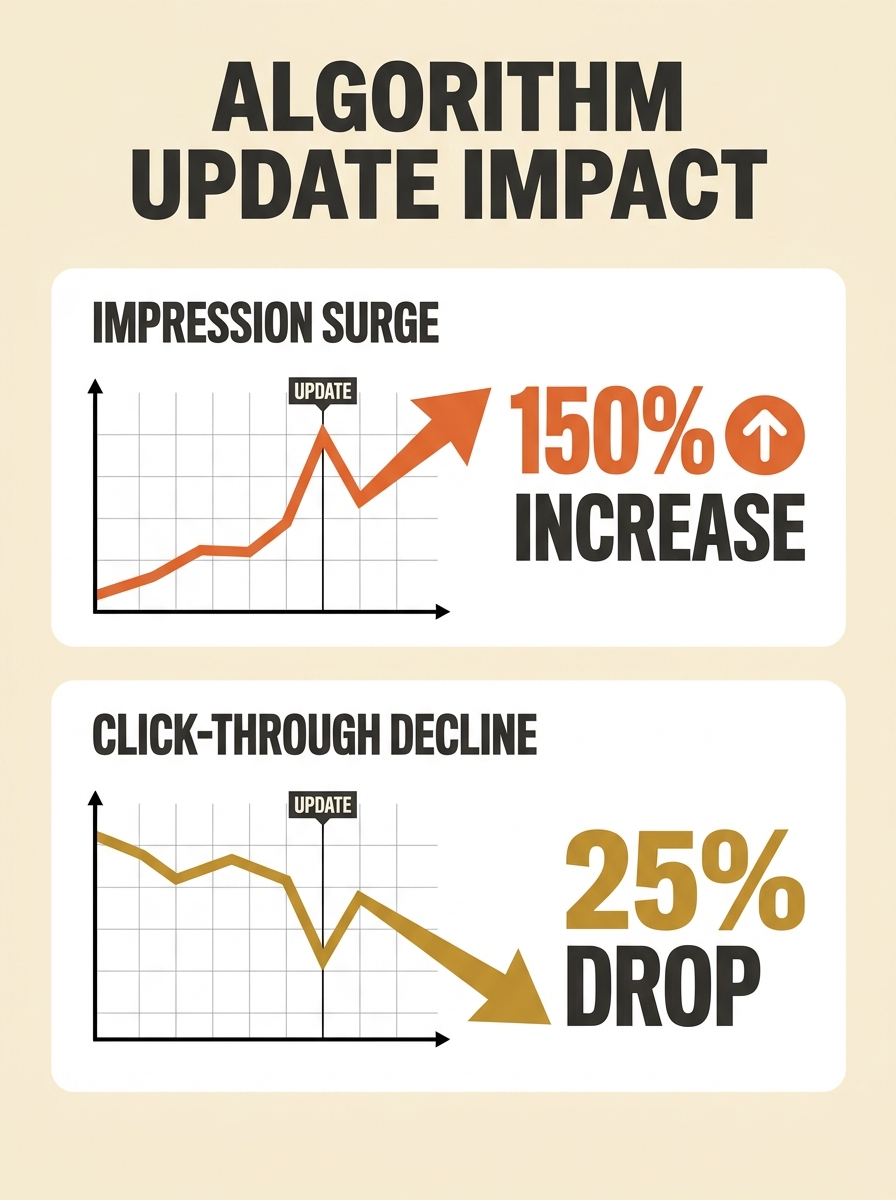
The relationship between impressions, clicks, and average position determines whether a site lost rankings or lost click-through rate. If clicks dropped 20% but impressions remained flat and average position stayed constant, the site maintained its rankings but fewer users clicked—often caused by SERP layout changes or expanded AI Overviews. If impressions and clicks both declined while position held steady, Google may be showing those pages for fewer total queries, indicating relevance reassessment. Position drops followed by impression and click declines represent the classic ranking loss most site owners assume they’re experiencing.
What Not to Change During the Unconfirmed Window
Content deletions and heavy page rewrites eliminate the version Google ranked during the update period. If the update reverses or if Google adjusts the change in subsequent weeks, deleted content cannot recover. Businesses that gut underperforming pages during unconfirmed updates destroy the baseline they need to measure whether later recoveries stem from Google’s adjustments or from their own changes.
Mass title tag edits layer new variables onto unclear situations. Title changes require days to re-index, and testing new titles during an active update makes it impossible to isolate which factor caused subsequent traffic shifts. The guidance applies equally to meta description rewrites, heading tag adjustments, and URL structure changes.
Disavow file submissions during traffic declines assume the drop stems from link-based penalties, but Google’s Manual Actions tool displays confirmed penalties. Disavowing clean backlinks can reduce a site’s authority. Link-based updates are announced and named; unconfirmed September shifts showed no pattern suggesting link reassessment.
Panic publishing thin content to “fill gaps” contradicts quality-focused update responses. Google’s August spam update targeted AI-generated SEO content, and rushing out low-value pages during an unclear algorithmic period increases the risk those pages get swept into quality filters.
When Site Changes Are Appropriate and What Two-Week Waiting Means
Google’s standard guidance after confirmed core updates recommends waiting one full week after the rollout finishes before drawing conclusions. For unconfirmed updates with no announced end date, that waiting period extends to at least two full weeks of stable data—meaning September 16 at the earliest for an update that started September 2.
Segmenting traffic by content type, device, and geography before making strategic decisions prevents over-correction. An Australian retailer that lost rankings in mobile search but held desktop positions shouldn’t rewrite content optimized for desktop users. A service business that dropped for high-volume commercial queries but maintained informational keyword rankings needs different adjustments than one that lost across all query types.
Businesses uncertain whether observed traffic shifts represent algorithmic changes or seasonal patterns can request an SEO audit before making site-wide changes. Independent analysis isolates update-related drops from technical errors, mobile usability issues, and click-through-rate problems that coincidentally emerged during the same week.
Protecting baseline data means leaving high-performing pages unchanged even if they experienced minor declines. A page that dropped from position 1.2 to position 2.8 for its primary keyword lost visibility, but rewriting it before the update stabilizes risks turning a temporary dip into permanent ranking loss if the rewrite reduces relevance for Google’s revised quality assessment.
The Takeaway
Australian businesses that observed ranking declines between September 2 and September 8 should resist immediate site changes until at least two full weeks of post-update data confirms the pattern persists. Glenn Gabe and Marie Haynes both identified what appears to be a significant unannounced algorithm update, but Google’s silence on the change means no confirmed start date, no announced end date, and no official guidance on what the update targeted. Making content deletions, title tag edits, or structural changes before the September data stabilizes eliminates the clean baseline needed to measure whether later traffic recoveries stem from Google reversing the update or from the site’s own modifications. The appropriate first step remains data analysis in Search Console—comparing same-day-of-week periods, filtering by page and query to identify whether declines cluster in specific content types, and checking whether impressions, clicks, and position moved together or independently. Businesses that cannot isolate genuine algorithmic shifts from seasonal traffic variation should prioritize external review over self-diagnosis during unconfirmed update windows.