
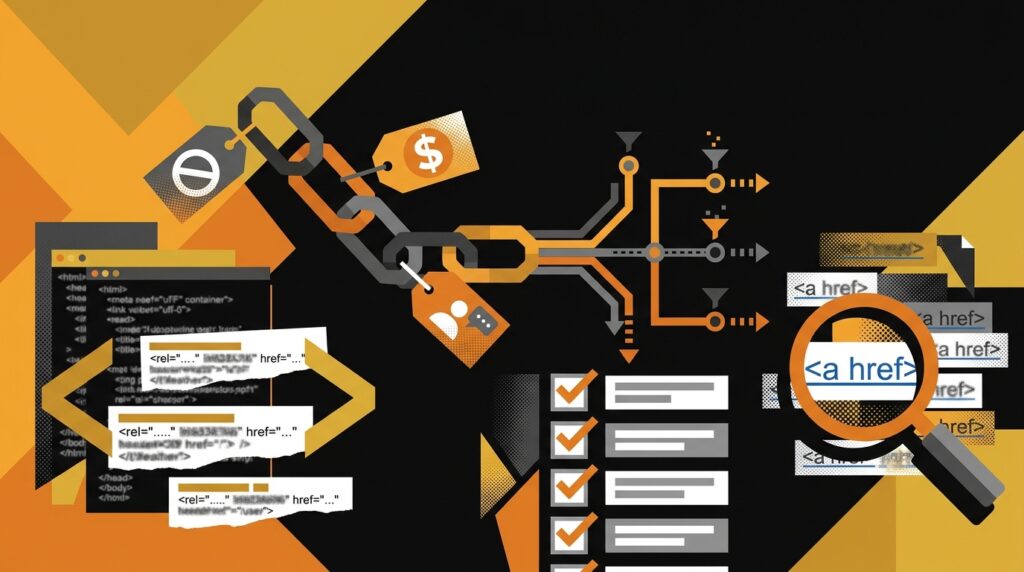
Digital marketing firm Relevant Audience published a compliance-focused link attribute guide September 15, 2026, explaining how Australian businesses must mark sponsored, affiliate and user-generated content links with rel=”sponsored” and rel=”ugc” values to stay within Google’s link spam policies.
TL;DR: Relevant Audience’s September 15 guide maps Google’s three link attributes—nofollow, sponsored and ugc—to specific link types, warning that unmarked paid links trigger manual actions visible in Search Console.
The guide from Relevant Audience documents Google’s September 10, 2019 policy shift that introduced rel=”sponsored” for paid placements and rel=”ugc” for user comments, converting nofollow from a directive to a ranking hint. The publication targets small and medium business owners handling affiliate programmes, sponsored content and customer reviews without dedicated compliance staff.
Google’s spam policies list buying or selling links that pass ranking credit as a link scheme, according to the guide. Businesses that accept payment for editorial placements, run affiliate programmes or publish user-submitted reviews face manual actions if outbound links lack proper qualification. The guide states manual actions for unnatural links appear in Search Console under Security and Manual Actions.
Google Shifted Nofollow to Hint Status in 2019
Google introduced nofollow in 2005 as a directive to fight comment spam, treating tagged links as excluded from ranking calculations. On September 10, 2019, the search engine added sponsored and ugc values and converted all three attributes to hints. From that date Google began using nofollow, sponsored and ugc links selectively within ranking systems. From March 1, 2020, Google extended hint treatment to crawling and indexing, the guide reports.
The hint designation means Google may choose to use a marked link to discover URLs or understand page context rather than ignoring it entirely. Google confirmed at the 2019 announcement that existing nofollow links do not require retroactive updates and that nofollow remains acceptable for sponsored content, though rel=”sponsored” is the preferred value.
Attribute Requirements Map to Link Compensation Type
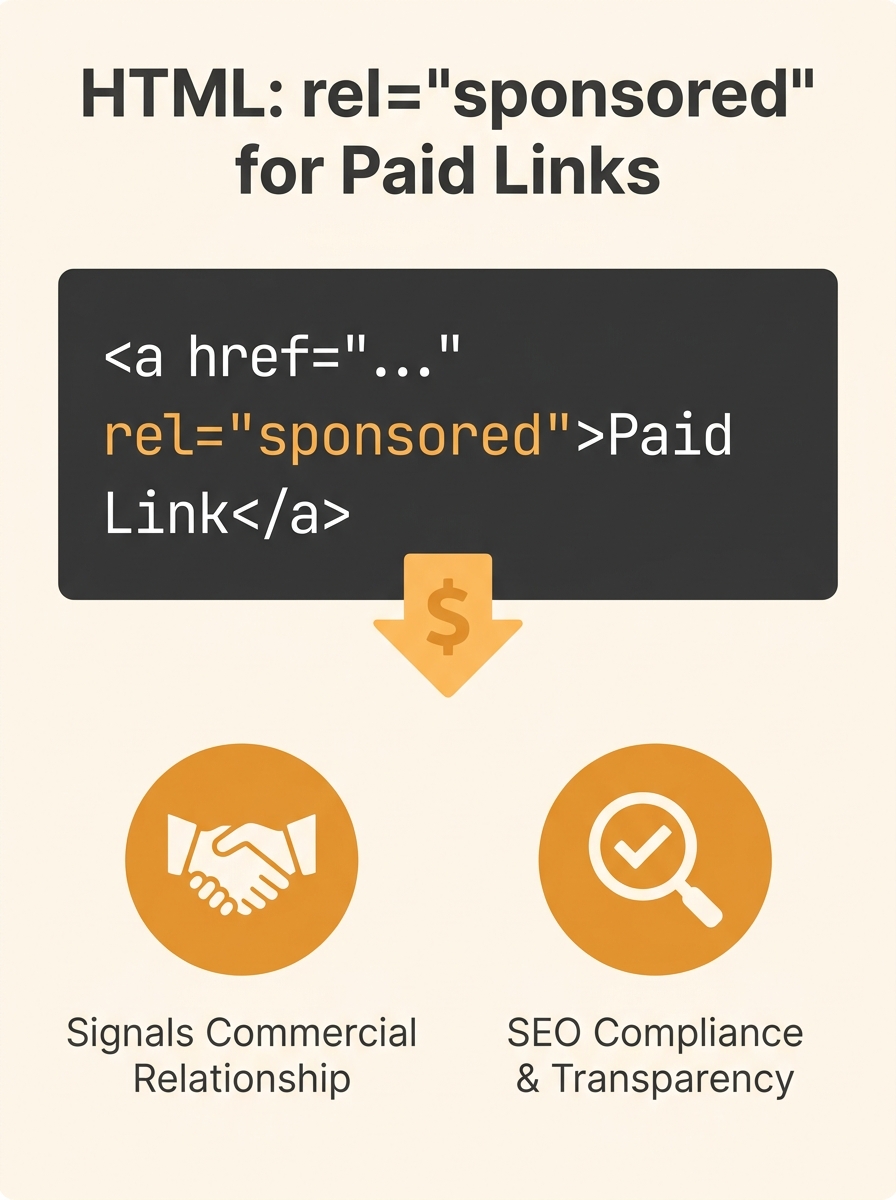
The guide maps three link scenarios to mandatory attributes. Paid advertisements, sponsored articles and advertorial placements require rel=”sponsored” because the publisher received compensation. Affiliate links to marketplaces or merchants where the publisher earns commission also require sponsored. Links in blog comments, forum replies and customer reviews posted by site visitors require rel=”ugc” because the site owner did not write or vet the content.
Businesses can combine attributes with a space separator, the guide notes. rel=”ugc nofollow” and rel=”sponsored nofollow” are both valid markup, which maintains compatibility with older search engines and analytics tools that only recognize nofollow. Editorial links chosen freely without payment or obligation should carry no attribute—a standard HTML anchor is the correct signal for genuine recommendations.
The guide details specific implementation steps for businesses running affiliate programmes. Businesses must add rel=”sponsored” to every link in paid articles, including links in author biographies and image wrappers. Many affiliate programmes generate links through redirect domains, but the link element on the publisher’s page still requires the sponsored attribute. The guide advises businesses buying placements to request rel=”sponsored” in writing from publishers and verify markup on the live page after publication.
Audit Method Requires Desktop or Cloud Crawler
Search Console’s Links report displays which external sites link to a business and which internal pages receive the most links, but does not expose rel attribute data, according to the guide. Auditing outbound link markup requires crawling the site with desktop software such as Screaming Frog SEO Spider or Sitebulb, or a cloud-based crawler, with outbound link data collection enabled.
The crawl export allows businesses to filter links by domain and identify unmarked sponsored placements or affiliate URLs. The guide recommends isolating links to known affiliate networks and sponsored content partners in spreadsheet software, then cross-referencing against live page source to confirm attribute presence. Businesses operating link-building programmes should establish quarterly crawl schedules to catch unmarked paid links before Search Console flags them, the publication states.
Link profiles that mix followed and nofollow links appear more organic to automated systems, the guide notes, because large platforms including Wikipedia, Reddit and major news sites mark most outbound links nofollow by default. Nofollow links still deliver referral traffic and brand awareness even when passing minimal ranking credit, which aligns with quality-over-quantity backlink strategies that prioritize visitor value.
Businesses Implications
Australian small and medium businesses running affiliate programmes, accepting sponsored placements or publishing customer reviews face compliance requirements under Google’s link spam policies that predate the March 2020 crawling update. The September 15 guide provides implementation checklists absent from Google’s official documentation, which describes policy but not audit workflow.
Businesses that hired external agencies for sponsored content placement in 2024 or 2025 should crawl their sites to confirm those agencies applied rel=”sponsored” to delivered links. Manual actions for unnatural outbound links can suppress rankings for months while businesses remove or re-qualify flagged URLs. The guide’s recommendation to request sponsored markup in writing from publishers establishes an audit trail for reconsideration requests.
Marketing managers evaluating link-building programmes should verify that outbound link audits appear in quarterly technical SEO reviews. Backlink quality monitoring traditionally focuses on inbound link profiles, but unmarked outbound sponsored links create penalty risk that inbound analysis misses. Businesses using content management systems should confirm that affiliate link plugins and review platform integrations inject rel=”sponsored” or rel=”ugc” automatically, rather than requiring manual per-link editing.