

Product page copy remains critical for e-commerce conversion despite AI agents’ ability to read structured data feeds and schema markup, according to guidance published September 17, 2026 by Search Engine Journal. The Ask an SEO column addressed whether businesses can rely solely on product feeds and schema to supply information to large language models, concluding that traditional product descriptions still drive traffic and conversions across multiple channels beyond AI recommendations.
TL;DR: E-commerce sites cannot rely on product feeds and schema alone because AI represents only one traffic source, structured data often contains errors or incomplete information, and product pages build brand trust that feeds cannot replicate.
AI Traffic Represents Single Channel Among Multiple Conversion Paths
Large language models including ChatGPT, Claude and Perplexity function as one traffic source rather than the sole path to conversions, the guidance explained. Customers continue using search engines, YouTube reviews, email lists, direct website visits, affiliate links and pay-per-click advertising to research and purchase products. The column positioned AI search as comparable to TikTok’s direct-purchase features or Amazon’s marketplace—supplementary channels that do not eliminate the need for optimized product pages on brand-owned websites.
The guidance cited ChatGPT’s partnership with Shopify as an example of platform-based conversions, noting that such integrations follow the same pattern as social commerce rather than replacing traditional e-commerce infrastructure. Search Engine Journal warned that prioritizing AI optimization over comprehensive website experiences represents a strategic error multiple companies are making, according to the column’s analysis.
Product Feeds and Schema Contain Gaps AI Systems Cannot Fill
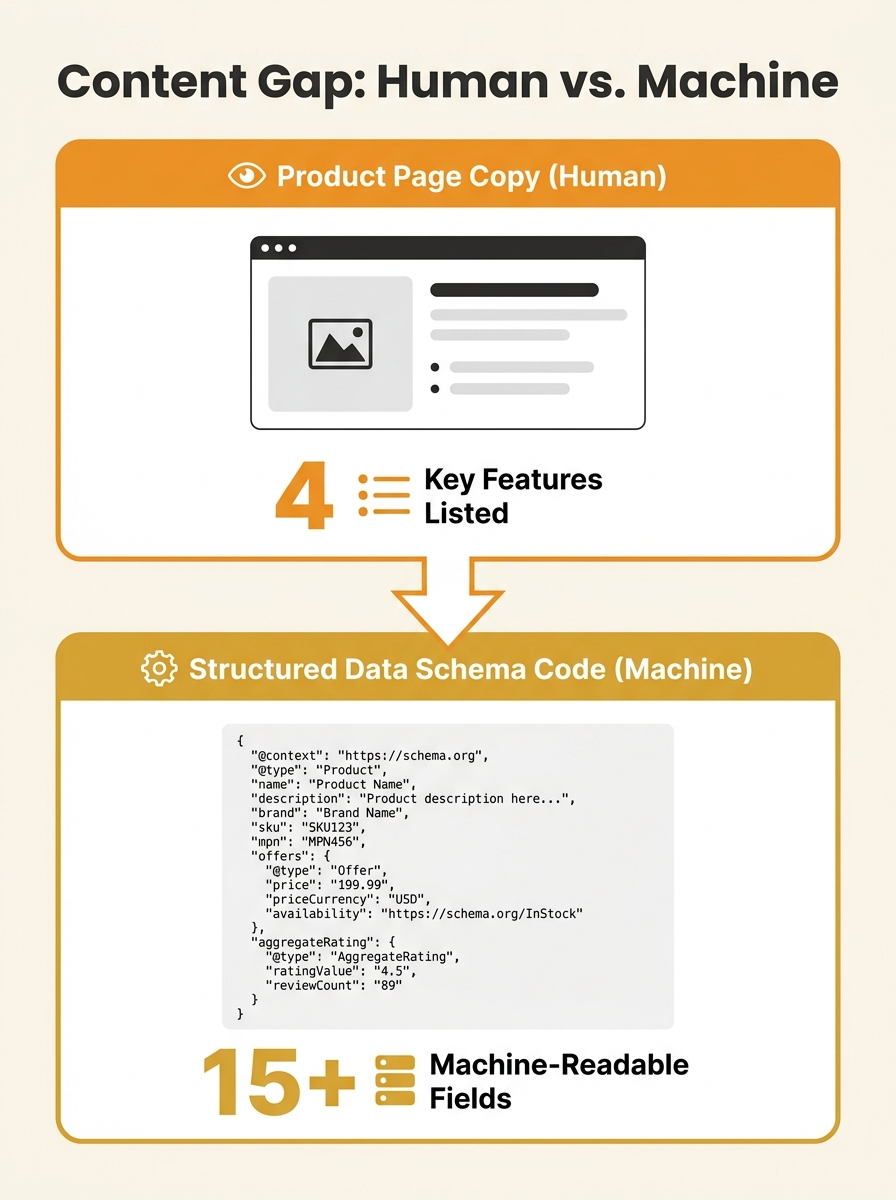
Schema markup frequently contains errors or incomplete data across e-commerce sites, forcing AI systems to seek validation from additional sources beyond structured data alone. The column explained that product feeds may exclude valuable information depending on provider specifications and format requirements, with many platforms imposing character limits or specific image size constraints that strip detail from merchandise descriptions.
Brands commonly maintain separate product description sets for their own websites versus third-party marketplaces and affiliate platforms to avoid content cannibalization, the guidance noted. This practice stems from search engines’ inability to reliably identify original content ownership, leading brands to reserve detailed copy for owned properties while distributing only essential information through external feeds. The column warned that using identical content across owned sites and large marketplaces creates ranking competition that favors established platforms with stronger domain authority.
A case study within the guidance described a travel jacket purchase decision across five brands, where three companies lost consideration due to websites lacking product detail, trust signals and clear return policies. The customer ultimately purchased from Amazon rather than directly from the chosen manufacturer’s website because the brand site failed to display adequate trust-building elements on product and category pages, the column reported.
Product Pages Build Trust and Answer Conversion Questions
Product page content addresses customer questions that structured feeds cannot accommodate, including size guidance for items with non-standard fits, compatibility information for technical products, and specific use cases such as running shoes designed for pronation or costumes sized for particular dog breeds. AI system crawlers access this detailed content during website visits, provided pages render properly and maintain easy-to-read navigation structures, the guidance explained.
Character limits and formatting restrictions in product feeds prevent brands from including the depth of information available on dedicated product pages, according to the column’s technical analysis. Website product descriptions can explain nuanced details that feeds omit, giving AI systems comprehensive information during crawl sessions while simultaneously providing human shoppers with conversion-critical trust signals.
The column positioned product page optimization as a brand-building exercise that protects against paying network, marketplace and advertising fees for branded search terms. Sites with outdated or incomplete product pages risk losing AI recommendation opportunities to competitors with more comprehensive content, the guidance concluded.
Businesses Implications
Australian e-commerce operators face a two-track optimization requirement following this guidance: maintaining structured data feeds for AI systems while preserving detailed product page copy for direct traffic and conversion optimization. The September 17 advice clarifies that schema markup labels existing content rather than replacing it, making comprehensive product descriptions essential even as businesses implement technical AI-readiness measures.
Small and medium e-commerce businesses should audit product pages for trust signals including return policies, size guidance and compatibility information that product feeds cannot transmit, according to the column’s framework. The content cannibalization warning particularly affects Australian brands distributing through Amazon Australia and local affiliate networks, where identical copy can trigger ranking competition that favors larger platforms.
The guidance aligns with September 2026 observations that AI search systems now prioritize organizational expertise over individual pages, suggesting product page investments serve dual purposes: immediate conversion optimization for traditional search traffic and long-term authority building for AI recommendation algorithms that evaluate site-wide content depth.