

An AI implementation consultant with multi-decade SEO experience published guidance September 3, 2026, stating that no universal backlink count guarantees search rankings, and that a Kent accountancy firm outranked a competitor holding 4,000 backlinks using just 38 links from 22 referring domains, according to a report published on lilachbullock.com.
TL;DR: Lilach Bullock, who has run SEO campaigns across UK, US and Israeli markets for over ten years, published realistic backlink ranges by site type alongside a case study showing twelve high-quality domains delivered better rankings than thousands of low-trust links.
The guidance arrives as Australian businesses increasingly question whether link-building volume strategies deliver returns, particularly after Google’s August 2026 spam update targeted low-quality link networks.
Accountancy Firm Case Study Shows Quality Over Volume
Bullock detailed a Kent-based accountancy practice that increased referring domains from 22 to 34 over four months through local business news placements, a Chamber of Commerce feature, and two finance blog guest posts. The firm outranked a larger competitor for three priority keywords despite the competitor holding more than 4,000 backlinks from approximately 180 referring domains.
“The competitor’s 4,000 links included dozens from expired domains, gambling-adjacent sites that had been repurposed, and forum profile spam,” Bullock wrote. “Google’s algorithms are far better at spotting that pattern now than they were five years ago.”
The case study supports earlier research on the backlink trap showing that Australian businesses often focus on link quantity without auditing link source quality.
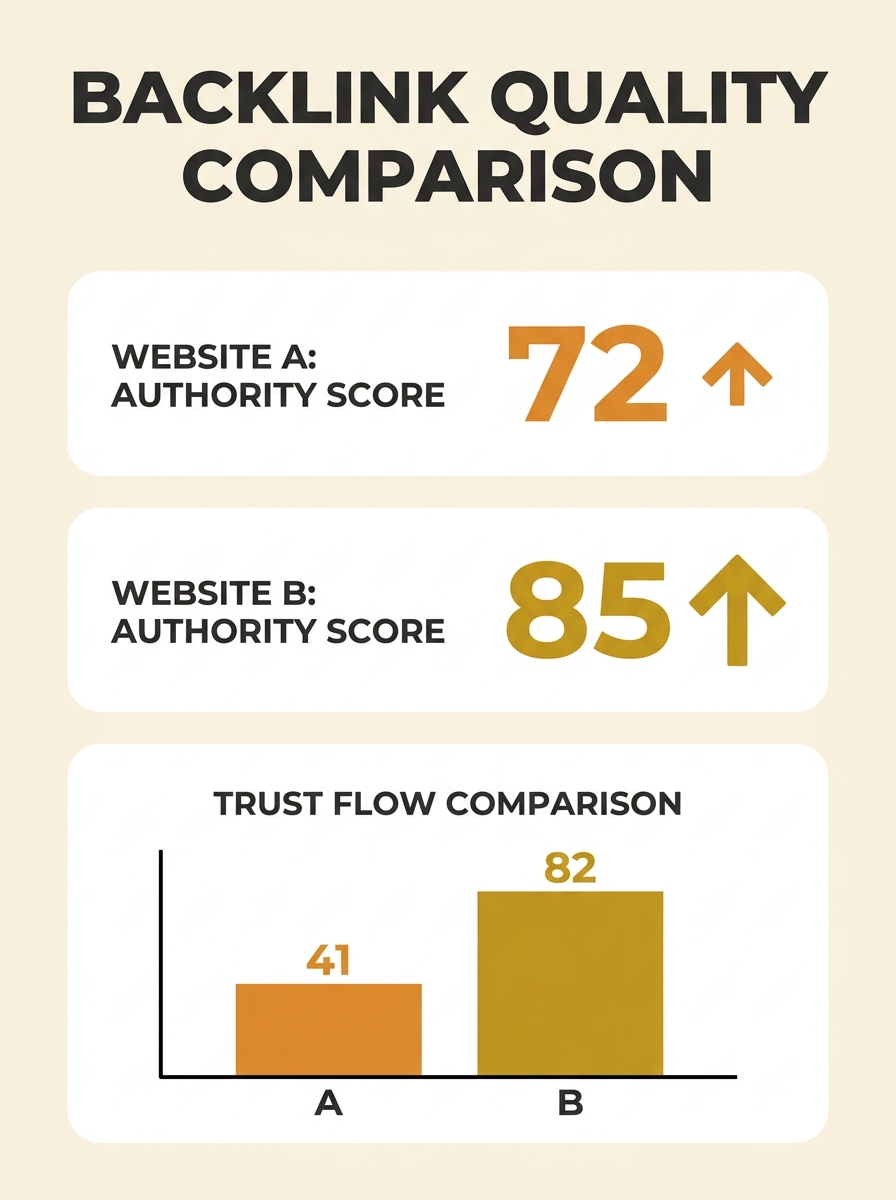
Realistic Benchmarks by Business Type
Bullock provided four ranges based on client work across multiple markets. New websites in their first six months need 5 to 15 backlinks from relevant domains to show movement for low-competition keywords. Local businesses targeting geographic search require 20 to 50 total backlinks from 10 to 20 referring domains, with local press, chamber listings, and partner pages outperforming generic directories.
National businesses facing moderate competition should build 50 to 200 referring domains over 12 to 24 months through guest posts, digital PR, and partnerships. High-competition markets including finance, insurance, and SaaS realistically require 300 to 1,000-plus referring domains built over years, with single links from major news outlets outweighing hundreds from smaller blogs.
“A link from a small, relevant, trusted site in your niche can do more for you than fifty links from directories nobody visits,” Bullock stated. The guidance aligns with Ahrefs research finding most web pages hold zero backlinks and receive no organic traffic.
Link-Building Industry Pricing Model Criticized
Bullock challenged the link-building industry’s volume-based pricing structure, stating packages offering “50 backlinks for £300” or “100 guest posts a month” sell because clients see measurable deliverables rather than because volume drives rankings. She wrote that businesses spend thousands on bulk link packages while rankings flatline or drop due to low-trust network sources that Google’s spam systems now recognize.
“Nobody’s paying £2,000 for one exceptional link from a site with real editorial standards, even though that one link might outperform the whole package,” Bullock wrote. The criticism follows industry reports of AI-generated content farms selling backlink packages at scale.
Australian businesses evaluating local SEO services face similar vendor pricing models, with directory submission packages and automated outreach campaigns marketed on volume metrics rather than domain authority or topical relevance.
What Happens Next
The published benchmarks give Australian small and medium businesses a framework for evaluating link-building proposals against realistic targets rather than inflated volume promises. Businesses can audit existing backlink profiles through tools Bullock referenced including Ahrefs to identify low-trust sources that may be dragging domain authority scores down.
The guidance suggests Australian businesses should prioritize industry publication placements, local news coverage, and partnership pages over bulk directory submissions or purchased link packages. Local businesses in particular can achieve strong regional rankings with fewer than 30 referring domains when those sources carry geographic and topical relevance.
Bullock’s case study showing twelve quality domains outperforming thousands of low-trust links provides a concrete example for Australian marketing managers evaluating organic growth budgets and questioning whether volume-based link-building contracts deliver measurable ranking improvements.