

AI implementation consultant Lilach Bullock published a ten-tool technical SEO checklist on July 30, 2026, positioning ongoing monitoring as the primary differentiator between sites that maintain search visibility and those that lose it, according to the framework published on her site. The framework identifies DNS record validation, robots.txt configuration, and structured data checking as baseline requirements, with weekly DNS monitoring and monthly broken-link audits as minimum frequencies.
TL;DR: Consultant Lilach Bullock released a technical SEO monitoring framework covering ten checker categories on July 30, 2026, arguing that one-time audits leave sites vulnerable to DNS propagation failures, expired SSL certificates, and canonical tag drift.
The guide arrives as Australian businesses face mounting pressure to maintain machine-readable site structures while AI Overviews continue reshaping search result layouts. Traditional technical audits often treat site health as a point-in-time snapshot rather than an ongoing process, the framework notes.
Framework Positions DNS and Security Checks as Weekly Requirements
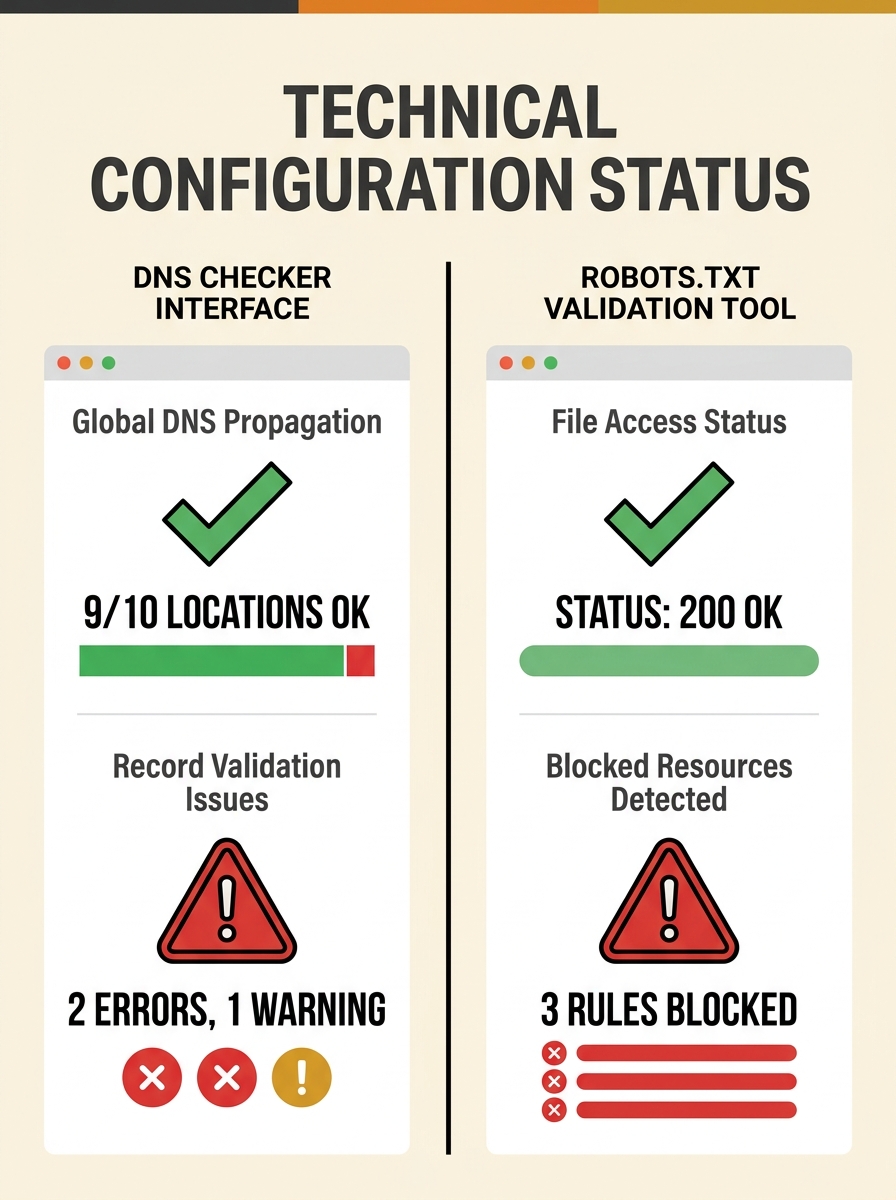
The checklist opens with DNS infrastructure, recommending weekly DNS record checks to catch misconfigurations before they affect crawlability. “Search engines rely on stable DNS records to crawl websites,” Bullock wrote in the framework. “If for any reason records are published incorrectly, it can affect the accessibility and indexing of the website.”
DNS propagation monitoring follows immediately in the framework’s sequence, positioned as particularly critical after migrations or hosting changes. The guide warns that old DNS records can cause two versions of a site to appear simultaneously during propagation windows.
IP blacklist checking appears third in the framework, tied to email deliverability and domain reputation. Bullock notes that blacklisted IP addresses automatically trigger email drops, which affect website trust signals that search engines factor into rankings.
Crawl Configuration and Structured Data Checks Anchor Middle Sections
The framework’s fourth through seventh positions cover robots.txt validation, XML sitemap structure, canonical tag accuracy, and structured data markup. Robots.txt misconfiguration ranks among the most common technical errors blocking valuable content from indexing, according to the guide.
Structured data validation receives particular emphasis as a prerequisite for AI Overview eligibility. “Structured data is very important because it helps search engines better understand your web page’s content,” Bullock wrote. “It is also a prerequisite for your website to appear in AI overviews.”
The guidance aligns with broader industry shifts documented in earlier research showing AI Overviews now appear for 68 percent of local searches, creating new visibility requirements beyond traditional local pack optimization.
Performance and Linking Checks Close the Framework
Core Web Vitals monitoring, HTTPS certificate validation, and broken link detection round out the ten-tool checklist. The framework positions Core Web Vitals as dual-purpose metrics affecting both user experience and search rankings.
Broken link checking appears last but carries disproportionate weight in the guide’s crawl efficiency argument. “Broken links create poor user experiences and make it harder for search engines to crawl your website efficiently,” the framework states, recommending regular scans of both internal and external links.
The guide stops short of prescribing specific tools for each category, instead defining the monitoring function each checker type must fulfil. Australian e-commerce SEO practitioners would find the XML sitemap and canonical tag sections particularly relevant given the duplicate product page challenges common in online retail.
Reading Between the Lines
The framework’s emphasis on monitoring frequency over tool selection reflects a maturation in how practitioners approach technical health. Weekly DNS checks and monthly broken-link audits represent minimum cadences most auditing platforms already support, yet adoption remains inconsistent across Australian SMEs.
The structured data positioning as an AI Overview prerequisite deserves scrutiny. While valid schema markup increases eligibility, research tracking AI search citation patterns shows schema alone doesn’t guarantee AI visibility—topical authority and content depth remain dominant factors.
Bullock’s framing of technical SEO as continuous rather than episodic work creates an implicit operational challenge for businesses without dedicated technical resources. The ten-checker framework assumes weekly monitoring capacity most Australian small businesses lack, suggesting the guidance targets marketing managers with existing audit workflows rather than site owners conducting annual reviews.