
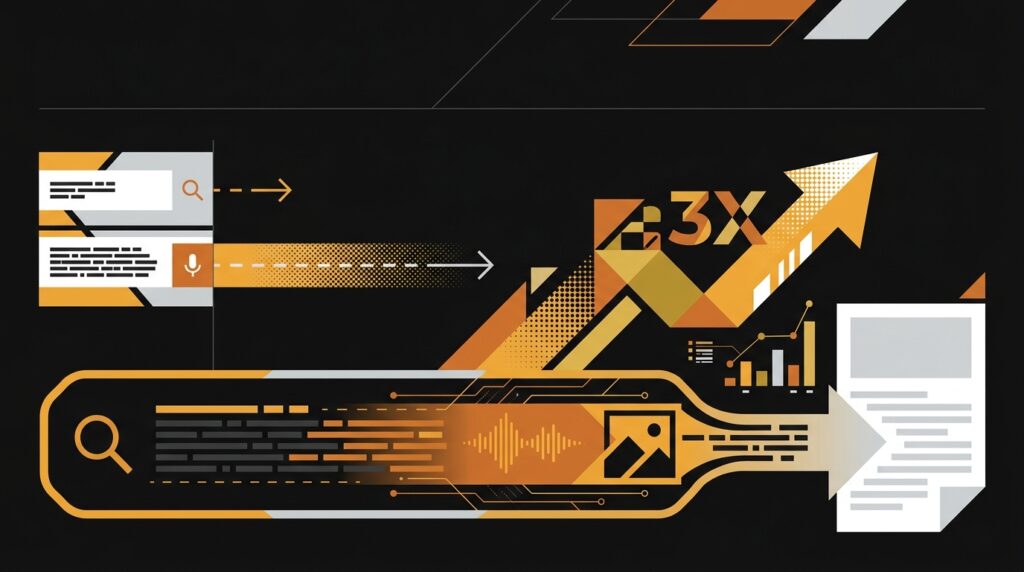
Google AI Mode users submit queries three times longer than traditional search terms and include images or voice in one of every six searches, according to research published May 19, 2026, by Shivani Mohan, vice president of Data Science and UXR at Google, in a company blog post.
TL;DR: AI Mode has passed 1 billion monthly active users globally, with queries more than doubling each quarter since launch, forcing businesses to restructure content around immediate answers rather than narrative arcs.
Five Query Types Replace Keyword-Based Search
Mohan’s report groups AI Mode behavior into five task-based categories: Explore, Decide, Learn, Create, and Do. Each mode grows at a different rate, with “Do” queries tied to planning tasks growing 80 percent faster than AI Mode queries overall over the past six months, according to the Google data.
“Explore” queries—open-ended brainstorming searches—are growing 30 percent faster than AI Mode traffic overall. “Decide” queries built around comparison words like “which of” and “which one” are growing 40 percent faster. Image creation queries in AI Mode have more than tripled since the start of the year, the report shows.
The most common first words in AI Mode queries are “what,” “how,” “I,” “is,” and “can,” not the short-head nouns that dominated traditional search. People ask questions the way they would ask another person, not typing fragments the way they would type into a search box, the Google analysis found.
Image-based queries are growing more than 40 percent month over month. Follow-up questions are climbing at the same rate, with users starting a search and then refining and narrowing in a conversational pattern that does not resemble the one-shot keyword query SEO strategy has been built around for two decades.
Telegraph Economics Parallel Modern AI Synthesis
Generative search engines operate under computational constraints similar to those that forced Associated Press journalists to abandon chronological storytelling between 1880 and 1890, according to historical analysis cited in the Google blog post. The AP paid telegraph operators by the word, making poetic preambles an unnecessary expense. Newspaper editors assembling heavy metal type needed a reliable way to cut stories from the bottom up to fit physical page constraints without removing critical facts.
AI search systems now demand the same immediate-value structure. Pages that bury primary answers inside narrative arcs make it harder for automated synthesis engines to pull a usable passage, the analysis shows. Content marketing built around head terms and related keywords is “aging out in real time, not in some hypothetical AI-search future,” according to the blog post.
Entity-Dense Opening Sentences Required
Content architects must place the primary definition, key metric, or main conclusion directly in the first sentence of every core section, the Google research suggests. Sentences anchored with specific brand names, clear geographic markers, exact dates, and verified numerical values are “mathematically readable for search engines and reduce the risk of AI hallucination,” according to the post.
Scannable hybrid layouts that organize body copy into short paragraphs averaging two or three sentences allow search crawlers to extract structured data more efficiently. Major section headers should be followed by concise summaries, ordered lists, or structured tables, the guidance shows.
This shift aligns with recent analysis showing AI search engines cite competitors 43 percent of the time when brands publish self-promotional lists, and with research showing AI search systems now synthesize recommendations instead of listing options. Businesses relying on traditional SEO consultation models that prioritize keyword density over task-based structure face declining visibility in AI Mode results.
What This Means for Australian Small
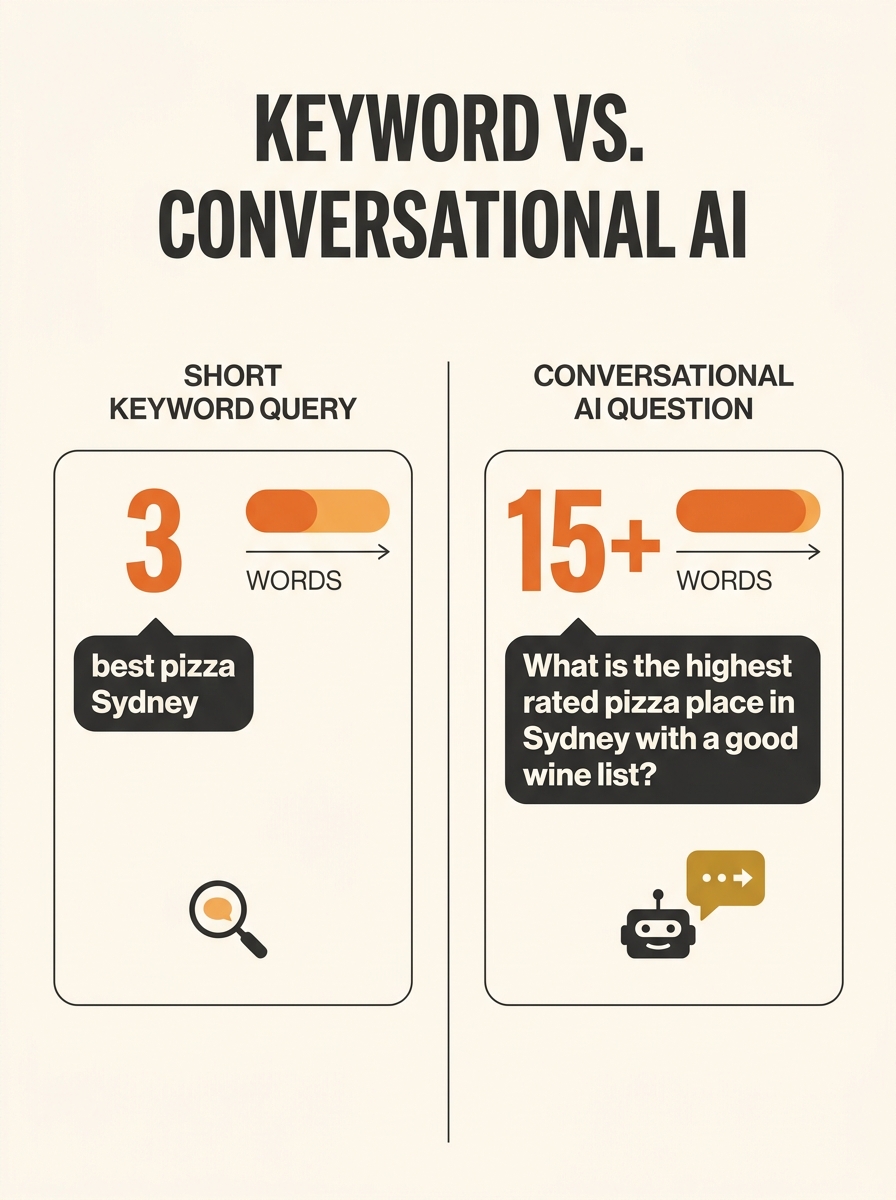
Australian small and medium businesses building content briefs around a head term and related keywords are working from an outdated model, the Google data suggests. The query itself has changed shape—users submit three-times-longer, task-based questions rather than keyword fragments—and content architecture must follow.
The practical shift is immediate: lead each page section with the direct answer, not with brand narrative. Use entity-dense first sentences that name the product, state the metric, and cite the date. Break body copy into scannable paragraphs with ordered lists and tables. This structure allows AI synthesis engines to extract usable passages without guessing what the page actually says.
Businesses that protect vague brand voice by hiding core facts inside fluffy introductions will see declining AI Mode citation rates. The measurement challenge Google’s Mohan data presents is the same one traditional media faced when telegraph costs made every word accountable: prove the value immediately, or get skipped.