

HTML is the backbone of your page’s design; the same way that keywords are the most basic component of your search engine optimisation efforts. Without these elements, it is hard to create a website that attracts attention and shows up in Google’s search results.
As a small business owner, one of your goals is to drive relevant traffic to your website. To achieve this, you need to find the right keywords that will bring in customers.
How do you find keywords for your business? And how do you make sure you are targeting the right SEO keywords?
Broad Search
First, you must belong to a niche. This is the category you want to penetrate. Belonging to a niche goes hand in hand with identifying your target demographics. You can’t just choose any niche, though. You want a profitable niche. Are you aiming to get the attention of young adults who might be looking to invest in real estate? Or first-time parents looking for a pediatrician? Without having a clear idea of your target niche, you may encounter difficulty in finding the right keywords.
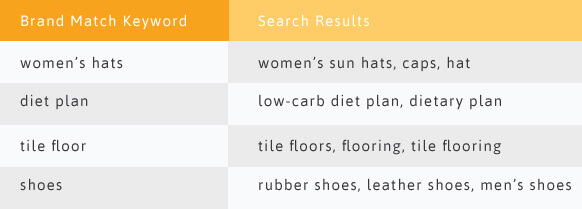
Belonging to a niche does not mean your site will automatically appear right in front of your customers when they search for it online. There is the matter of search engine ranking. This brings us to broad match terms. Broad match keywords are general category search terms that users type in their queries. Those looking for a “cosmetic dentist” will potentially see your site if you’re targeting this term instead of just focusing on specific services.
When you use broad match keywords, search engines will provide results that include variations of your keywords — even if these are not in your keyword list.
Here are some examples:
Branded Keywords
Your small business may have generated some buzz after a viral social media post or a mention in a local publication, which means more people will be searching for you online. It would be a waste if you’re not ranking for your own brand terms, though. Before you focus on competitor keywords, make sure you are targeting your own brand terms. Not doing so wastes the traffic that gets redirected to other websites ranking for your brand name.
Use your brand terms in your website content, in your social media profiles, and YouTube channel. Having your brand keywords interspersed among your online profiles boosts your authority for the particular niche you’re targeting. You should also include keywords with a high conversion rate, such as “review,” “rating,” “customer reviews,” and “benefits.”
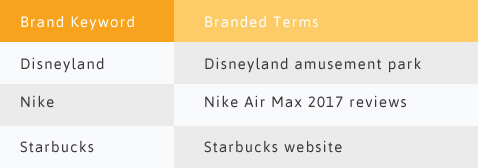
Branded keywords are important because they show user interest. Loyal customers practice brand affinity — one of the things that you can use as leverage for your strategy.
Competitor Keywords
There are differences in opinion on whether a small business should try to rank for competitor keywords organically, or bid on them through PPC. On the other hand, some would rather focus their efforts and resources on ranking for their own brand terms and profitable keywords.
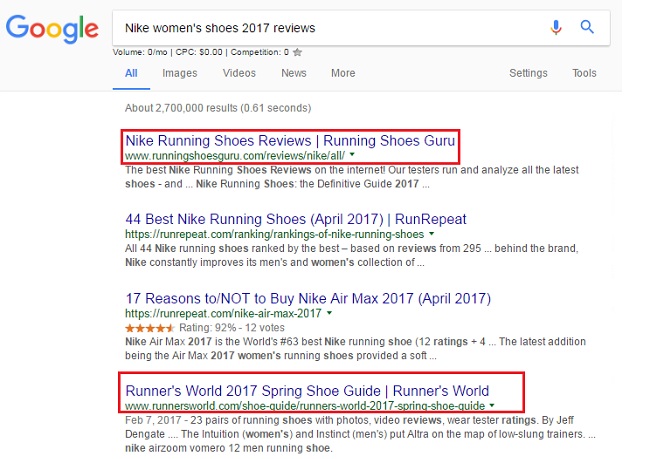
But, here’s one thing that might change your keyword-ranking approach: Neil Patel’s study shows that you can rank for your competition’s brand name and steal traffic from them. The key is not to target direct competitors. For example, if you’re selling Nike shoes, you don’t target other ecommerce sites or Nike’s actual online store; go after sites that publish product information or aggregate reviews.
Relevant Keywords
Let’s say you have a site offering wedding rental services. You noticed a low-competition for the keyword “birthday supply rental”. Unless you’re an all-around event rental service offering birthday supply rentals, you don’t need to include that keyword. Otherwise, you’re only going to confuse users.
Before you even think about targeting a keyword, determine if it’s relevant to your business. Relevancy is a big factor. This is one of the reasons you have a niche and are trying to outrank your competition. You may initially get more traffic if you are ranking for those irrelevant terms, but will that bring you conversions? If you’re not offering what they need, it’s a definite no.
Apart from being relevant, you also want to be unique. You want something that sets your business apart from the competition. Here’s an example: a couple of years ago, web hosting sites only offered the same thing, until green web hosting became a thing. The company that started to offer that service appealed to their audience by giving them something new, and this helped them rank for the term “green web hosting”.
Selecting the right keywords is a matter of focusing on what sets your brand apart. Think about how you do your business, what you aim to achieve, and how you aim to achieve it. Come up with unique keywords that have a good search volume. Provide informative and compelling content. Combine all these elements, and you’ll hit your marketing goals and improve your bottom line in no time.