

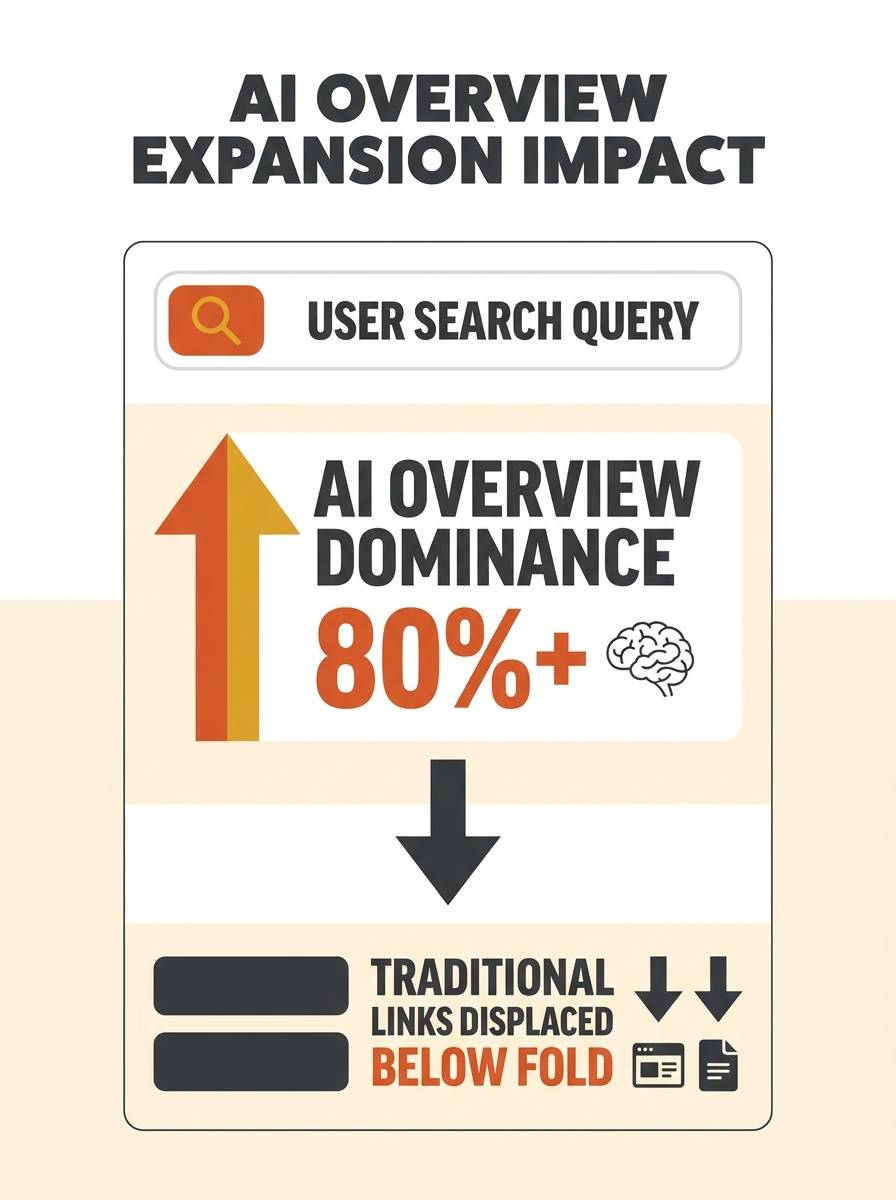
Google now automatically expands AI Overviews to full length for certain search queries, pushing traditional organic results substantially further down the page, according to a report published August 28, 2026, by The Verge. The change removes the “Show more” button users previously clicked to expand summaries, instead displaying the complete AI-generated answer immediately at the top of search results.
TL;DR: Google automatically expands AI search summaries for some queries, pushing traditional link results much lower on the page and eliminating the user-controlled expansion option.
The expanded format displays a full AI Overview, followed by an “Ask anything” search box, before showing the standard list of website links. Search Engine Roundtable first documented the change, which Google confirmed through spokesperson Jennifer Kutz. “For some queries, AI Overviews may dynamically expand for topics where our systems determine it’s most useful for people,” Kutz said in a statement to The Verge.
Auto-Expansion Criteria Remains Unclear
Google has not disclosed the specific criteria its systems use to determine when AI Overviews should automatically expand. Testing by The Verge reporter Jay Peters showed inconsistent behavior, with most queries initially triggering auto-expansion but later reverting to the collapsed format with a “Show more” button. The query “what is the best game on switch 2” produced auto-expansion most consistently during testing, though results varied across searches and browsers.
The expanded AI Overviews can require significant scrolling before users reach traditional organic search results. When the AI Overview expands automatically, users see the complete AI-generated summary text and the follow-up query box before encountering any third-party website links. Google’s Kutz told The Verge the company cancels the expansion “if users have already begun scrolling to view content below the AI Overview” to avoid disrupting reading position.
Google Cites User Research Supporting Auto-Expansion
Google justified the change by citing internal research showing user preference for the expanded format. “Our research has shown that with this dynamic experience, users find Search more helpful and engage deeper in follow-up exploration,” Kutz said in the statement. The company did not release specific metrics or data supporting this claim.
The auto-expansion represents the latest in a series of moves by Google to prioritize AI-generated content at the top of search results. AI Overviews now appear for 68% of local searches, according to previous industry analysis, while Google’s own domains capture 8.4 times more AI mode citations than other publishers in three-month traffic data.
The change arrives as Australian businesses increasingly adapt content strategies for AI-driven search formats. Earlier analysis found AI search systems shifted cognitive load from query formulation to verification tasks, requiring different content approaches than traditional SEO optimization.
Why This Matters Now
The automatic expansion of AI Overviews directly affects organic visibility for Australian businesses relying on search traffic. When Google expands AI summaries automatically, traditional website links drop below the fold on most screen sizes, reducing click-through rates for organic results. Businesses optimizing for SEO consultation or investing in content marketing now face a search landscape where Google answers queries directly without sending users to external websites.
The inconsistent rollout creates measurement challenges for marketing teams tracking organic performance. Without clear criteria for when auto-expansion occurs, businesses cannot predict which queries will display their content prominently versus burying it beneath AI-generated summaries. Australian SMBs should monitor click-through rates from search by query type and adjust content strategies toward formats that AI systems cite within overviews rather than competing with them for visibility below the answer box.