
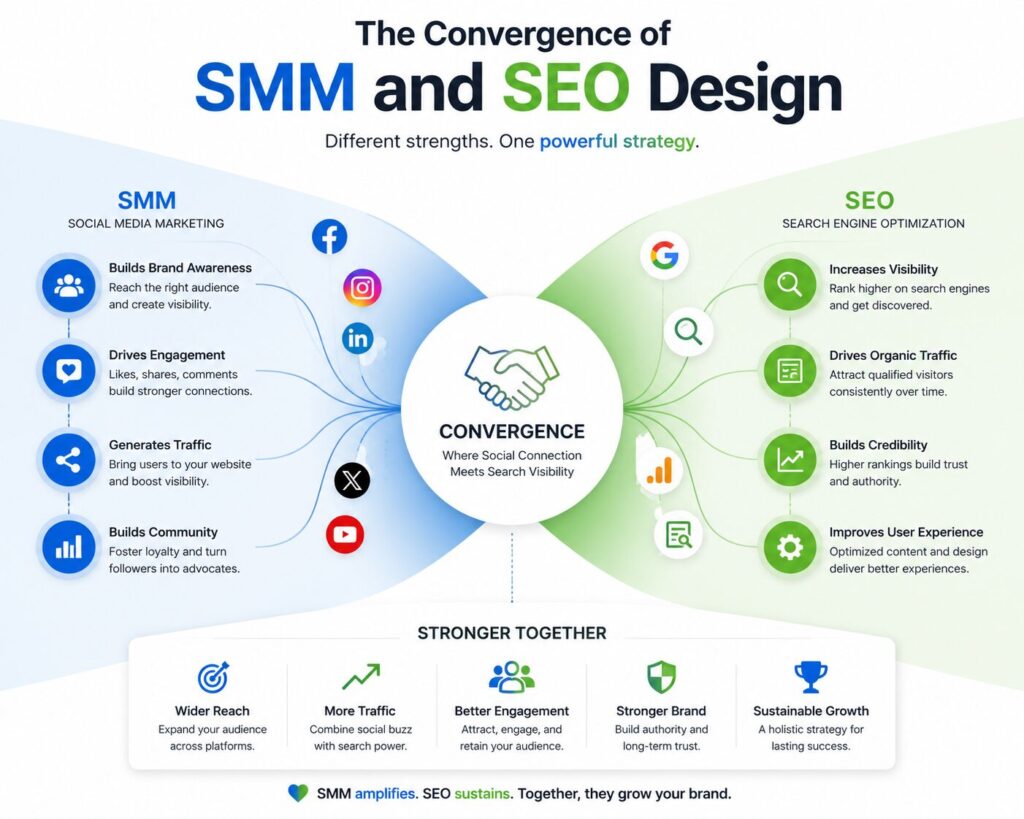
We’ve all heard the old digital marketing debate: Where should we focus our budget this quarter? SEO or Social Media? For years, agencies and in-house teams treated search engine optimization and social media marketing (SMM) like rival siblings. SEO was the analytical, patient introvert focused on metadata, keywords, and technical site architecture. Social media was the flashy, fast-paced extrovert trying to stop the scroll with eye-catching graphics and immediate engagement.
But times have changed. Today, search engines are increasingly visual and social, while social platforms are behaving more like search engines. TikTok has become a primary search engine for Gen Z, and Google’s search results pages (SERPs) are more visual than ever, pulling in images, videos, and social posts.
If you’re still designing your website assets and your social graphics in isolated silos, you are leaving massive traffic and brand equity on the table.
Let’s dive into how SMM and SEO Design intersect, and how you can build a unified visual strategy that satisfies both algorithms and human eyes.
What is “SEO Design” and Why Does Social Media Care?
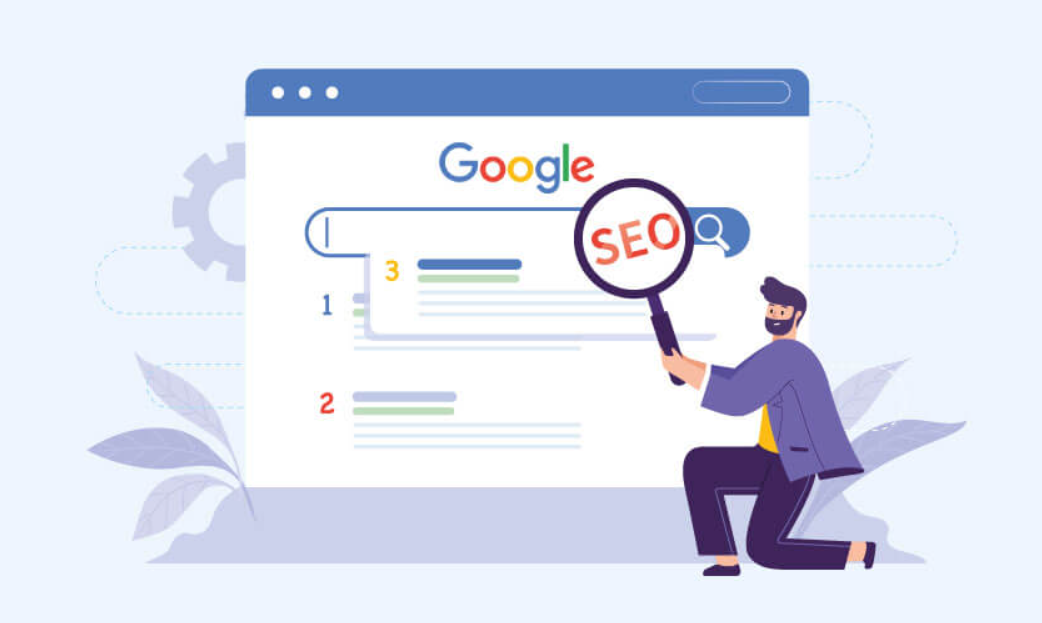
When we talk about “SEO Design,” we aren’t just talking about a clean layout. We’re talking about User Experience (UX) designed to signal search engines that your site is authoritative, helpful, and technically sound. It includes:
- Visual hierarchy that guides users to take action (reducing bounce rates).
- Fast-loading, optimized visual assets (improving Core Web Vitals).
- Accessible design choices (alt text, readable contrast, and responsive scaling).
- Structured data markup that helps search engines understand what your images and videos actually represent.
When your website design is optimized for search, it naturally creates a better destination for your social media traffic. Think about it: if you run a brilliant Instagram ad campaign, but the landing page takes six seconds to load on mobile and has confusing navigation, your SMM budget is going straight down the drain.
Designing for the Double Impact: The Search-to-Social Visual Bridge
To win at both SEO and social, you need to create visual assets designed for double impact. Let’s look at a few practical ways to do this.
1. The Scroll-Stopping Infographic
Infographics are gold mines for both SEO and social media.
- For SEO: High-quality, data-rich infographics are backlink magnets. When other blogs reference your data, they link back to your original page, boosting your domain authority.
- For Social: Platforms like Pinterest, LinkedIn, and Twitter thrive on bite-sized, visual data.
The SEO Design Trick: Never upload a giant, heavy infographic file to your blog. Slice the infographic into individual, high-resolution but compressed sub-images (using WebP format). This keeps your page load speeds lightning-fast while allowing social media managers to share individual sections of the graphic as standalone social posts.
2. Social-Share Metadata (Open Graph Tags)
You can design the most gorgeous blog header image on the planet, but if your Open Graph (OG) tags aren’t properly configured, it won’t matter. OG tags are snippets of code that control how your website’s URLs are displayed when shared on social media.
Make sure your site’s SEO design template automatically formats featured images to a pixel ratio. This is the golden standard for Facebook, LinkedIn, and Twitter shares, ensuring your images look crisp, professional, and uncropped when your readers share your content on their feeds.
Repurposing Content: The Secret Weapon of Multi-Channel Marketers
Creating high-quality visual content from scratch for every single platform is exhausting. The secret to scaling your marketing without burning out is strategic repurposing.
When you publish a deeply researched, SEO-optimized blog post, that single asset should serve as the foundation for your social media strategy.
[Deep SEO Blog Post]
│
├─► Individual Social Graphics (Instagram/Twitter)
├─► 60-Second Video Script (TikTok/YouTube Shorts)
└─► Educational Slide Deck (LinkedIn Documents/Webinars)
For instance, you can easily pull the key takeaways of a 1,500-word SEO article and transform them into an educational slide deck or a PDF carousel for LinkedIn (which currently enjoys incredibly high organic reach).
If designing these slide decks from scratch feels like a bottleneck, modern tools can do the heavy lifting for you. Utilizing an intuitive AI presentation generator allows digital marketers to quickly input their SEO-optimized text and automatically generate beautifully designed, brand-aligned slides.
This not only saves hours of manual formatting but ensures that your brand’s visual identity remains cohesive across both your website and your social channels. You can then export these slides as a PDF to share on LinkedIn, embed them directly back into your blog post to improve on-page dwell time, or use them to pitch your next big digital strategy to internal stakeholders.
Key Technical Design Tactics for SEO & Social Harmony
To make sure your social media traffic and search crawlers both love your site, keep these technical design guidelines in mind:
| Design Element | SMM Priority | SEO Priority | Unified Best Practice |
| Image Formatting | Highly aesthetic, vibrant, clear branding. | Lightweight, highly compressed, next-gen formats (WebP/AVIF). | Use tools like TinyPNG or squoosh.app to compress high-res social graphics before uploading them to your CMS. |
| Interactive Layouts | Engaging interactive widgets, dynamic pop-ups. | Stable layouts, no shifting elements (CLS), fast LCP. | Ensure all dynamic widgets have reserved pixel heights in the CSS so they don’t cause layout shifts when users land from social media. |
| Fonts & Readability | Trendy, stylized typography that matches brand aesthetic. | System-friendly, fast-loading, legible on small mobile viewports. | Limit custom web fonts to 2-3 weights max. Use system fonts for body copy to keep load times under 2 seconds on mobile. |
User Experience (UX) Signals: Where Google and Social Align

Google’s Search Partner updates over the last few years have placed immense focus on page experience. Google wants to reward sites that satisfy search intent quickly and pleasantly.
When a user clicks a link from your social profile (SMM) and lands on your website, their behavior sends direct and indirect signals to search engines.
If they click “back” immediately because your site is hard to navigate, that high bounce rate and low dwell time can signal to Google that your page isn’t matching user expectations. On the flip side, if your SEO design is beautiful, fast, and easy to read, they will stay longer, explore other pages, and maybe even share your content with their followers.
Quick Tips to Optimize Mobile-First UX:
- Enlarge Touch Targets: Ensure your social share buttons, menus, and call-to-actions (CTAs) are easy to tap on a smartphone screen (at least
pixels).
- Ditch Aggressive Pop-ups: There is nothing worse than clicking a link from Twitter on your phone only to be blinded by three different pop-up banners. Google actively penalizes intrusive interstitials. Use elegant slide-ins or inline CTAs instead.
- Utilize Visual Cues: Use directional elements (like arrows or strategic contrast) to guide users from your introductory text down to the core value of your page.
Conclusion: Stop Siloing Your Strategy
Search Engine Optimization and Social Media Marketing are not competing strategies—they are two sides of the same coin.
By integrating SEO Design principles with your SMM efforts, you build a cohesive, resilient brand presence. Your website loads faster, your social media channels are fed with high-quality, repurposed visual assets, and your visitors enjoy a seamless journey from search result or social feed to checkout.
The next time you design a blog header, write a script, or use an AI tool to generate a presentation deck, ask yourself: How can I make this asset work double-duty for both search engines and social feeds?
Your traffic analytics, your social engagement metrics, and your bottom line will thank you.