

Businesses pour resources into analytics dashboards, rank trackers, and campaign performance reports, yet often operate with a fractured view of reality.
The data teams rely on to guide budgets, optimise campaigns, and benchmark competitors frequently contains invisible gaps shaped by location, device, and network. What looks like position three on a desktop in Sydney may not even rank on page one when viewed from a mobile device in regional Queensland.
These distortions aren’t errors in collection, they’re artifacts of how search engines personalise results and how advertising platforms deliver content differently depending on the request’s origin.
Understanding how search engines personalise results based on location is critical for modern strategy, and research confirms that the same keyword produces completely different SERPs based solely on how specific the location signal becomes.
As of 2016, 73 percent of organic searches showed different results based on the device used to perform the search, and that divergence has only accelerated as mobile traffic has grown. When SEO agencies or internal marketing teams track rankings from a single fixed environment, they capture only one slice of what users actually encounter.
How Location and Device Signals Reshape What We See
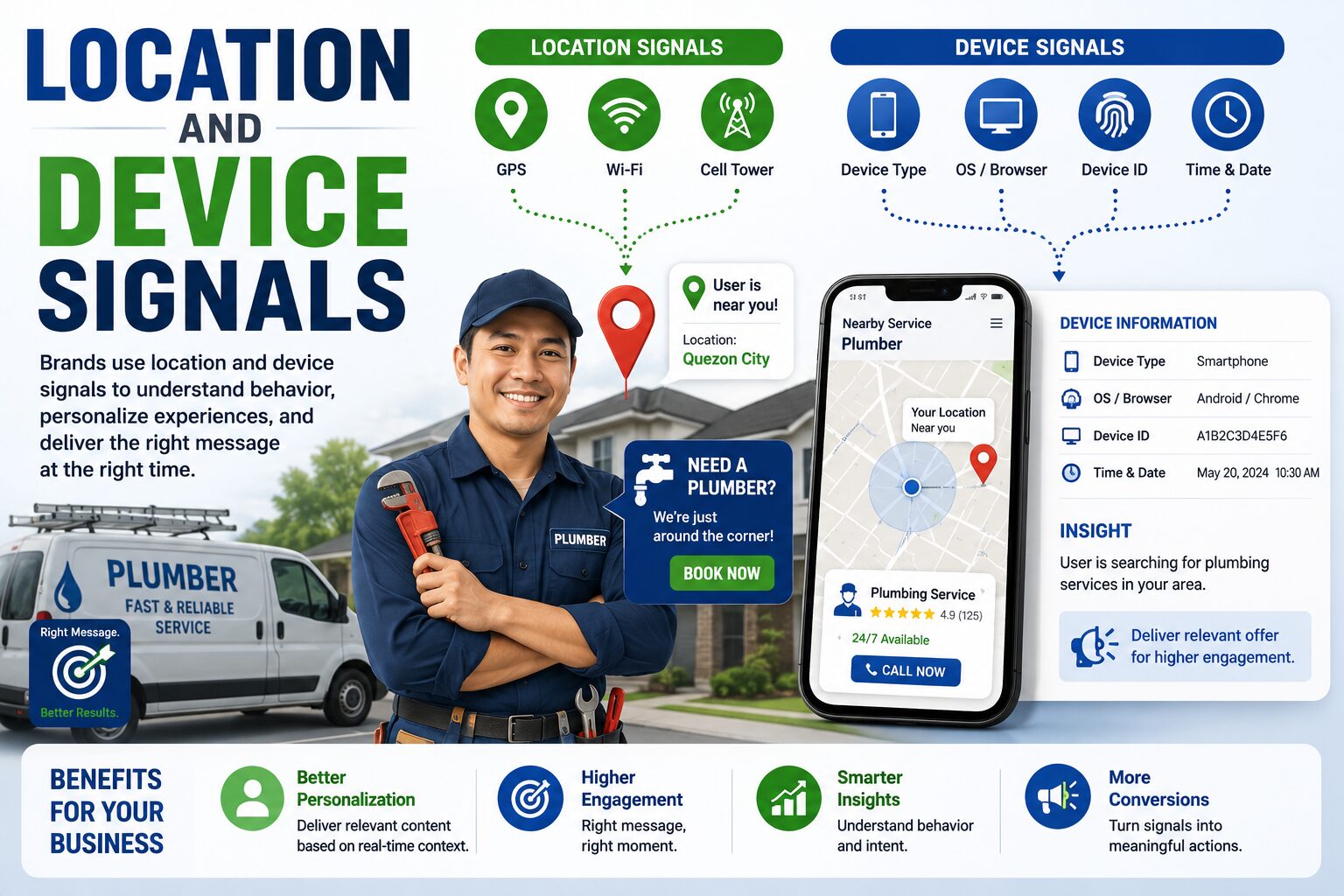
Google’s local intent is tied to geography through IP addresses, even if the searcher isn’t explicit about location. A query for “plumber” triggers entirely different results in Melbourne versus Perth, and those variations extend to the suburb level. The same logic applies to competitive intelligence. Businesses monitoring ad placements or product listings from their office network see the version Google or Facebook believes is relevant to that specific IP and device profile, not the broader market picture.
Google aligns mobile content to deliver experiences matched to mobile searcher intent by showing mobile searchers different results from what a desktop search would yield. The divergence isn’t limited to rankings.
The Vehicles and Parts category had 32.8% of queries geo-modified on mobile compared to 25.3% on desktop, demonstrating that user behaviour itself shifts by device. This means desktop-only tracking fails to capture how the majority of users now interact with search and advertising.
Testing from real mobile network perspectives matters for accurate verification.
Data-centre proxies and standard residential connections may bypass geo-blocks or deliver a page, but a mobile proxy is different because it routes requests through actual carrier infrastructure, replicating the trust signals and device fingerprints that platforms use to segment audiences.
Mobile proxies are invaluable for simulating authentic user behaviours because they use IP addresses from real mobile devices, and since the IPs are associated with actual devices, they can mimic geographic location, device type, and user behaviour, providing more accurate and reliable verification results.
For local SEO strategies, this technical distinction translates directly into whether campaign audits reflect reality.
An ad system may branch based on mobile carrier or ASN, and a residential IP might be trusted, but it still isn’t a mobile carrier IP, so if campaign logic reacts differently to cellular traffic, results are incomplete. When agencies validate ad delivery or test SERP features without matching the network profile of the target audience, they measure an approximation, not the truth.
When Incomplete Data Drives Strategy Decisions
Missing chunks of information restrict or bias the decision-making process, and attempting to perform analytics with incomplete data can produce blind spots, biases, and missed opportunities.
Consider a campaign optimised around desktop performance data. If mobile users in specific regions encounter different ad creatives, slower load times, or alternative landing pages, desktop-only reporting creates a false sense of control.
Budget allocation, bid adjustments, and creative decisions all flow from that incomplete picture.
Incomplete data, outdated data, bad data sources, and query errors are ways that poor data quality can result in misinformed data-driven decision-making.
Data completeness issues undermine confidence in reporting and erode trust between agencies and clients. When rankings fluctuate without apparent cause, or ad spend climbs while conversions plateau, the issue often lies not in the campaign itself but in the measurement layer that failed to account for how diverse user contexts fragment the data.
This problem compounds when businesses benchmark against competitors. If a rival appears to dominate mobile search in Adelaide, but that measurement comes from a desktop tool in Melbourne, the entire competitive analysis rests on faulty assumptions.
The way data is collected and measured can result in biased and incomplete information, and this can significantly impact outcomes. Teams then chase phantom advantages or overlook genuine threats, wasting resources on strategies built around distorted intelligence.
Testing Assumptions Before Acting on Them
Validating data accuracy starts with questioning the collection method. Ask where the request originated, which device profile was used, and whether the network matched the target audience. For location-sensitive campaigns, testing across multiple regions and device types isn’t optional, it’s foundational.
Accurate analysis hinges on the comprehensiveness of data, and businesses make critical decisions based on incomplete data and inaccurate insights.
Agencies should document verification environments with the same rigour applied to creative briefs. Record the IP source type, carrier if applicable, device operating system, and timestamp. When discrepancies emerge between reported performance and client feedback, these details become diagnostic tools.
A mobile verification workflow should preserve evidence such as screenshots, screen recordings, request timing, account state, region, device environment, and the exact link path tested, making it easier to compare what the ad platform reported with what an operator actually observed.
For agencies managing portfolios across sectors, establishing testing protocols that mirror real user conditions protects both performance outcomes and client relationships.
Rank tracking that incorporates mobile carrier perspectives, ad verification from genuine device contexts, and competitor monitoring across regions creates a foundation for decisions that hold up under scrutiny.
Comprehensive data practices reduce the risk of strategic pivots based on incomplete signals.
The discipline extends beyond technical verification. Teams must cultivate scepticism toward single-source reporting and resist the urge to act on trends until they’ve been validated across contexts.
Do not rush to conclusions based on incomplete data, as rushing to conclusions based on incomplete information can lead to misguided decisions and wasted efforts. This measured approach may slow initial response times, but it prevents costly misdirection.
Building Strategies Around What’s Actually There
Effective digital strategy requires acknowledging that modern measurement isn’t passive observation, it’s active reconstruction of fragmented realities.
The rankings, impressions, and conversion paths businesses rely on reflect only the versions platforms chose to show under specific conditions. By testing across the device, location, and network variables that shape user experience, agencies move closer to understanding what’s actually happening in the market.
Clients deserve strategies built on complete pictures, not convenient samples. When data collection methods match the diversity of real user contexts, the insights that follow become reliable foundations for investment.
The alternative, confident optimisation of campaigns that perform differently than reported, wastes budget and erodes trust in the measurement systems that should guide decisions.