
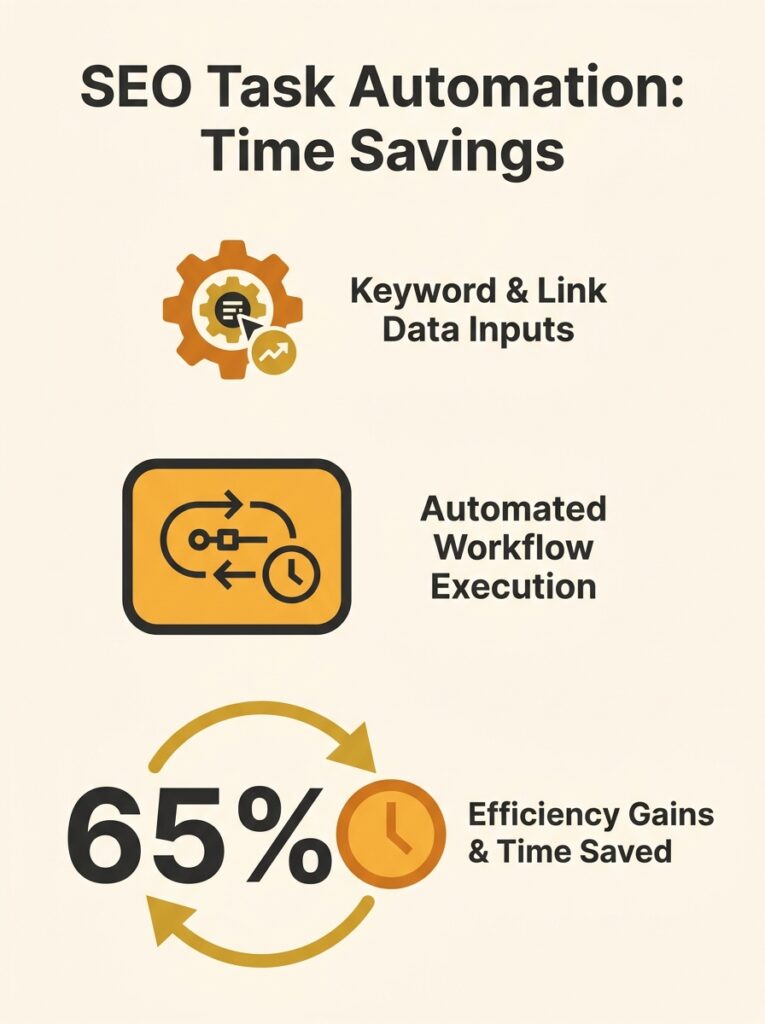
A practitioner framework published yesterday identifies eight specific SEO workflows suitable for automation by asking a single question: “Would I assign this to an intern?” According to SearchEngineLand, the methodology targets repetitive tasks where AI tools can complete 70% of the work before human review.
The analysis, written by SEO consultant Roslyn Ayers and published April 24, quantifies time savings for each automated workflow and provides specific prompts for implementation. The eight tasks span content planning, keyword research, technical audits, and reporting functions that typically consume hours of manual effort each month.
Framework Targets Repetitive Work
The methodology directs practitioners to automation candidates by evaluating whether a task would typically be assigned to a junior team member. Tasks meeting that threshold—data analysis, template scaling, content gap identification—are considered suitable for AI-assisted workflows that require final human quality checks rather than full automation.
Ayers notes three scenarios where automation fails: broken tracking systems that produce incomplete data, missing performance metrics needed for analysis, and resource constraints that prevent acting on audit findings regardless of how quickly they’re generated.
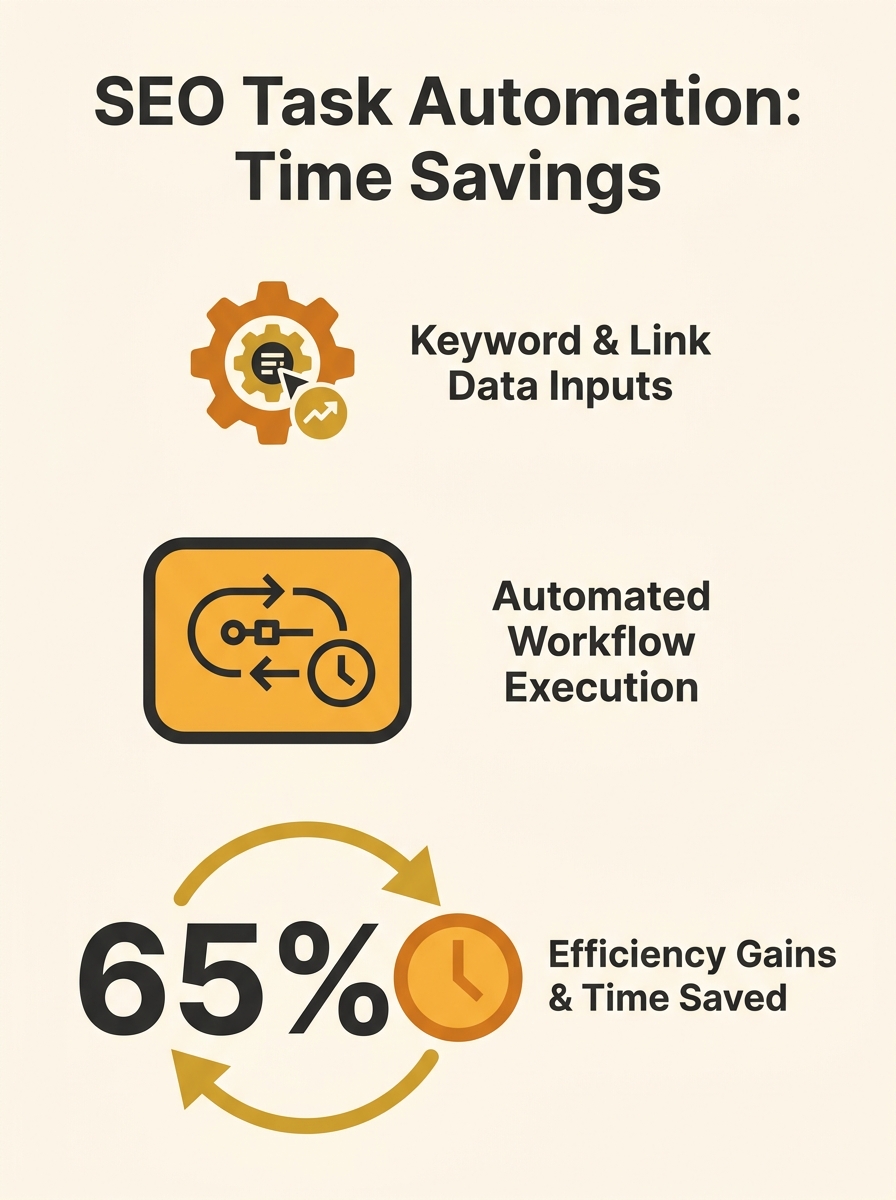
Eight Workflows With Quantified Returns
Content calendar generation tops the list with eight hours saved per quarter. The workflow uses spreadsheet formulas—UNIQUE, MAXIFS, IFERROR, VLOOKUP—to combine sitemaps, performance reports, and update schedules into a master sheet showing pages due for refresh based on the industry standard of updating content every one to two years.
Keyword and prompt research saves 15 minutes per page by processing content gap reports from tools like Ahrefs and Semrush. The analysis warns that AI tools struggle with user intent and short-tail versus long-tail distinctions. A local veterinary website might receive suggestions to target “cats” when “cat vet” or “cat care” better match the site’s ranking potential.
Meta description writing, internal linking audits, content outlines, image alt text generation, broken link identification, and performance reporting round out the eight workflows. Each includes a sample prompt and estimated time savings ranging from five minutes per image to four hours per month for reporting functions.
Quality Control Remains Manual
The framework emphasizes that automation handles initial drafts and data collection while practitioners retain responsibility for strategy, quality assurance, and final decisions. The article cites large language model limitations—”rarely get things exactly right”—as the reason human review remains necessary even for routine tasks.
Practitioners are directed to identify additional automation opportunities by auditing existing workflows, reviewing onboarding documentation, surveying team members about most-hated tasks, and directly querying AI tools about their capabilities.
What This Means for Australian Small
Australian SMEs running lean marketing teams face the same time-allocation problem the framework addresses: too many hours spent on data compilation and first-draft work that doesn’t require strategic judgment. The “intern test” provides a practical filter for deciding which parts of monthly SEO maintenance can shift to AI-assisted workflows.
The quantified time savings—eight hours per quarter on content calendaring alone, four hours monthly on performance reporting—translate directly to capacity for strategy work or additional client accounts for agencies. Firms already using Ahrefs, Semrush, or Google Search Console for SEO can implement most workflows without new tool subscriptions.
The warnings about incomplete tracking and broken systems matter particularly for businesses that haven’t instrumented GA4 properly or lack consistent performance baselines. Automation amplifies existing data quality, so the framework works best when core measurement infrastructure is already functional.