

Google reported all-time high search query volumes in its most recent quarter while web publishers simultaneously forecast traffic declines of 50 percent over the next three years, exposing the paradox at the center of AI-powered search: the technology cannot function without the indexing infrastructure SEO professionals build, according to analysis published by Search Engine Journal on July 3, 2026.
TL;DR: AI search engines use retrieval-augmented generation (RAG) to fetch documents from search indexes before generating answers, making them structurally dependent on the semantic HTML, site hierarchy, and clean indexing paths that SEO professionals create and maintain.
The traffic compression stems from AI summaries retaining users within search interfaces rather than referring them to publisher sites, the analysis notes. Google has announced updates intended to send traffic back to websites, though whether those changes constitute antitrust positioning remains unclear.
Large Language Models Require Search Infrastructure to Ground Predictions
Large language models are probabilistic text-generation engines that calculate the statistical likelihood of word sequences rather than retrieving stored facts, according to the analysis. To make those answers current and grounded, retrieval-augmented generation fetches documents from a search index and feeds them to the model before it writes its response.
A December 2024 YouTube explainer by Jess Peck titled “Oh my god, ChatGPT is not a search engine” detailed this process. For an AI search engine to answer a query using RAG, it relies on a high-quality data pipeline requiring organized, easily navigable, and authoritative data sources made possible through semantic HTML, logical site hierarchy, and clean indexing that SEO work provides.
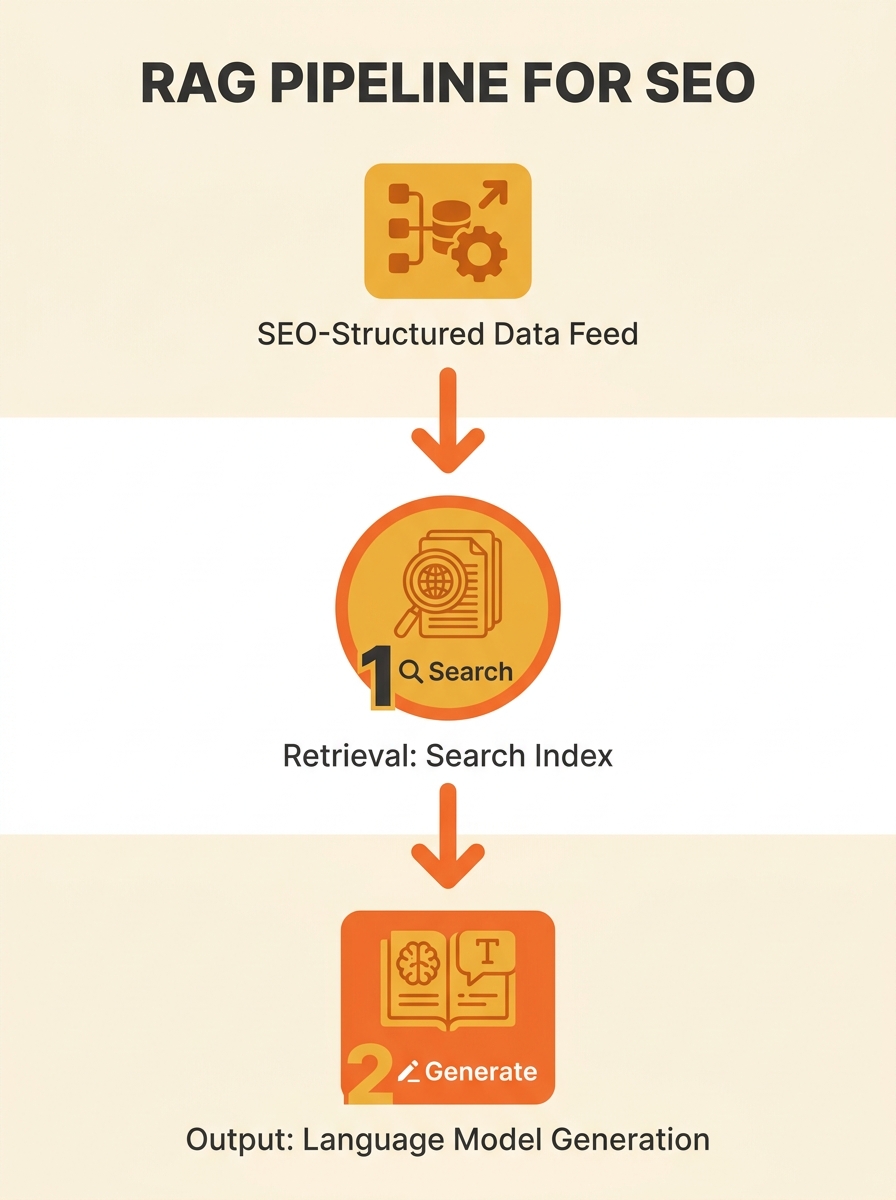
Without the foundational architecture of SEO, AI search engines are left with inefficient paths and website structures, the analysis states. Modern SEO now encompasses both legacy site-health maintenance and specific AI-readiness strategies, including optimizing for RAG extraction and strengthening brand entity signals across the knowledge graph.
SEO Community Builds the Data Layer AI Search Engines Index
The SEO community labels data, cleans clutter, and ensures machines can actually read what humans write, according to the analysis. By structuring data so that machines can interpret context, SEO professionals provide the exact signals AI search engines use to verify facts and attribute sources.
Technical SEO ensures that the information gain of a page is accessible to the models that need to cite it. If a brand wants an AI to recommend its product, its digital footprint must support that recommendation through proper structured data and entity signals.
Jamie Indigo, an SEO professional, summarized the dynamic on LinkedIn in June 2026: “We should be clear-eyed about what happened – and intentional about what we build next.” The post highlighted that SEO has built the product LLMs now productize and charge for.
The smartest brands are not abandoning SEO for AI search but are aggressively using SEO to fuel their AI readiness, the analysis notes. They understand that AI search does not replace the need for traditional SEO and information retrieval practices but instead highlights the need for SEO and information systems thinking even more.
Reading Between the Lines
The 50 percent traffic decline forecast puts Australian SMEs in a bind: invest more in the technical SEO foundation that AI platforms require to index and cite your content, or watch visibility collapse as AI summaries compress the traditional organic result set. The analysis confirms what the March 2026 core update pattern already showed—sites with clean semantic markup, logical hierarchy, and machine-readable structure are holding citation share while sites treating technical SEO as an afterthought are disappearing from AI-generated answers.
For Australian businesses evaluating where to allocate next quarter’s organic budget, this changes nothing about fundamentals. The schema implementation priorities remain the same; the site architecture work remains the same; the entity signal cleanup remains the same. What changes is the urgency. If AI search platforms are indexing your content through RAG pipelines that depend entirely on how well your site communicates context to machines, then the technical debt you’ve been deferring is now the exact debt blocking you from AI citations.
The Search Engine Journal analysis landed one day after Google’s query-volume announcement, reinforcing that search usage is growing even as the interface retains more users. That divergence means technical SEO work—semantic HTML, structured data, logical hierarchies—now determines whether your business exists inside AI-generated answers or gets filtered out at the retrieval stage before a model ever considers citing you.