

Want to appear on the first page of Google for local searches? Local SEO is how small businesses compete with larger competitors in their service areas. When someone searches “plumber near me” or “best cafe in Brisbane,” local SEO determines who shows up.
Here are 15 proven local SEO hacks that help businesses achieve first page rankings in their target areas.

1. Optimise Your Google Business Profile
Your Google Business Profile (formerly Google My Business) is the foundation of local SEO. It’s often the first thing potential customers see.
- Claim and verify your listing if you haven’t already
- Complete every section—business name, address, phone, hours, categories
- Add a detailed business description with relevant keywords
- Upload high-quality photos of your business, products, and team
- Keep information accurate and updated
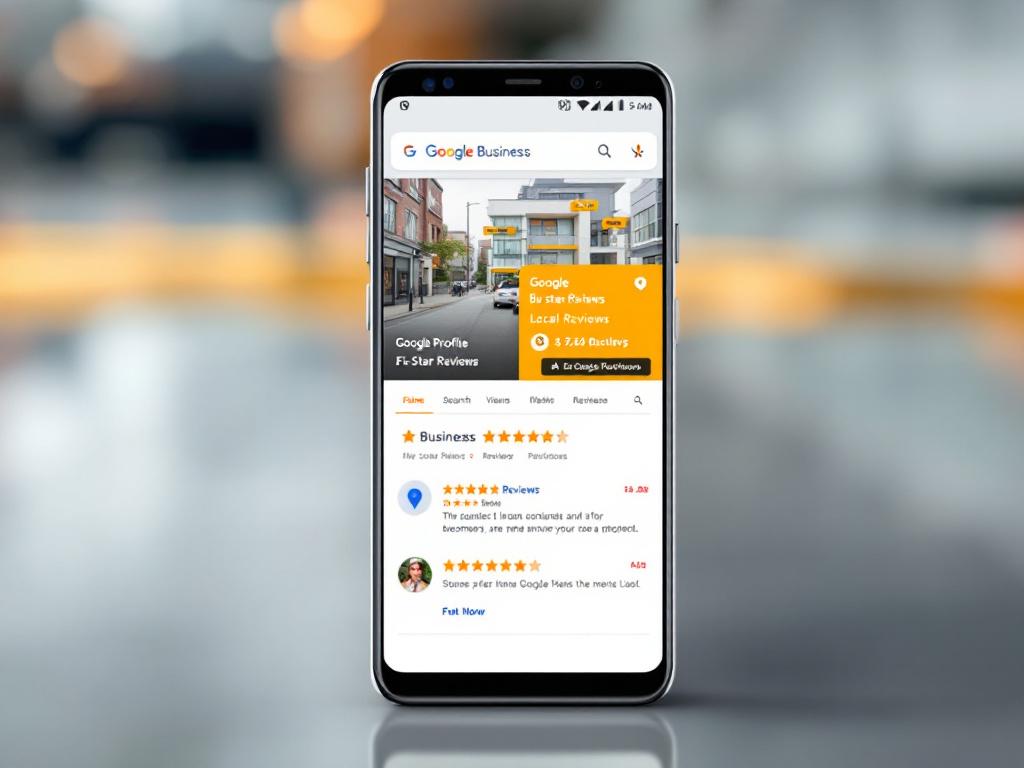
A complete, optimised profile significantly increases your chances of appearing in the local pack—those three business listings that appear at the top of local search results.
2. Ensure NAP Consistency
NAP stands for Name, Address, and Phone number. Google uses NAP consistency as a trust signal. If your business information varies across different websites, it confuses search engines.
- Use the exact same business name everywhere
- Format your address identically (don’t use “St” in one place and “Street” in another)
- Use one primary phone number consistently
- Audit your existing listings for inconsistencies
Even small variations can hurt your local rankings. Take time to standardise your information across all platforms.
3. Target Local Keywords
Local keywords combine your services with geographic terms. They signal to search engines exactly where you operate.
- Service + location: “electrician Perth,” “dentist Melbourne CBD”
- Near me variations: These are handled by Google based on user location
- Suburb targeting: “plumber Bondi,” “lawyer Parramatta”
- Regional terms: “wedding photographer Gold Coast region”
Include local keywords naturally in your website content, meta titles, and descriptions. Create location-specific pages if you serve multiple areas.
4. Generate and Manage Reviews
Reviews are a major local ranking factor. They also influence whether customers choose your business over competitors.

- Ask satisfied customers to leave Google reviews
- Respond to every review—positive and negative
- Address negative feedback professionally and constructively
- Never buy fake reviews—Google penalises this
- Make leaving reviews easy with direct links
Businesses with more positive reviews rank higher and convert more searchers into customers.
5. Build Local Citations
Citations are mentions of your business on other websites—directories, industry sites, local business associations. They reinforce your legitimacy and location.
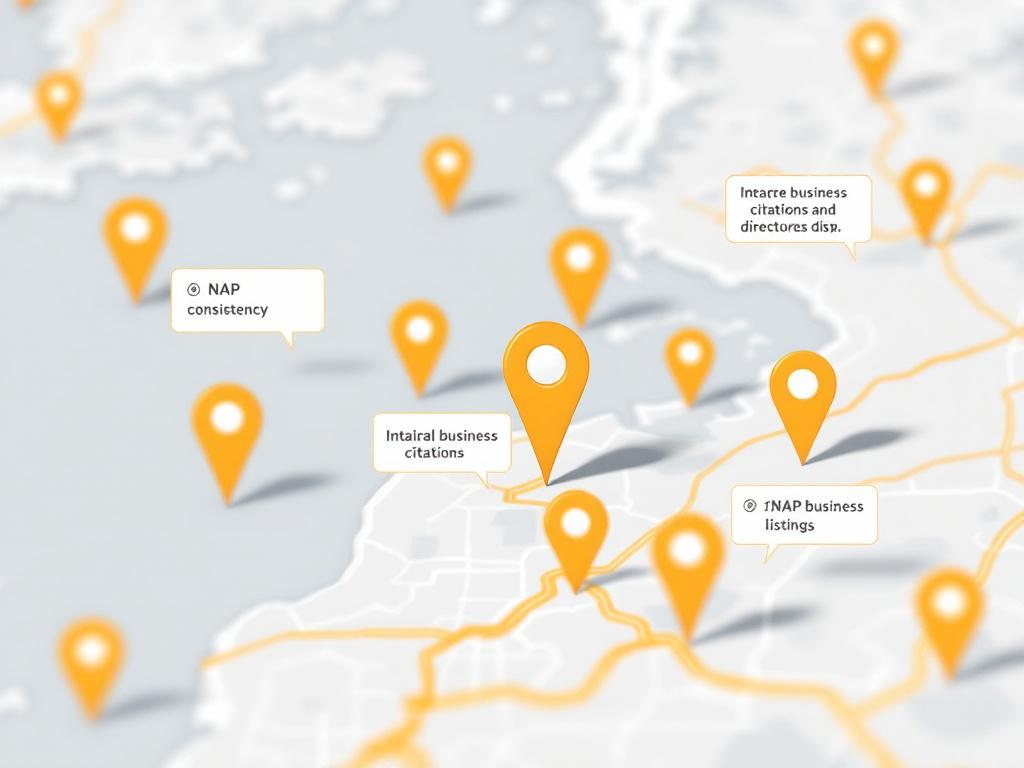
- General directories: Yellow Pages, True Local, Yelp
- Industry-specific: Directories for your profession
- Local directories: Chamber of commerce, local business associations
- Social profiles: Facebook, LinkedIn company pages
Quality matters more than quantity. Focus on reputable, relevant directories rather than spamming hundreds of low-quality sites.
6. Optimise for Mobile
Most local searches happen on mobile devices. If your website doesn’t work well on phones, you’ll lose potential customers.
- Use responsive design that adapts to screen sizes
- Ensure buttons and links are easy to tap
- Make your phone number clickable for instant calls
- Test page speed on mobile devices
- Keep forms short and mobile-friendly
Google uses mobile-first indexing, meaning your mobile site determines your rankings.
7. Implement Local Schema Markup
Schema markup is code that helps search engines understand your business information. Local business schema tells Google exactly what you are and where you’re located.
- Add LocalBusiness schema to your website
- Include business type, address, hours, and contact details
- Add review schema to display star ratings in search results
- Use Google’s Structured Data Testing Tool to verify
Schema doesn’t guarantee better rankings, but it helps search engines display rich results that attract more clicks.
8. Create Local Content
Content that serves your local community establishes relevance and attracts local links.
- Write about local events and news relevant to your industry
- Create guides for your service areas
- Cover local case studies and customer success stories
- Address location-specific questions and concerns
Strong content marketing builds authority in your local market over time.
9. Use Google Posts
Google Posts let you share updates directly on your Business Profile. They appear in search results and Google Maps.
- Share offers and promotions
- Announce events
- Post updates about your business
- Include calls-to-action with links
- Post regularly—they expire after 7 days
Active posting signals to Google that your business is engaged and current.
10. Add Quality Photos and Videos
Visual content on your Google Business Profile increases engagement and trust.
- Upload photos of your premises, inside and out
- Show your team and products
- Add photos of completed work or happy customers
- Include short videos showcasing your business
- Update photos regularly with fresh content
Businesses with more photos get more clicks and direction requests.
11. Optimise Your Q&A Section
Google Business Profile includes a Q&A feature where anyone can ask and answer questions about your business.
- Monitor questions and answer promptly
- Pre-populate with common questions and answers
- Upvote helpful questions and answers
- Include keywords naturally in your responses
Taking control of your Q&A section prevents misinformation and showcases your expertise.
12. Define Service Areas Correctly
If you serve customers at their location (like plumbers or mobile services), use service area settings instead of just a business address.
- List all suburbs and areas you serve
- Be realistic—don’t claim areas you won’t actually service
- Create location pages on your website for key service areas
- Consider separate listings for distinct service regions
Proper service area configuration helps you appear for searches across your entire coverage zone.
13. Build Local Backlinks
Links from local websites signal geographic relevance to search engines.
- Partner with complementary local businesses
- Sponsor local events, sports teams, or charities
- Join local business associations
- Get featured in local news and blogs
- Create linkable local resources
Local link building supports both your local SEO and broader search visibility.
14. Leverage Social Signals
While social media isn’t a direct ranking factor, it supports local SEO indirectly.
- Maintain active local social media profiles
- Engage with your local community online
- Share your Google Business Profile posts on social
- Encourage check-ins and tags at your location
Social engagement increases brand awareness and drives traffic that supports SEO.
15. Track and Measure Rankings
You can’t improve what you don’t measure. Monitor your local search performance regularly.
- Track rankings for your target local keywords
- Monitor Google Business Profile insights
- Analyse website traffic from local searches
- Track phone calls and direction requests
- Measure conversion rates from local traffic
Regular tracking reveals what’s working and where to focus your efforts.
Common Local SEO Mistakes
Avoid these errors that hurt local rankings:
- Keyword stuffing: Unnatural overuse of location terms
- Fake reviews: Google detects and penalises fake reviews
- Duplicate listings: Multiple profiles confuse Google
- Ignoring negative reviews: Unanswered complaints damage reputation
- Inconsistent information: NAP variations hurt trust signals
Getting Professional Help
Local SEO requires ongoing attention. Between running your business and serving customers, there’s often little time for marketing.
Our SEO services team specialises in helping local businesses improve their search visibility. From Google Business Profile optimisation to comprehensive local SEO strategies, we help businesses attract more local customers.
Ready to dominate local search in your area? Contact us for a free local SEO audit and discover opportunities to grow your business.
]]>How Long Does Local SEO Take?
Local SEO results don’t happen overnight. Expect to see initial improvements within 3-6 months, with more significant gains over 6-12 months. Several factors affect your timeline:
- Competition level: More competitive markets take longer
- Starting point: New businesses need to build authority from scratch
- Consistency: Regular effort compounds over time
- Technical issues: Website problems can delay progress
- Review velocity: Steady review growth builds trust faster
Local SEO is a long-term investment. The businesses that commit to it consistently outperform those looking for quick fixes.
Local SEO in 2026: What’s Changed
Local search continues evolving. Here’s what matters most in 2026:
- AI search: ChatGPT and Google AI Overviews influence how people find local businesses
- Voice search: More conversational queries like “where’s the nearest open pharmacy”
- Zero-click searches: Google answers questions directly—you need visibility in those answers
- Experience signals: Google measures user satisfaction beyond just rankings
- Visual search: Google Lens and image-based discovery are growing
The fundamentals—reviews, citations, optimised profiles—still matter. But adapting to new search behaviours gives you an edge.
DIY vs Professional Local SEO
Many local businesses handle basic local SEO themselves. But there’s a point where professional help makes sense:
- DIY works for: Simple businesses with limited competition, time to learn and implement, single location
- Professional help for: Competitive markets, multiple locations, complex technical issues, limited time, serious growth goals
The right approach depends on your resources, competition, and growth ambitions. A comprehensive SEO strategy combines local tactics with broader search visibility for maximum impact.
Take Action Today
Start with the basics: claim your Google Business Profile, fix any NAP inconsistencies, and ask your next satisfied customer for a review. Small consistent actions build momentum.
Local SEO levels the playing field for small businesses. A solo operator with a well-optimised presence can outrank major chains in local results. The businesses that invest in local visibility today capture the customers searching tomorrow.
Your local customers are searching. Make sure they find you first.