
Paid search budgets in Australia are being spent against a backdrop that barely existed eighteen months ago. AI-generated answers now appear above the ads, above organic listings, and above the maps pack in roughly 12 to 16 per cent of all Google queries. Zero-click searches account for close to 60 per cent of all queries, according to the 2026 Zero-Click Search Visibility Playbook for Australia. And more than half of Australians are using AI tools to discover products, with adoption up 109 per cent in a single year.
That changes how you bid, where you bid, and what you’re bidding on. These seven rules are for Australian businesses trying to work out where their search spend should go when the results page itself is being rewritten by AI.
Measure answer share before you adjust ad spend
Traditional paid search reporting tracks impressions, clicks, cost per click, and conversions. Those metrics still matter, but they’re incomplete if you can’t see whether your brand appears inside the AI-generated answer that sits above your paid ad.
Answer share is the emerging metric: how often does your brand get cited when an AI system generates a response to a query in your category? Tools like Scrunch now integrate with SEO dashboards to track AI-originated traffic and revenue impact. If your answer share is zero, your paid ads are competing with an AI summary that recommends someone else entirely. You’re paying for position two while position zero belongs to a competitor who published better content.
Before your next quarterly budget review, add citation frequency and brand mention tracking in AI outputs to your reporting. If you already run a regular benchmarking rhythm for your SEO metrics, extend that same cadence to AI visibility metrics. The cost of ignoring this is straightforward: you keep spending while the returns quietly erode.
Structure content for AI extraction, not just click-through
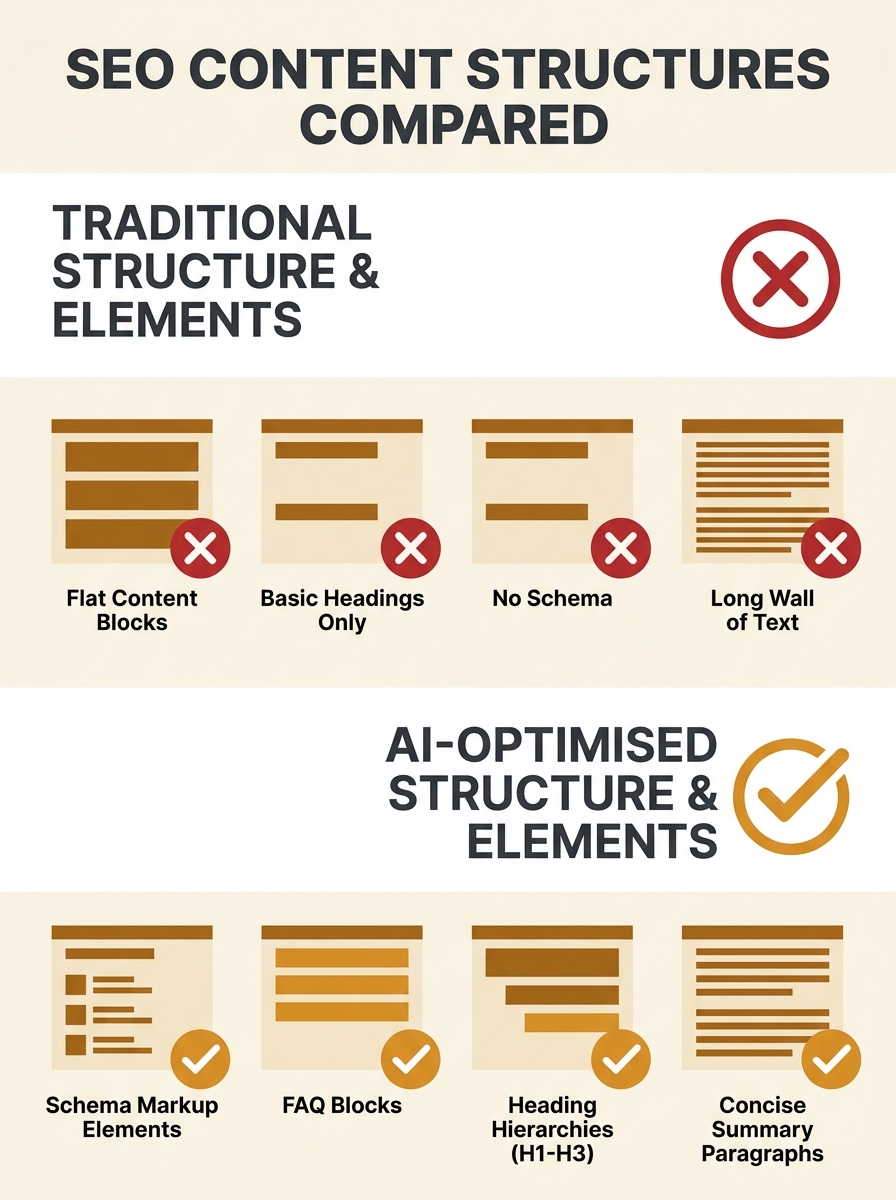
AI systems don’t read your landing pages the way a human does. They parse structure. Schema markup, clear heading hierarchies, FAQ blocks, and concise summary paragraphs all increase the odds that an AI model will extract and cite your content in its generated answer.
This applies to your ad landing pages as much as your blog posts. If you’re running Google Ads campaigns driving traffic to product pages, those pages need to be structured so AI crawlers can understand them too. HubSpot restructured its content into smaller, topic-specific chunks specifically so AI tools could reference individual features, and saw improved AI citation rates for specific product queries as a result.
Australian businesses that have already addressed their AI crawler audit gaps are ahead here. Those that haven’t are invisible to an entire layer of search that’s growing faster than any other channel.
Update published content every six months or lose citation share
AI models favour recency. Data from multiple tracking studies shows that content updated within the last six months accounts for 53 per cent of citations in ChatGPT responses. A thorough, well-researched guide published in 2022 will lose visibility to a thinner article published this month, regardless of depth or quality.
This has direct implications for paid search. Your ad landing pages, product descriptions, and supporting content all need a refresh schedule. If you’re spending $5,000 a month driving traffic to a landing page you haven’t touched since launch, the AI overview above your ad is probably pulling from a competitor who updated their equivalent page eight weeks ago.
Build content freshness into your paid media operations. Every time you review ad creative rotation, review the landing page content too. Add current statistics, update case studies, and ensure pricing or product information reflects reality. This dual-purpose maintenance feeds both your conversion rate and your AI citation likelihood, which makes the effort pay for itself twice.
Track the queries AI actually generates, not your old keyword list
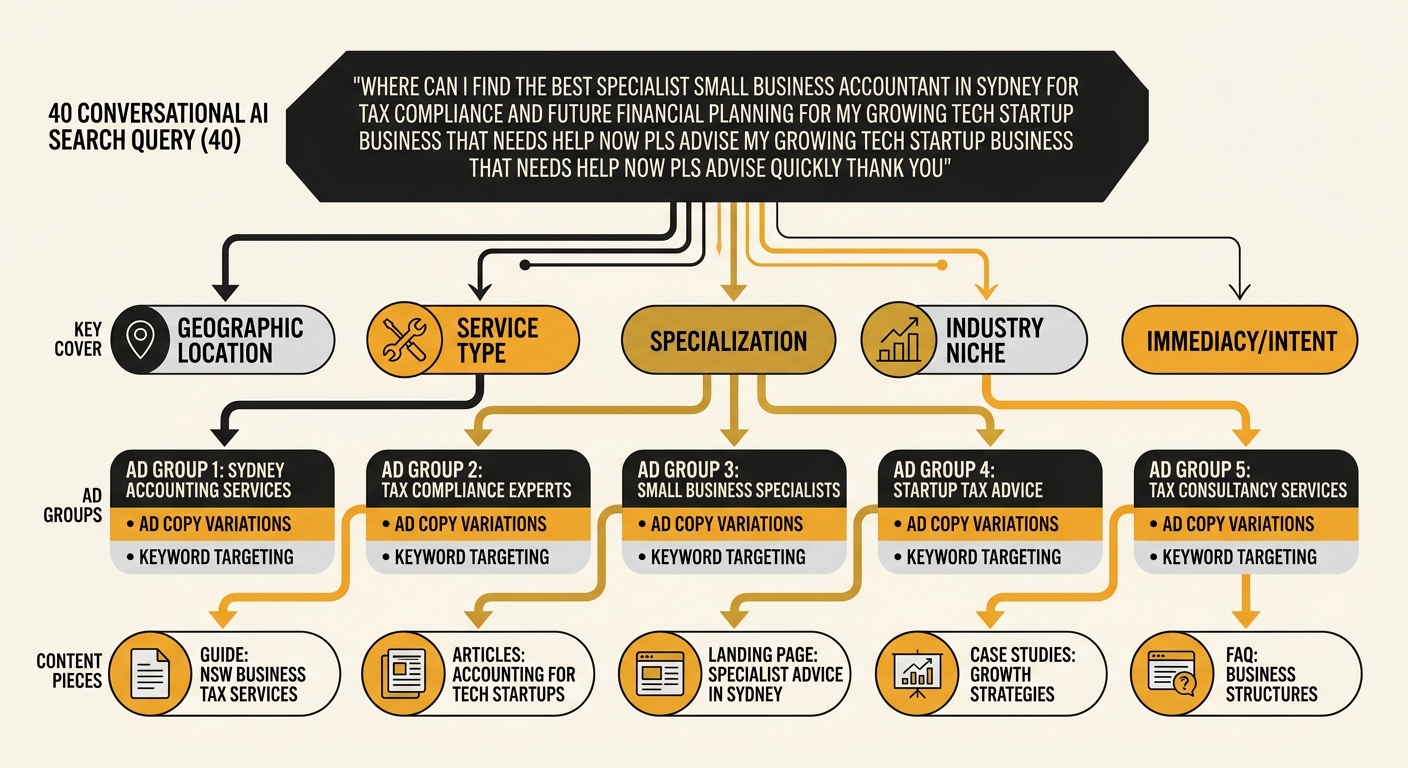
Google’s own research shows that AI search queries break apart into component keyword searches differently than traditional typed queries. The average AI-driven query runs 40 to 60 words, compared to the two-to-four-word keyword strings that paid search campaigns have traditionally targeted.
Your keyword strategy needs rethinking. The queries people type into ChatGPT or speak to an AI assistant are conversational, specific, and often local. “Best accountant near Parramatta for small business BAS lodgement under $500” is a real AI-era query. A PPC advertising strategy built around bidding on “accountant Parramatta” catches a fraction of that intent.
Research into how AI search queries fragment into keyword searches reveals a practical path forward: map the long conversational queries your customers actually ask, then build both content and paid campaigns around those natural-language patterns. Google’s AI Overviews are triggering on these longer queries, and your ads need to appear alongside the results they generate. The businesses winning the GEO vs SEO strategy question are the ones mapping both layers simultaneously.
When AI systems cross-reference multiple sources and find consistent information, they gain confidence in recommending you.
Build authority off your own site, deliberately
AI models cross-reference multiple sources when generating answers. When they find consistent information about your business across several platforms, they gain more confidence citing you. A.P. Web Solutions’ research on Australian search strategy confirms this cross-referencing behaviour, noting it’s particularly critical here where 46 per cent of Google searches carry local intent.
Practically, this means your paid search strategy needs a companion: distributed authority building. Sigma Tax Pro saw measurable results by having team members actively participate in niche Reddit communities, answering complex questions under their real names. AI models like Perplexity and Google’s AI Overviews frequently pull from Reddit and specialist forums as source material.
For Australian businesses, this connects directly to citation consistency across local directories and business profiles. Every mention of your business name, address, phone number, and service descriptions across the web feeds the AI’s confidence score. Inconsistencies confuse the models, and confused models don’t recommend you. The money you spend on paid search works harder when the AI summary above the ads already trusts your brand.
Diversify your paid spend beyond Google’s search results page
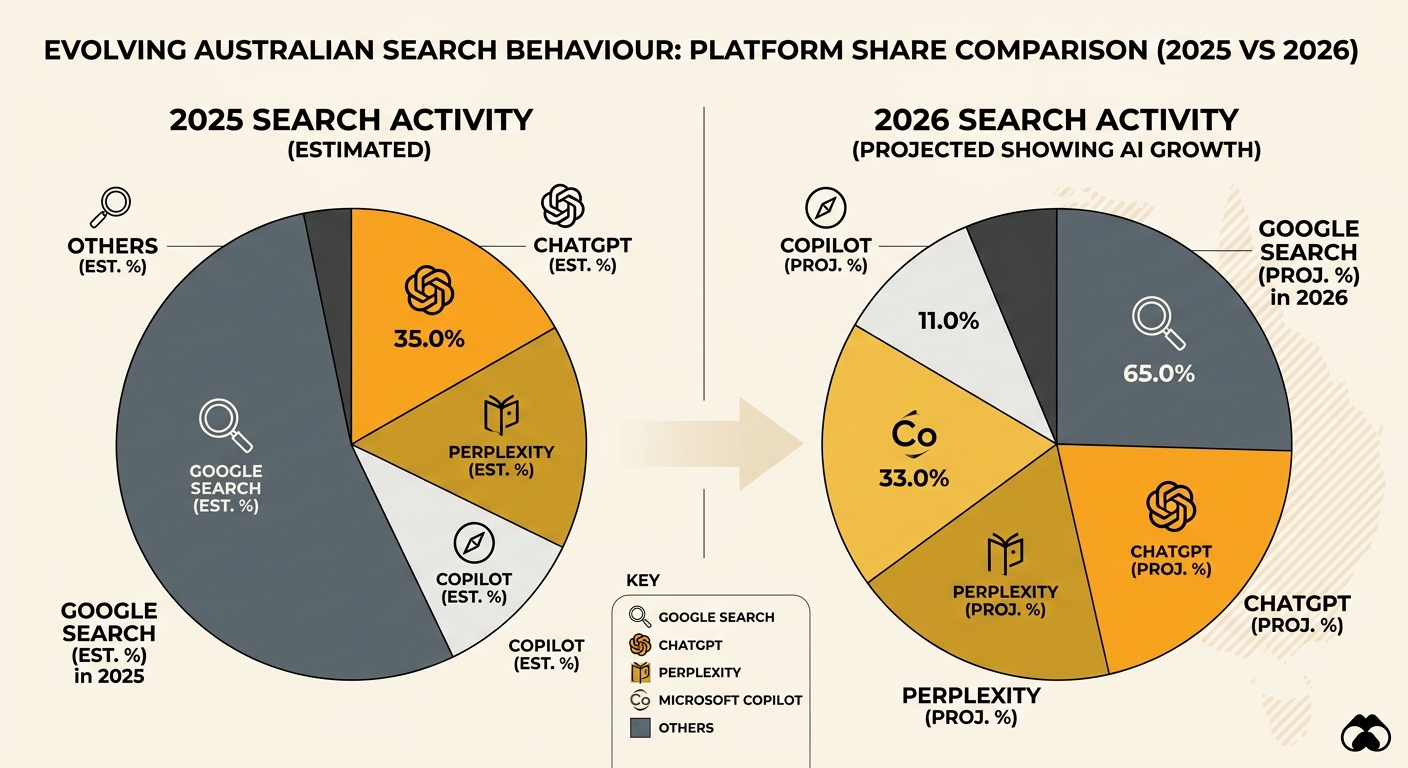
ChatGPT is now the world’s fifth most visited website. MKM Building Supplies, a UK retailer tracked by the BBC’s investigation into AI search visibility, reported that ChatGPT drives more AI-originated traffic to their site than Google’s own AI features. And the visitors arriving through AI citations convert at higher rates than traditional search visitors.
The search engine evolution in 2026 means your paid media mix should reflect where people are actually searching. If your entire budget goes to Google search ads, you’re missing the growing cohort of Australians who start product research in ChatGPT, Perplexity, or Copilot. Some of these platforms are beginning to offer advertising products. Others reward content authority with citation placement that functions like earned media.
A GEO vs SEO strategy operates as a both-and proposition. Traditional SEO and paid search handle the queries that still land on a Google results page. Generative Engine Optimisation handles the queries that get answered by an AI before a results page ever loads. Your budget allocation should start reflecting that split, and for most Australian businesses right now, the GEO allocation is still zero. That’s the gap.
Treat AI-generated search results optimisation as a paid media discipline
This is the rule most Australian businesses will resist. SEO has traditionally sat in the “organic” column, separate from paid. AI search visibility doesn’t respect that boundary. Getting cited in an AI Overview requires content investment, authority building, structured data work, and ongoing freshness maintenance. All of that costs real money and staff time.
The businesses winning at AI-generated search results optimisation are applying the same rigour, budget, and measurement discipline they’d give their paid campaigns. They’re assigning staff to the work. They’re measuring return on investment per piece of content. They’re running tests on content structure to see which formats get cited more often.
If you’ve been reading AI search visibility Australia discussions as an SEO-only concern, reconsider. The click you “win” from an AI citation is functionally identical to the click you’d pay for through a search ad. Both cost resources to acquire. Both deserve proper attribution and measurement. The difference is that AI citation builds compounding value over time, while every paid click is a one-off transaction with no residual benefit.
Tip: Start by auditing which of your top 20 paid keywords trigger AI Overviews in Google. For any that do, check whether your brand appears in the generated answer. If it doesn’t, your ad spend on those keywords is fighting a headwind you can’t outbid. Pair paid campaigns with content that targets AI citation for those same queries.
When These Rules Contradict Each Other
They will. Rule one says measure before spending. Rule seven says treat AI optimisation like a paid discipline, which means committing budget before you have perfect measurement. Rule four says chase long conversational queries. Rule six says diversify away from Google, where those query patterns may look entirely different.
The contradiction is real, and there’s no single answer for every Australian business. A local tradie in Perth allocating $800 a month to search ads needs a different balance than a national e-commerce brand spending $80,000. The tradie probably gets the most value from rules two and five: structured content and consistent local citations. The e-commerce brand needs all seven, with rule six carrying the heaviest strategic weight.
What stays consistent across every business size is that the search landscape has genuinely split into two layers. There’s the traditional results page, where paid ads and organic listings still function as they have for twenty years. And there’s the AI answer layer, where citation, authority, and content structure determine whether your brand exists at all. Ignoring either half means leaving revenue on the table. The Australian businesses that figure out how to operate across both layers, with proper measurement and proper budget for each, will own the visibility that matters for the rest of the decade.