

AI video generation tools have shifted from experimental novelty to enterprise-grade marketing infrastructure in 2026, according to a strategy guide published by Digen today. The transition marks a pivot away from early generative models toward platforms built directly into advertising ecosystems and social media interfaces.
Amazon Ads launched an AI video generator for Australian advertisers in April 2026, allowing small and medium-sized businesses to convert static product listings into video ads automatically, the guide reports. The self-service tool handles formatting, scene composition, and product placement without requiring video production expertise or external editing software.
Disney unveiled a TikTok-style vertical video interface in January 2026 paired with a proprietary AI video generation tool, according to the same report. The move signals convergence between media distribution platforms and content creation technology, forcing brands to redesign campaigns for mobile-first, vertical-format environments.
Enterprise Focus Replaces Early Experimentation
The industry has moved past the “Sora era” of experimental AI video models into what Constellation Research describes as a “Good News” phase focused on stability and copyright compliance, according to the Digen analysis. Current-generation tools prioritize temporal consistency — ensuring products and brand elements appear identical across every frame — rather than simply automating video production.
G2’s Learning Hub identified seven leading AI video generators in April 2026, emphasizing platforms that solve for brand safety and intellectual property protection. The shift addresses early-generation problems including visual “hallucinations” and texture inconsistencies that made AI-generated content unsuitable for regulated industries or luxury brand campaigns.
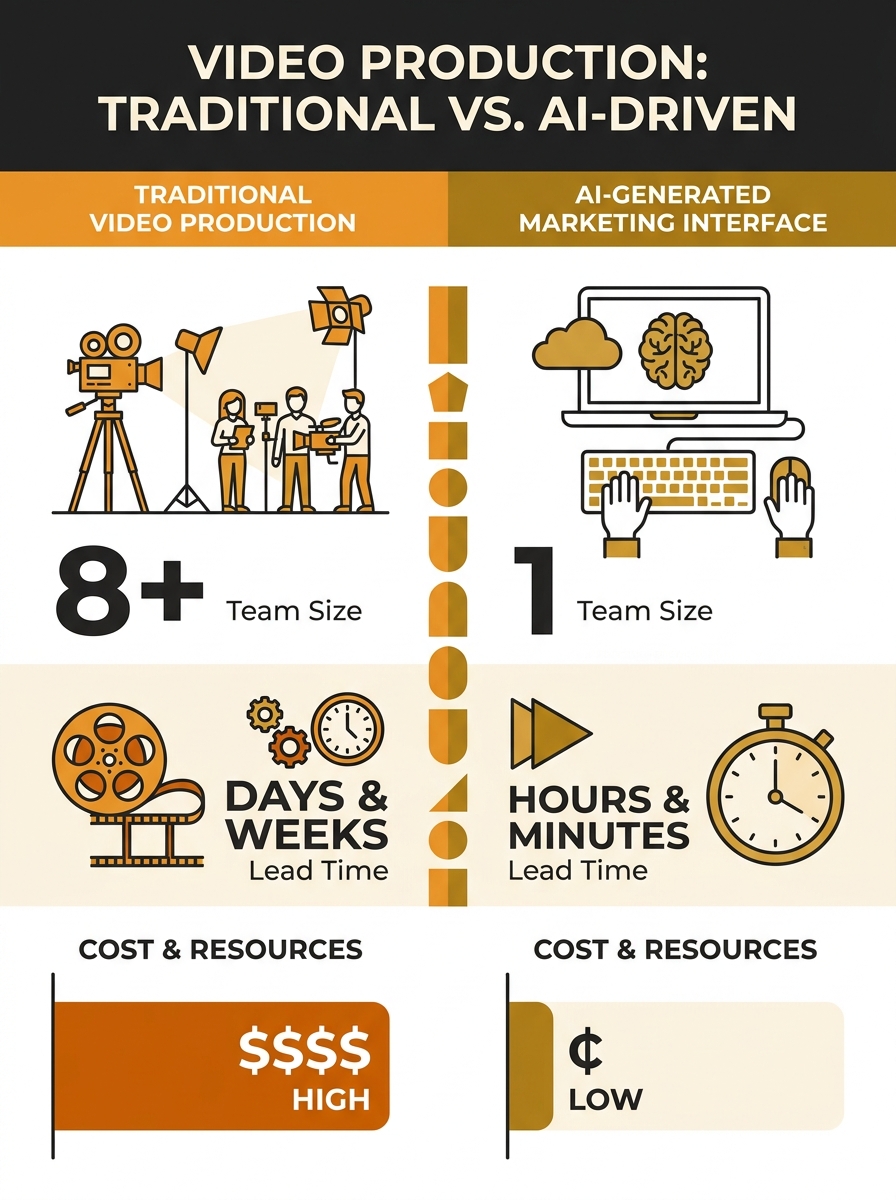
The technology now supports instant vertical formatting for platforms including TikTok and Disney’s new social interfaces, the guide notes. Enterprise-grade systems allow marketers to upload brand guidelines, color palettes, and approved assets to ensure visual consistency across hundreds of market variations without manual oversight.
Retail and Social Platforms Integrate Production Tools
Amazon’s AI video generator represents a broader pattern of platforms embedding production capabilities directly into advertising interfaces. The tool converts product images and listing data into video ads formatted for Amazon’s shopping environment, eliminating the production gap that previously separated large advertisers from small merchants.
The shift toward platform-integrated tools reduces reliance on standalone software while tying video creation to specific distribution channels. Disney’s vertical video system follows the same model, offering creation tools optimized for its own engagement metrics rather than generic social media specifications.
Personalized video at scale drives the highest return on investment, with AI systems handling localization and product placement automatically, the guide reports. Tools now include voice cloning and lip-syncing capabilities for adapting content across global regions without re-shooting footage or hiring multilingual talent.
Four Platform Categories Emerge for 2026
The strategy guide categorizes current AI video tools into four distinct types based on marketing use cases. Retail-integrated platforms like Amazon Ads prioritize product-to-video automation for e-commerce sellers. Media-centric tools from Disney and TikTok focus on native vertical rendering for social media engagement.
Enterprise creative suites emphasize brand safety and IP protection for global corporations managing campaigns across more than 100 markets. Independent platforms rated by G2 specialize in hyper-realistic human avatars for training videos and personalized sales content.
The guide distinguishes between tools built for “infinite versioning” — creating thousands of customized variations from a single concept — and those designed for high-fidelity, cinematic production. Australian businesses evaluating options must choose based on distribution channel requirements rather than generic feature comparisons.
Video content produced through AI workflows now integrates with social media services platforms that handle scheduling and performance tracking across multiple channels. The automation extends beyond creation into deployment, with some systems triggering creative refreshes automatically based on real-time engagement data.
Why This Matters Now
Australian SMBs face a compression of video production timelines that makes manual processes unviable for multi-channel campaigns. The Amazon Ads tool launch specifically targets Australian advertisers who lack video production budgets but compete against brands deploying automated content at scale.
The shift toward platform-integrated tools changes procurement decisions. Businesses previously evaluated standalone video software on feature lists; the 2026 landscape requires choosing platforms based on where audiences actually consume content. A tool optimized for Amazon’s shopping interface delivers different value than one built for TikTok’s vertical feed, regardless of technical capabilities.
For Australian businesses building organic growth strategies, AI-generated video fills content gaps in areas where written content alone underperforms — product demonstrations, social proof testimonials, and mobile-first explainer formats. The technology removes production cost as a barrier while introducing new complexity around prompt engineering and brand consistency enforcement.