
Google’s May 19 I/O keynote confirmed what the traffic data already showed: AI Mode is now the default search experience for one billion users, AI Overviews trigger on 58% of queries, and 93% of AI Mode searches end without a single click to an external website.
What Google Actually Shipped on May 19
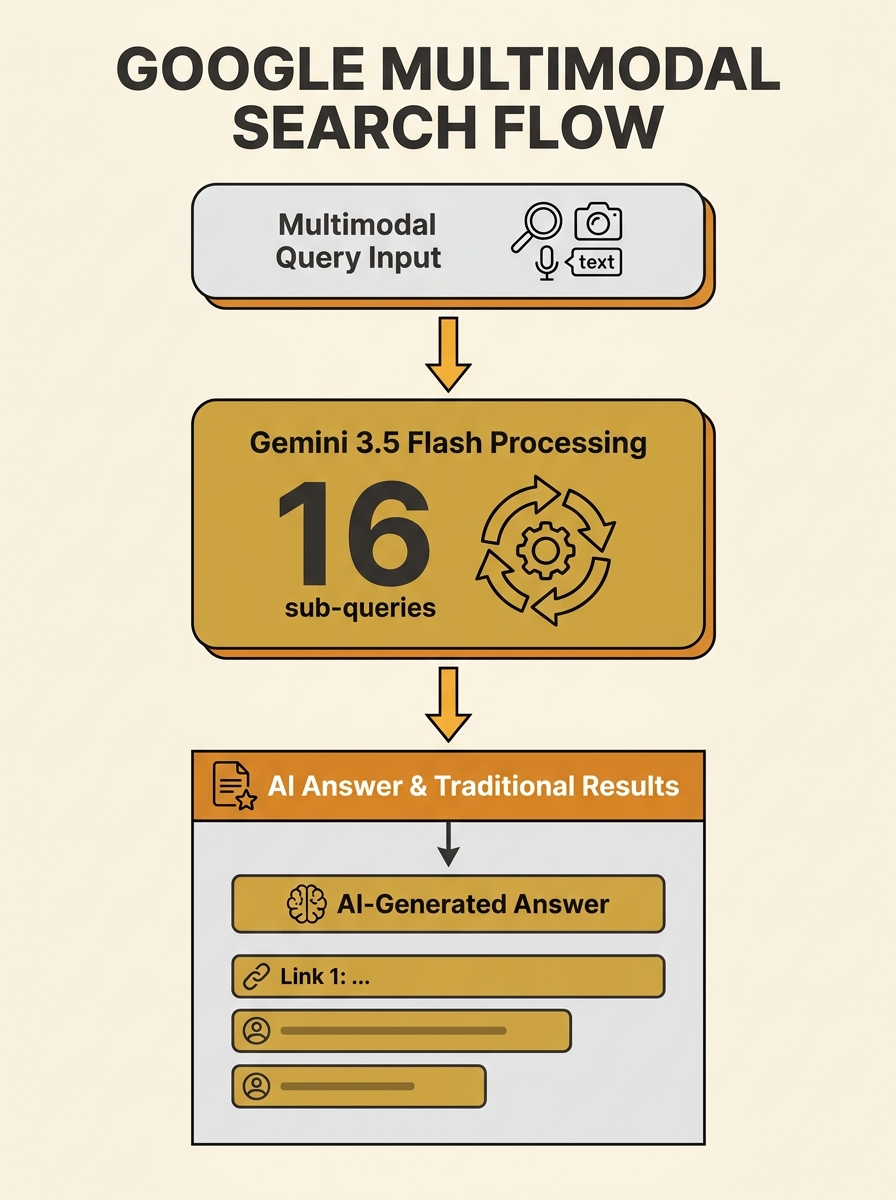
The Google I/O search redesign impact extends far beyond a visual refresh. Google described it as the “biggest upgrade” to search in 25 years, and the technical details support that claim. The search box now accepts images, files, videos, and active Chrome tabs alongside text. AI Mode, powered by the new Gemini 3.5 Flash model, launches up to 16 sub-queries for every question a user types. It then synthesises answers from multiple sources into a single conversational response, displayed above (and often instead of) the traditional ten blue links.
The practical effect is immediate. A user searching “best accounting software for small business Australia” no longer lands on a results page full of clickable options. They see an AI-generated summary with product comparisons and pricing pulled from multiple sites. The traditional results page still exists underneath, but most users never scroll past the AI response. “We shared the next step in our journey to bring together the best of a search engine with the best of AI,” Google’s search team wrote on May 19. That “next step” puts Google in direct competition with every website it used to send traffic to.
Two features announced at I/O deserve particular attention from Australian businesses. Information Agents now run in the background 24/7, monitoring the web and pushing updates to users without any search query at all. A user who told Google they’re interested in CRM software will get notified about new features, price changes, and reviews automatically. Personal Intelligence, meanwhile, now operates in nearly 200 countries and 98 languages, pulling context from Gmail, Google Photos, and Calendar. Two people searching the same term will see different results based on their personal data. Google CEO Sundar Pichai confirmed at I/O 2026 that many of these AI capabilities, including the personal agent Spark, will eventually be “free and broadly accessible.” That means the traffic shift isn’t limited to early adopters. It will reach every user.
Traffic Losses Are Worse Than the Headlines Suggest
The headline number is bad enough: 58 to 68% of all Google searches in 2026 end without a click, according to SparkToro, Datos, and Similarweb data. The sector-specific breakdown paints a sharper picture. Ahrefs 2026 data shows tech and B2B companies face up to 70% exposure to AI Overviews. Science content sits at 43.6%, health at 43%. E-commerce sees AI Overviews on only 3.2% of queries (down from 29%) after Google found the overviews converted poorly for shopping intent.
Organic click-through rates for the number one position have dropped from 27% to 11% when an AI Overview appears, per SISTRIX data from March 2026. Seer Interactive reported a 61% year-over-year decline in organic CTR. The March 2026 Core Update, which finished rolling out on April 8, compounded the damage by targeting low-quality AI-generated content and rewarding depth. Some Australian sites lost up to 40% of organic traffic in the aftermath. If you’ve been trying to diagnose mysterious ranking drops, the Core Update and AI Overview expansion together explain a large share of what many site owners are seeing.
But here’s the number that should reshape your entire approach to AI search visibility 2026: brands cited within an AI Overview earn 120% more organic clicks per impression, according to Digital Strategy Force’s April 2026 analysis. Seer Interactive’s March 2026 data puts the citation CTR lift at 35% for organic and 91% for paid results. The old game was ranking first. The new game is being the source Google’s AI chooses to cite. That distinction matters because zero-click doesn’t mean zero-value. Users who see your brand cited in an AI Overview develop familiarity. When they search again with commercial intent, or when they need a provider they remember, that visibility converts. Google Analytics 4’s data-driven attribution can track this pattern if you set up custom events for branded search uplifts following AI Overview appearances.
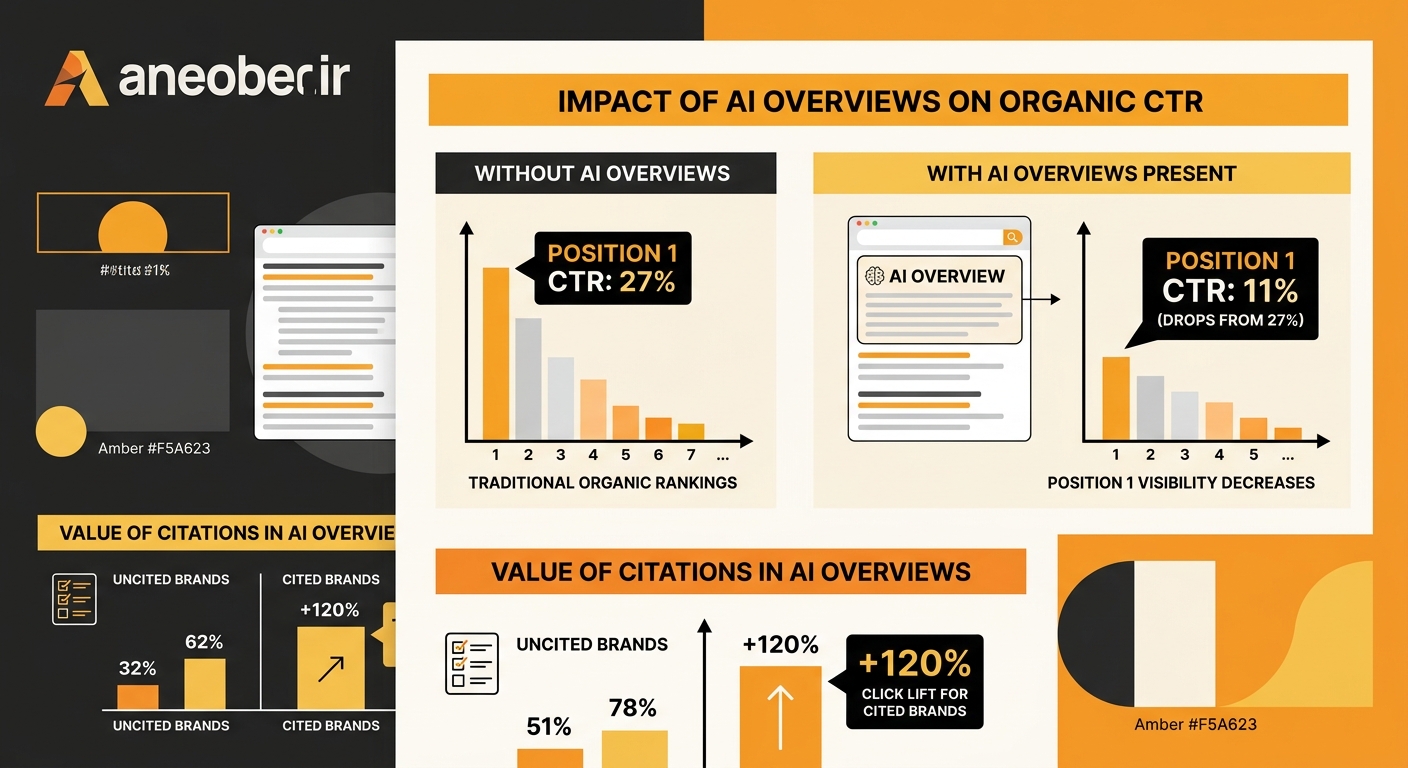
Brands cited within an AI Overview earn 120% more organic clicks per impression. The old game was ranking first. The new game is being the source Google’s AI chooses to cite.
Where Australian SMEs Should Redirect Their Effort
Rebuilding organic traffic post-algorithm requires a fundamental rethink of what “traffic” means and where it comes from. The zero-click search strategy Australian SMEs need in 2026 isn’t about fighting AI Overviews. It’s about getting cited in them, then building channels that don’t depend on Google at all.
Start with query selection. Informational queries like “how to set up a business in Queensland” are cannibalised at a 99.9% rate by AI Overviews, per Ahrefs November 2025 data. Transactional and commercial queries perform far better. E-commerce queries trigger AI Overviews on only 3 to 4% of searches. Phrases with clear buying intent (“buy,” “price of,” “best X for Y near me”) still send clicks. If you’ve been building your content architecture around broad informational topics, this is the moment to rebalance toward commercial and local intent clusters.
The core AI Overview optimization tactics are structural, not creative. Google’s AI extracts answers from content that uses clear headings, structured schema markup (FAQ, HowTo, Product, Review), and concise verifiable claims. Pages with original research, proprietary data, and first-hand testing get cited more often because the AI can attribute specific findings to a specific source. This is the “Experience” pillar of E-E-A-T in practice. Running an AI visibility audit on your current pages will show you exactly which content Google’s AI already references and where you’re invisible.
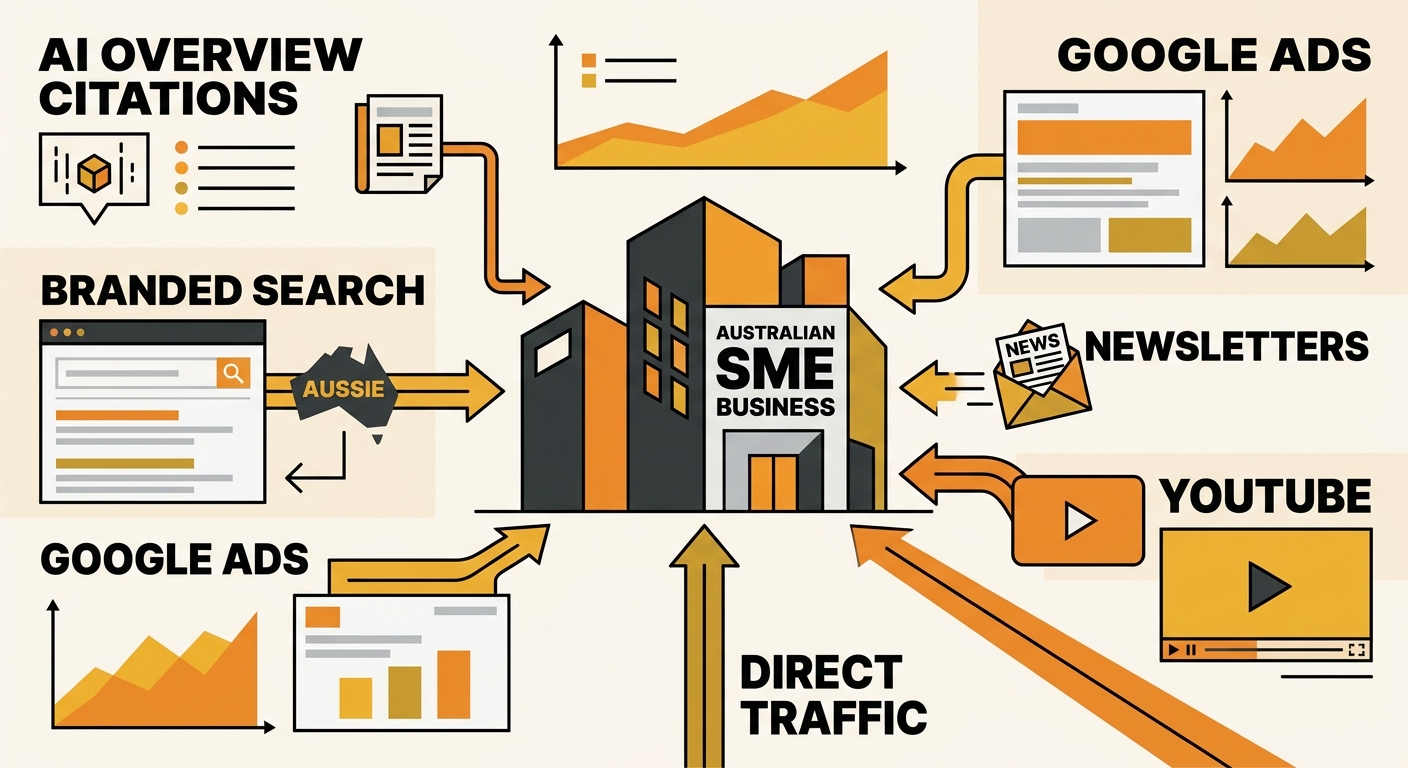
And then there’s diversification. Digiday reported on May 21 that “publishers are meeting Google’s AI search overhaul with resignation rather than resistance.” Resignation is a poor strategy. Australian SMEs should be investing in newsletters, YouTube, podcasts, and community channels that generate direct traffic. Branded searches (“your brand + CRM” or “your brand + review”) resist zero-click erosion because Google typically shows your site for navigational queries. Building brand recognition through managed PPC campaigns alongside organic efforts creates a safety net. When organic CTR falls 61% year-over-year, Google Ads management becomes less of an optional supplement and more of a load-bearing channel. The businesses that will weather this shift are the ones treating paid and organic as two halves of the same visibility problem, tracking how metadata extraction affects their AI Overview appearances, and measuring citation rate alongside traditional ranking position.
What This Leaves Unresolved
The honest answer is that nobody knows how stable these numbers will be six months from now. Google pulled AI Overviews from 29% of e-commerce queries because they hurt conversions. They could expand or contract AI Mode’s reach in any category based on user behaviour data that changes weekly. The March 2026 Core Update targeted one kind of low-quality content. The next update could shift the goalposts again. Building your entire strategy around today’s AI Overview trigger rates is like optimising for a specific algorithm version, a practice that has burned Australian businesses every time Google rolls a major update.
The deeper uncertainty is philosophical. Google’s Information Agents are now pushing content to users before they search. Personal Intelligence means two users see different results for the same query. These features break the foundational assumption of SEO, that there’s a shared search results page you can optimise to appear on. If the results page becomes personal, the concept of “ranking” loses coherence. Citation in AI responses still matters, and structured, authoritative content will keep earning those citations. But the measurement infrastructure hasn’t caught up. GA4’s attribution modelling can track branded search lifts, but there’s no standard way to measure how often you appear in someone’s personalised AI feed, or whether an Information Agent pushed your competitor’s price drop to your prospect at 3am.
The businesses in the best position right now aren’t the ones with perfect AI Overview optimization tactics or the cleverest zero-click workaround. They’re the ones with genuine expertise, original data, a real audience who knows their name, and channels they own. The Google I/O search redesign impact will keep unfolding through 2026 and into 2027. Rebuilding organic traffic post-algorithm is a rolling process, not a one-time fix. The only durable advantage is being a source worth citing, regardless of which AI model is doing the citing.