

Sending more outreach emails will not improve your backlink acquisition strategy. The 8.5% average response rate reported across email outreach campaigns reflects a structural problem with how businesses compose, target, and time their requests. Volume amplifies whatever you’re already doing wrong.
TL;DR: Australian businesses tank their outreach response rates by repeating five mistakes: sending generic templates, offering no value exchange, pitching irrelevant sites, botching follow-up timing, and treating link building as a one-off transaction instead of an ongoing relationship. Fixing the process beats increasing the volume.
Generic Templates Signal You Haven’t Done the Work
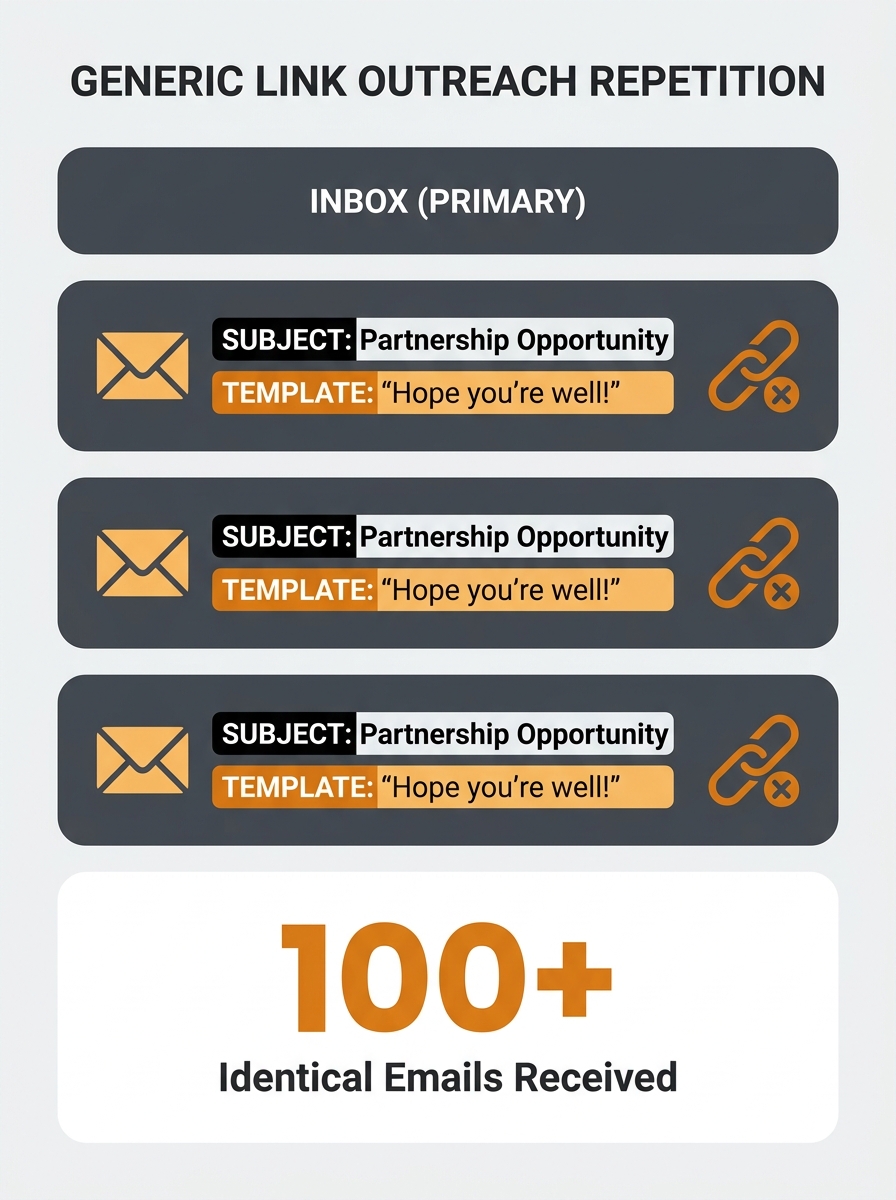
Website owners receive dozens of outreach emails every day, and the overwhelming majority look identical. A vague subject line, zero personalisation, an immediate request for a backlink. The pattern is so recognisable that recipients can identify a template within the first sentence. Search Engine Journal identified the most frequent causes of outreach failure as “lack of email personalisation, sending messages to the wrong people, focusing too much on praising someone, and not offering anything in return.”
That 8.5% average means roughly 91 out of every 100 emails disappear without a reply. For link building outreach Australia campaigns, where the pool of high-quality, niche-relevant local sites is smaller than in the US or UK markets, a generic pitch stands out even more conspicuously. Recipients on .com.au domains see the same recycled opener (“I came across your excellent article about…”) week after week from dozens of senders.
Personalisation doesn’t mean inserting a first name into a mail merge field. It means referencing the specific page you want a link placed on, explaining exactly why your content is relevant to that page’s audience, and keeping the ask simple. A single personalised paragraph that names the article, identifies the gap your content fills, and proposes a concrete placement outperforms three paragraphs of flattery wrapped around a merge tag. The recipients who do respond, the 8.5%, consistently report that specificity was the deciding factor.
This is where understanding how Google evaluates expertise and trust signals becomes directly relevant to your outreach. The site owners you’re emailing assess trustworthiness the same way a search engine does. If your email reads like it was generated from a spreadsheet, the recipient assumes your content was produced with the same level of care.
Targeting the Wrong Prospects Destroys Results Before You Hit Send
The second and third email outreach mistakes are related, and they happen before a single message is drafted. Australian businesses consistently pitch sites outside their niche and ignore the Australian market context entirely.
A backlink from a high-Domain-Rating site in an unrelated industry does almost nothing for your rankings. Australian link building agencies that deliver measurable results typically evaluate prospects on at least two metrics: Domain Rating pulled from Ahrefs, and organic traffic pulled from SEMrush, with minimum thresholds that vary by niche. The logic is straightforward. A link from a site receiving actual traffic in your category passes more value than a DR 70 site in a completely different vertical with zero audience overlap.
Yet the default Australian link prospecting workflow often skips this filtering entirely. Businesses export a list of sites with high domain authority scores, blast every address with the same pitch, and wonder why outreach response rates sit below 5%. Segmenting prospects by industry, content type, and audience alignment before writing a single email separates targeted campaigns from spam campaigns. If you’re already using tools like Ahrefs or SEMrush for local competitive analysis, apply the same rigour to your outreach prospect list.
The Australian dimension adds another layer. SEO strategies vary by country, and effective link building outreach Australia campaigns need partners who understand local directories, regional publications, and the .com.au content ecosystem. A site with 500 monthly visits from Australian users in your niche is worth more than a site with 50,000 visits from a different country in a different category.
The Three-Filter Prospect Test
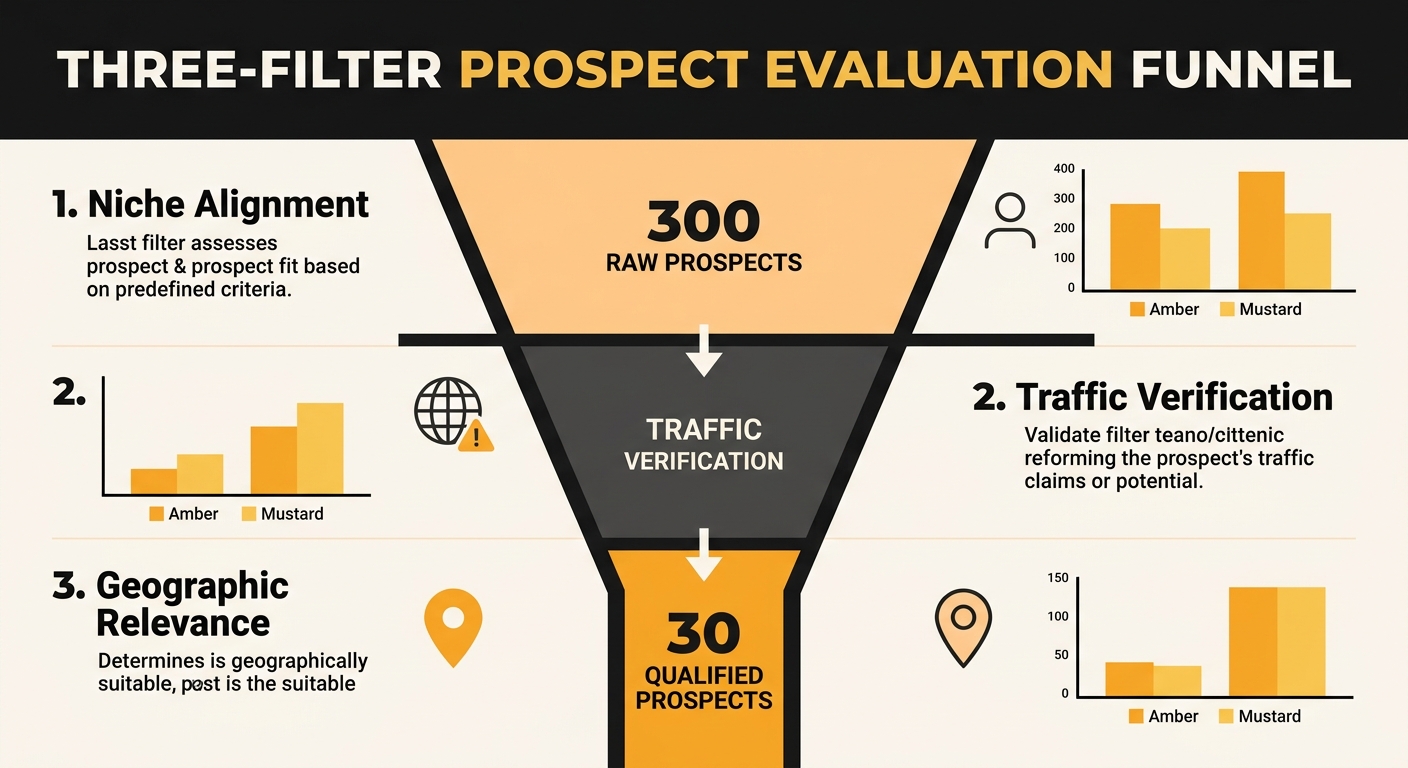
Before adding any site to your outreach list, run it through three checks:
- Niche alignment: Does this site publish content your target audience already reads? If you couldn’t imagine your ideal customer visiting the site, remove it from the list immediately.
- Traffic verification: Does the site receive organic search traffic? Check Ahrefs or SEMrush for at least 200 monthly organic visits. Sites with zero traffic often have zero editorial standards, and a link from them carries minimal value.
- Geographic relevance: Does the site serve an Australian audience, or at minimum a global English-speaking audience where Australian content fits naturally?
Sites that fail any one of these filters belong off the list. This reduces your prospect pool significantly, which is the point. A filtered list of 30 qualified prospects will outperform a raw list of 300 irrelevant ones.
One-and-Done Sends Ignore How Relationships Actually Form
The fourth and fifth mistakes collapse into a single problem: treating backlink acquisition strategy as a transaction rather than a relationship-building exercise.
Sending one email and moving on leaves enormous value on the table. Research from Nutshell found that engaging with prospects on LinkedIn or Twitter before emailing produces 22% more links per month compared to cold-only approaches. Commenting on their posts, sharing their content, and building familiarity before making any request changes the dynamic from cold solicitation to warm introduction.
Follow-up cadence matters as much as the initial message. A single follow-up email can increase response rates by 65%, and a sequence of three follow-ups produces the best overall results. But sending follow-ups too soon, less than 2 days apart, reduces engagement by 11% and risks damaging your sender reputation. The productive window sits between 2 and 5 days between messages.
Going Digital’s 2026 outreach analysis stated it directly: “The difference between emails that get responses and those that get deleted comes down to one thing: respect for the recipient’s time and context.”
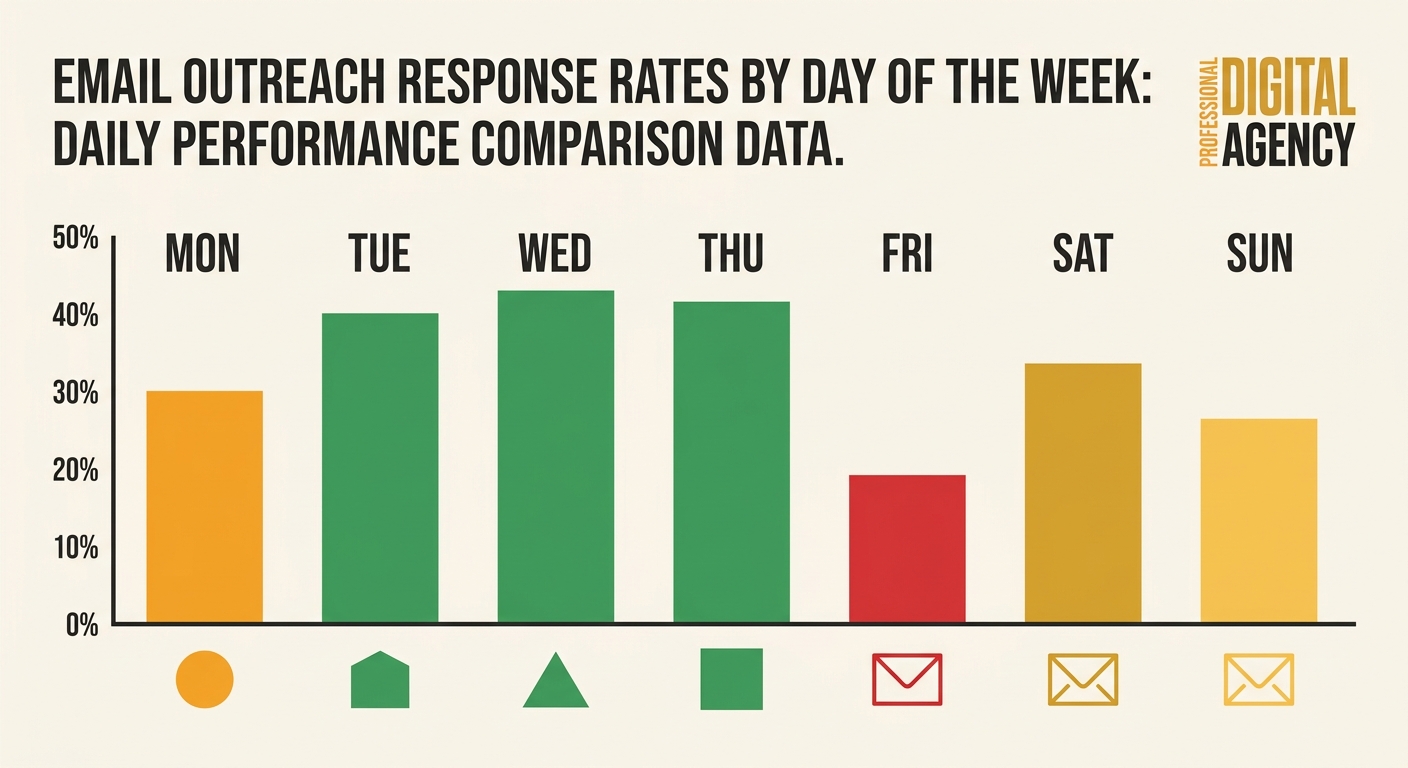
Timing within the week also shifts results measurably. Sending outreach emails on Fridays produces the lowest response rates, while Tuesdays, Wednesdays, and Thursdays consistently perform best. If you’re batching your outreach into a Friday afternoon task, you’re choosing the worst possible slot for the most important step in your campaign.
A filtered list of 30 qualified prospects will outperform a raw list of 300 irrelevant ones in every measurable outreach metric.
The data on long-term partnerships underlines this further. An estimated 80% of successful links at leading firms come from ongoing relationships rather than one-off cold pitches. Maintaining an active network of 20 to 50 link partners, where you regularly share each other’s content and look for natural linking opportunities, produces compounding returns that cold outreach never matches. If your outreach strategy leans toward organic relationship-building over paid placements, the maths works decisively in your favour over 6 to 12 months.
Tip: Track positive replies and earned links as your primary outreach metrics, not open rates or total emails sent. Open rates tell you whether your subject line works. Reply rates tell you whether your entire approach works.
The Claim, Tested Against the Numbers
The contrarian position at the top of this article, that more volume produces worse results, holds up across every metric available. The 8.5% global response rate is an average dragged upward by well-targeted campaigns and dragged downward by the template-blasting majority. Australian businesses operating in smaller niches with fewer potential link partners face an even starker divide between the two approaches.
The five email outreach mistakes covered here share a common root: treating the process as a numbers game when the evidence consistently shows it’s a quality game. Generic templates, absent value propositions, untargeted prospect lists, poor follow-up timing, and transactional mindsets all optimise for volume. The campaigns that actually earn links, the ones pulling response rates above 15% or 20%, optimise for specificity and genuine relevance.
Email marketing generates up to $42 for every $1 spent when executed well, a 4,200% ROI that makes it the highest-returning digital channel by a wide margin. Link building outreach is a subset of that channel, and the same principle applies. The return concentrates in the small percentage of emails that are personalised, well-targeted, properly timed, and built on genuine relevance. Everything else gets deleted without being read.
Building topical authority for your Australian business makes outreach dramatically easier because the content you’re pitching actually deserves links. When the asset behind the email is genuinely useful to the recipient’s audience, the entire conversation shifts from “please give me a link” to “this would be valuable for your readers.” That shift, from extraction to contribution, is where the 8.5% average stops applying and real results begin.