

A digital marketing agency released an analysis today cautioning Australian small businesses that most standard link building packages deliver minimal SEO value, arguing the services prioritize backlink volume over the relevance and trust signals Google’s ranking systems now require, according to Ingenious Netsoft.
TL;DR: Ingenious Netsoft published a June 16 analysis warning that pre-set link building packages—which sell fixed quantities of backlinks for flat fees—often rely on low-quality sites and can trigger trust penalties rather than ranking improvements for small business websites.
The analysis, published June 16, identifies link farms and irrelevant placements as the primary failure points in budget link building offers. “For most small businesses, these link building packages are a waste of money because they often prioritize quantity over the real trust that Google’s search system looks for today,” the published framework states.
Core Criticisms of Package-Based Link Services
The analysis targets three structural problems in standard link building packages. First, low-cost providers rely on networks of sites created solely to sell links—what the industry calls link farms—which Google’s detection systems now identify. Second, providers market packages using third-party metrics like Domain Authority or Domain Rating that Google does not use in ranking algorithms. Third, automated and AI-driven placement tools frequently create backlinks on topically irrelevant sites, producing what the analysis calls a “scattergun effect” that dilutes rather than concentrates authority signals.
The framework argues that a single link from a relevant industry publication delivers more ranking impact than dozens of links from high-metric but unrelated domains. This positions against the volume-based pricing model most link building packages use.
AI Link Building Emergence Flagged as Risk
Ingenious Netsoft’s analysis notes the recent market entry of AI-powered link building packages that automate outreach and placement at scale. The framework recommends businesses avoid these automated services, suggesting instead that AI be applied to backlink analysis—studying competitors’ earned links to identify genuine outreach targets—rather than to link creation itself.
The analysis provides no statistics on AI link building adoption rates or case studies documenting penalties, limiting the evidence base for this recommendation.
Decision Framework Advises Most SMEs Skip Link Packages
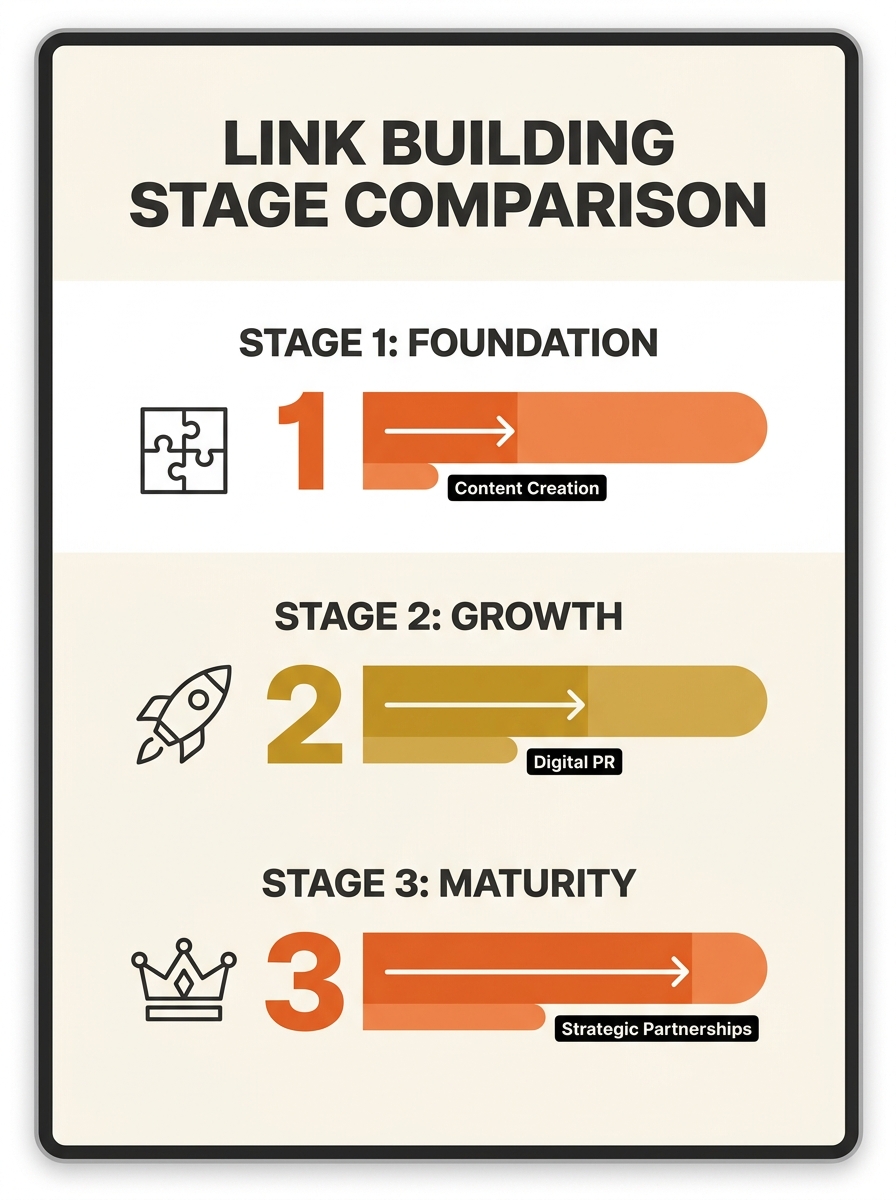
The published decision matrix segments businesses by site maturity. For new sites with fewer than 50 published pages, the analysis recommends zero spending on link acquisition, directing resources instead toward content creation. For established brands, the framework prescribes Digital PR—earning mentions in industry news and trade publications—over purchasing link packages. The analysis positions paid placements as viable only for high-competition verticals where competitors already dominate earned media.
The framework provides no cost comparisons between Digital PR retainers and link package pricing, nor case studies showing ROI differences between the two approaches for Australian SMEs.
Australian businesses evaluating link building outreach strategies or weighing paid link services against organic tactics face persistent confusion about which services deliver measurable ranking improvements. The Ingenious Netsoft analysis joins industry commentary discouraging package-based link purchasing, though it provides limited empirical data to quantify the risks or alternatives.
Context and Outlook
The analysis arrives as Google’s March 2024 core update and subsequent algorithm changes have elevated signals tied to topical relevance and earned authority over raw backlink counts. Third-party link metrics that dominated SEO decision-making from 2015 through 2022—Domain Authority, Trust Flow, Citation Flow—no longer correlate reliably with ranking outcomes in competitive Australian commercial queries, per multiple independent analyses published since 2024.
For Australian SMEs allocating limited marketing budgets, the practical question remains whether any third-party link service—package-based or bespoke—delivers better ROI than owned content investment. Businesses operating in saturated local markets (legal, trades, healthcare) face backlink acquisition challenges that content alone rarely solves, creating demand for link services despite industry cautions. The Ingenious Netsoft framework offers no pricing guidance or spend thresholds to help SMEs evaluate when link building becomes cost-effective versus when organic content remains the higher-value play.
The analysis recommends businesses direct budgets toward original data publication, content refreshing, and initiatives that generate referral traffic rather than purchasing link placements. Whether Australian SMEs adopt this guidance depends largely on whether search visibility improves measurably through content investment alone—a timeline and outcome the analysis does not model.