

Digital marketing consultant Ryan Spelts published a local SEO audit framework on June 22 prescribing Google Business Profile verification as the primary audit checkpoint, ahead of on-site technical factors. The guide positions map listing visibility as a higher-priority SEO asset than traditional website ranking signals for service-area businesses.
TL;DR: Ryan Spelts Marketing published a local SEO audit guide June 22 prioritizing Google Business Profile maintenance and city-specific landing pages over technical website optimization for businesses serving defined geographic areas.
The framework targets businesses whose customers search by location, identifying gaps in visibility before paid acquisition spending. Spelts frames the audit as a diagnostic tool that reveals “what’s helping your visibility and what’s holding you back,” according to the publication.
Google Business Profile Named First Audit Checkpoint
The guide positions Google Business Profile review as the opening audit step, before website analysis. Spelts cites map pack placement in search results as justification: “When someone searches for a service near them, Google often shows map listings before traditional website results.”
The framework prescribes verification of business name accuracy, address correctness, phone number consistency with website listings, current operating hours, and appropriate category selection. Photo library maintenance appears as an ongoing requirement rather than a one-time setup task.
The guide extends profile consistency checks to Yelp, Bing Places, Facebook, and industry-specific directories. Spelts warns that phone number discrepancies across platforms “can create confusion for both customers and search engines.”
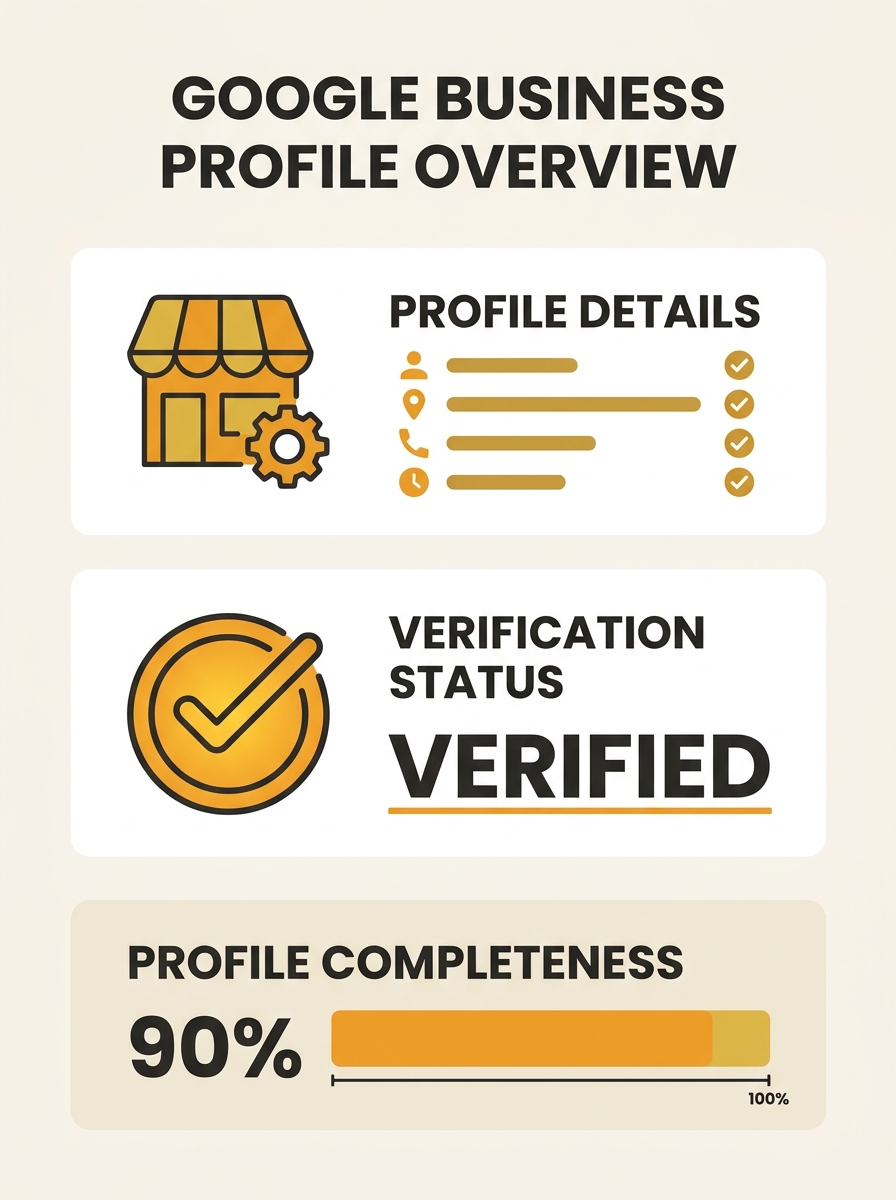
This prioritization aligns with recent frameworks identifying review volume and photo libraries as frequently neglected visibility factors in Australian local search strategies.
Website Audit Emphasizes Location Signal Clarity
The framework’s website audit section requires that service area and contact details appear immediately visible on homepage load. “Don’t make people hunt for it,” the guide states.
Page title optimization receives specific formatting guidance. The publication contrasts “Roofing Contractor in Ogden, Utah” against “Home Page” as examples of effective versus weak title construction. Spelts recommends city and service-area mentions in titles to help search engines “understand what your business does and where you operate.”
NAP consistency—business name, address, phone number—should appear in footer, contact page, and location page placements according to the framework. The guide prescribes this repetition as a search engine comprehension signal rather than user-experience design.
Content Strategy Prescribes City-Specific Landing Pages Over Generic Service Pages
The framework’s content audit section warns against generic service descriptions. Spelts criticizes businesses that “create one generic service page and hope it ranks everywhere.”
The prescribed alternative: dedicated pages for each served location. The guide recommends project showcases from local jobs, customer success stories with geographic specificity, community involvement documentation, and service pages “tailored to specific cities.”
“The more relevant your content is to local searchers, the easier it becomes for Google to connect your business with nearby customers,” according to the publication. This approach mirrors strategies documented in case studies showing 140% organic lead growth through local SEO fundamentals implementation.
Technical Audit Sequence Prioritizes Mobile Experience and Speed
The framework’s technical audit places site speed testing via Google’s PageSpeed Insights tool ahead of most structural checks. Mobile experience verification receives equal priority, with the guide recommending manual smartphone testing for text readability, button tap-target size, and load performance.
Broken link and error page identification appears as a maintenance task rather than one-time fix. The audit checklist includes broken links, missing images, error pages, and outdated content as regular review items.

The framework acknowledges that “even great content can struggle if the website itself has issues,” positioning technical performance as a content-amplification factor.
Local Authority Building Identifies Chambers and Industry Associations as Primary Citation Sources
The guide’s off-site section frames local citations and backlinks as authority signals Google monitors beyond website content. Recommended citation sources include local chambers of commerce, industry associations, community organizations, local news websites, and business directories.
Backlink profile review appears with a quality-versus-quantity caveat. Spelts warns that accumulated “spammy links over the years” may damage rather than improve rankings.
The framework does not prescribe citation volume targets or specify which directories deliver ranking impact, leaving those decisions to business judgment.
Tracking Requirements Include Call Volume and Review Growth Alongside Traffic Metrics
The audit framework concludes with ongoing measurement requirements. Prescribed metrics include website traffic, phone calls, form submissions, local keyword rankings, and review growth.
Google Analytics and Google Search Console receive mentions as insight sources. The guide frames measurement as opportunity identification: “The data often reveals opportunities you wouldn’t notice otherwise.”
The publication positions consistent monitoring as the differentiator between businesses that “constantly attract local customers” and those whose visibility stagnates.
What This Means for Australian Small
The framework’s emphasis on Google Business Profile as the primary audit checkpoint reflects the reality Australian service businesses face: map pack visibility often delivers more qualified leads than traditional organic rankings. A plumber or electrician appearing in the local three-pack captures searchers with immediate intent, while tenth-position website ranking generates minimal traffic.
The prescribed shift from generic service pages to city-specific landing pages creates content development overhead that many SMEs resist. A tradie serving five suburbs needs five distinct pages with localized project examples, testimonials, and service descriptions rather than one template duplicated with city-name substitutions. The additional work compounds for businesses serving wider geographic areas.
The framework’s measurement prescription—tracking calls and form submissions alongside traffic—addresses the visibility-versus-conversion disconnect many Australian businesses encounter. Ranking improvements that don’t generate phone calls indicate targeting or messaging problems the audit should surface before marketing budget increases.