

Google dismissed widespread deindexing reports from Australian and international site owners over the past two months, with search liaison John Mueller stating the company sees nothing unusual despite pages moving into “crawled, currently not indexed” status at rates that prompted a late-April inquiry from former Google employee Pedro Dias, according to Search Engine Journal.
TL;DR: Reports began in late April describing whole properties flipping to “crawled, currently not indexed” without manual actions or crawl errors, but Google maintains the data shows ordinary index movement.
The reports started in late April 2026 and continued through June. Site owners described pages that had been indexed for years suddenly appearing in Search Console’s excluded buckets without manual actions, crawl errors, or apparent technical blocks. Glenn Gabe, an SEO consultant, published a detailed investigation tracing one site’s complete removal from the index.
Mueller addressed the reports the same week they surfaced, describing the movement as ordinary index behaviour. Site owners found the response insufficient given the volume of similar reports arriving from multiple properties simultaneously.
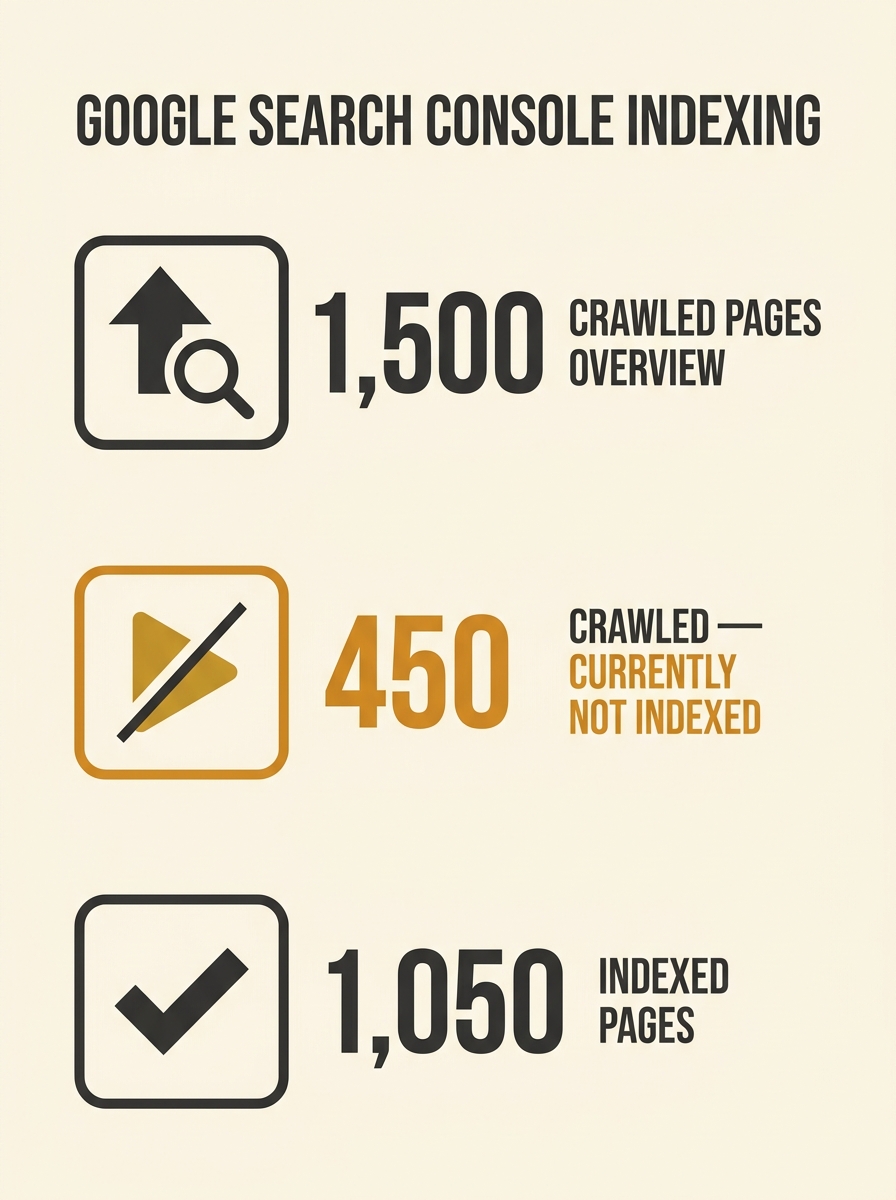
The Pattern Site Owners Are Seeing
Pages moved into “crawled, currently not indexed” status without triggering the documented signals that typically precede removal. The status means Google fetched the page and chose not to index it, which differs from a discovered-but-not-yet-crawled URL. Some accounts described entire properties moving into the status rather than isolated URLs.
One site owner reported nearly an entire site deindexed after the March 2026 core update. Another described a property indexed for six years watching every page flip to the same status. Dias’s April 28 question on X drew responses from SEO professionals describing identical patterns across unrelated sites.
The status itself isn’t new. Gary Illyes, a Google search analyst, previously said a high number of “crawled, currently not indexed” URLs “could hint at general quality issues” and described cases where Google’s view of a site had shifted. That precedent doesn’t explain why multiple sites reported simultaneous changes in April and May 2026.
Why Most Reports Aren’t Deindexing
The diagnostic challenge is sorting true deindexing from look-alike symptoms. Ranking losses after core updates are the most common misidentification. A page that drops from position 3 to position 50 stays indexed but earns fewer impressions, which dashboards can present as a traffic cliff. Search Console’s URL Inspection tool confirms actual index status; the Performance report shows ranking position.
Canonical consolidation accounts for another subset. Google keeps the content but credits a different URL, so the chosen page reads as not selected. URL Inspection surfaces this as a duplicate where Google selected a different canonical than the site owner set.
Technical blocking is a third case. A stray noindex tag, robots.txt rule, or server error can remove a page without algorithmic judgment. Site architecture issues that fragment crawl efficiency create similar symptoms.
A Search Console reporting bug adds noise to the current window. Google’s Data Anomalies page documents a logging error that misreported impressions from May 2025 until late April 2026. The correction applied in late April inflated impression counts for the prior 11 months, making the fix appear as a drop. Clicks were not affected, which makes click data the steadier signal for that period.
The 2026 Core Update Context
Google ran three major ranking updates between March and May 2026. A spam update and core update ran in March; a broad core update ran in May. The March update moved visibility away from content aggregators, according to research from Amsive. The May update reshaped visibility patterns, with Reddit gaining top positions across every niche tracked by one vendor.
Core updates change rankings, and ranking changes get mistaken for deindexing when site owners check index status after traffic drops. The updates don’t explain the reports, but they establish the noisy backdrop against which the reports arrived. Sites that lost rankings in March or May would naturally check index status when impressions fell, increasing the volume of “missing page” inquiries filed through support channels and social platforms.
The URL Inspection tool remains the documented method to confirm whether a specific URL sits in the index. A site: search provides rough orientation but isn’t a reliable read of index status, according to Google’s published documentation.
What Happens Next
Australian businesses seeing pages move to “crawled, currently not indexed” status should confirm the data before acting. Cross-reference Search Console click trends with GA4 organic sessions to verify whether actual traffic moved, particularly for May data affected by the impression-reporting correction. The SEO debugging workflow walks through isolation steps that separate true deindexing from ranking shifts.
Site owners with confirmed deindexing—where URL Inspection shows “not indexed” with a stated reason—face a recovery path that depends on the cause. Technical blocks (noindex tags, robots.txt rules, server errors) are mechanical fixes. Quality signals that moved Google’s assessment of a site require content depth work and documented strategic frameworks rather than emergency patching.
The gap between site owner reports and Google’s assessment will likely persist until Google publishes incident-specific data or the pattern resolves on its own. For now, businesses should verify their symptoms match true deindexing before committing resources to recovery work designed for a different problem.