

Of the 792 schema types listed on Schema.org, Australian SMEs need roughly five. LocalBusiness, Organization, FAQPage, Product, and Service markup account for the structured data that triggers rich results and AI citations for local businesses. Google’s March 2026 core update widened the gap between sites with clean entity schema and sites without it, with AI Mode citations jumping 3.2x for properly marked-up sites.
When Schema Was Decoration
For most of its life, structured data sat in the “would be nice” pile for Australian small businesses. Google introduced rich result support years ago, but adoption among SMEs stayed low. The technical barrier was real: JSON-LD code looked intimidating, CMS plugins were unreliable, and the payoff felt uncertain. Fewer than 33% of top-10 ranking pages used any schema markup at all.
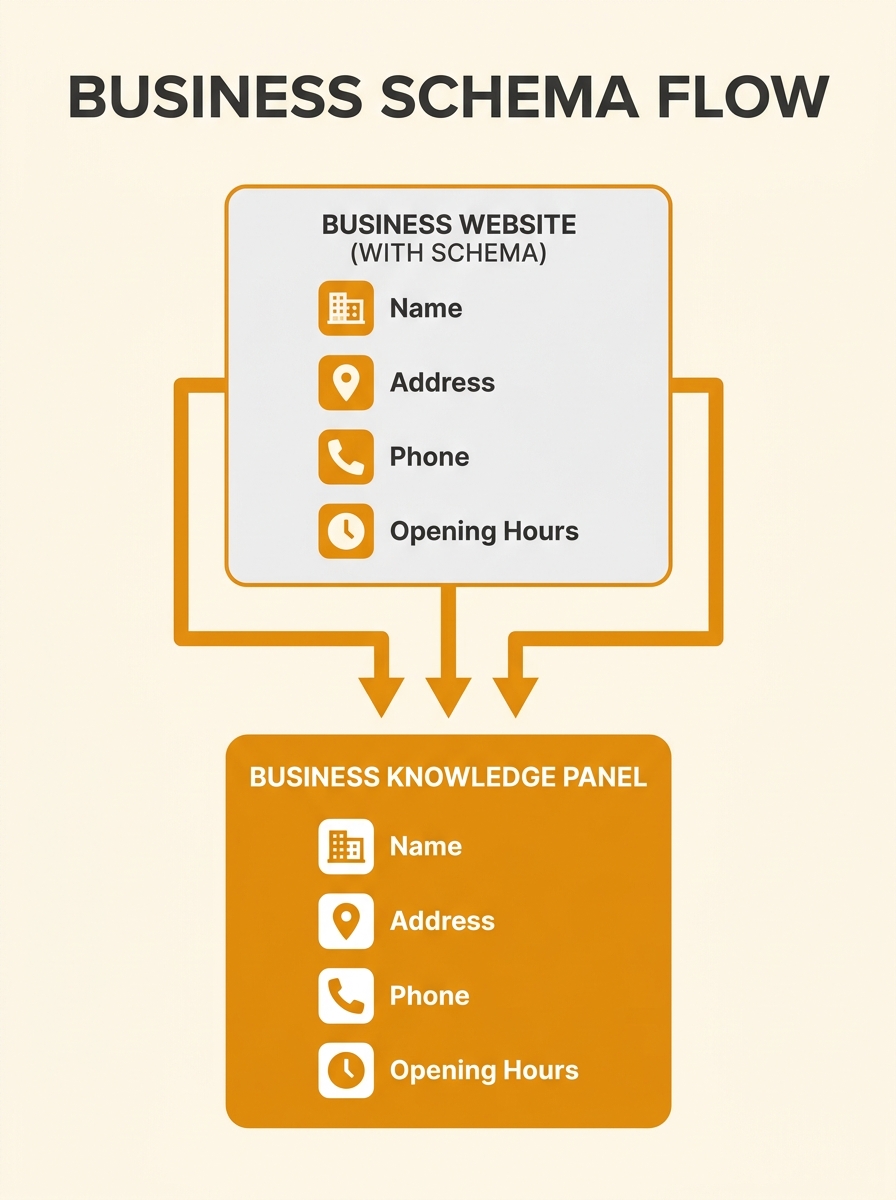
The businesses that did implement it tended to focus on Organization and LocalBusiness schema on their homepage. Basic details: business name, address, phone number, opening hours, geo-coordinates. The reward was modest — a Knowledge Panel appearance here, a slightly richer search listing there. For a plumber in Parramatta or a dentist in Geelong, schema was background infrastructure that Google appreciated but didn’t visibly reward.
What mattered during this period was getting your site architecture right. Businesses that had clean technical foundations benefited more from schema because Google could actually crawl and process it. Schema on a poorly structured site was decoration on a building with no front door.
The FAQ and HowTo Gold Rush
Then Google expanded rich result eligibility for FAQPage and HowTo schema, and every SEO plugin in the WordPress ecosystem added one-click FAQ generation. Suddenly, a service page with three frequently asked questions could dominate a full SERP viewport. FAQ dropdowns pushed competitors below the fold. Businesses stacked questions onto pages regardless of whether the content supported them.
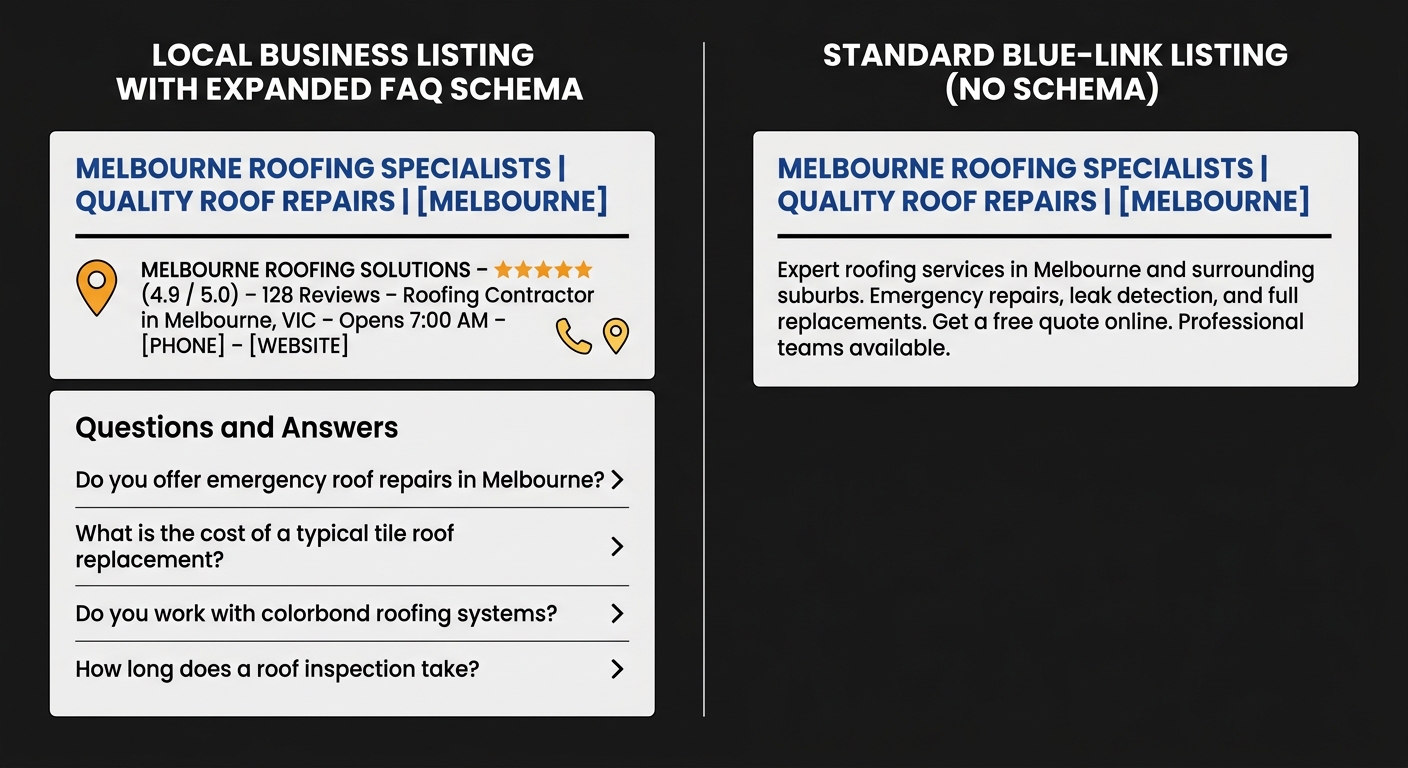
Australian SMEs caught on quickly. Trade businesses, professional services firms, and local retailers added FAQ sections to every page they could. As Temerity Digital documented, “Service pages with proper schema, especially Service, LocalBusiness, or FAQPage markup, can trigger enhanced snippets: FAQ dropdowns, review stars, pricing info, directly in the results. More real estate, better CTR, no extra ranking needed.”
FAQ schema implementation became the single fastest structured data ROI play for SMEs. A bakery in Brisbane could add five questions about wedding cake pricing and watch its listing expand to occupy three times the vertical space of competitors. The payoff was immediate and visible.
But the gold rush attracted abuse. Pages accumulated dozens of FAQ items unrelated to the primary content. Schema described supplementary sidebar content rather than the main page purpose. Google was watching, and the correction came hard.
Google Pulls the Handbrake
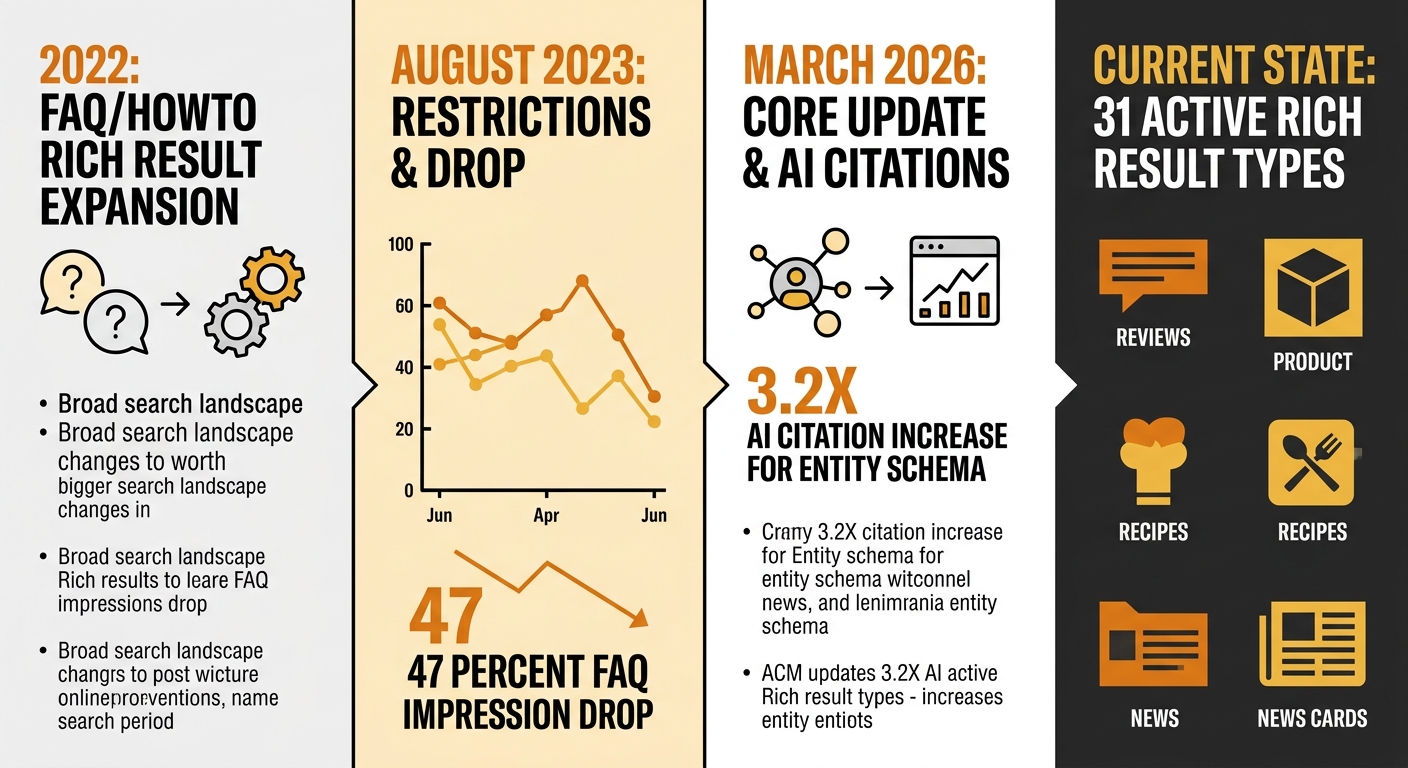
In August 2023, Google restricted FAQ rich results to pages from “well-known, authoritative government and health websites.” HowTo rich results were removed from desktop SERPs entirely and limited on mobile to pages where HowTo content was the primary purpose. The changes applied globally, but hit Australian SMEs particularly hard because so many had built their local SERP strategy around FAQ expansion.
FAQ rich result impressions dropped by 47% across the board. Businesses that had relied on FAQ dropdowns for click-through rate advantages saw their enhanced listings disappear overnight, reverting to standard blue-link format.
Many Australian business owners concluded schema wasn’t worth the effort anymore. That reading missed the point of what Google actually did. The restriction targeted abuse: schema applied to non-primary content, stuffed into sidebars, bolted onto pages where the FAQ was an afterthought. FAQPage markup remained fully supported for pages where frequently asked questions are the genuine focus of the content. The complete schema checklist for local businesses covers which page types qualify and which don’t.
Warning: Google’s FAQ schema restrictions don’t mean FAQ markup is dead. They mean it only works on pages where Q&A content is the primary purpose. If your FAQ section is a bolt-on afterthought, remove the schema. If your page genuinely answers customer questions, keep it.
March 2026 Changed the Equation
Google’s March 2026 core update shifted structured data from a SERP enhancement tool to an entity verification mechanism. Organization and Person schema with SameAs identifiers became the highest-value implementation for any business wanting visibility in AI-powered search features. Sites with clean, accurate entity schema saw AI Mode citation rates increase by 3.2x compared to sites without it. Only 31 schema types retained active rich result support, and eligibility was restricted to pages where the schema describes the primary content purpose.
This shift happened because Google’s Gemini-powered AI Mode now uses structured data to verify claims and resolve entity relationships. When the system generates an answer about “best physiotherapist in Adelaide,” it cross-references the Organization schema on candidate websites against known entity data: ABN registrations, Google Business Profile details, LinkedIn company pages, and industry directory listings.
As Yellow Pages’ schema guide puts it, “By using schema markup, you increase the chances of your content being selected as a featured snippet or direct answer, enhancing your visibility in voice search results.” That statement applies even more forcefully to AI-generated answers, which now power a growing share of Google’s search surface.
The May 2026 core update reinforced this direction by rewarding content that AI systems can extract and cite. Schema became the bridge between your content and AI search features, functioning as a trust credential rather than a visual enhancement.
The Five Schema Types Worth Implementing
Given where things stand, here’s where Australian SMEs should invest their schema markup effort. Every implementation should use JSON-LD placed in the document head. Google hasn’t changed its preference for this format: microdata and RDFa deliver no additional benefit.
| Schema Type | Primary Function | Rich Result? | AI Citation Signal? | Priority |
|---|---|---|---|---|
| LocalBusiness | Name, address, hours, geo-coordinates, service area | Yes (Knowledge Panel, Map Pack) | Yes (entity verification) | Critical |
| Organization | Entity identity, SameAs links, knowsAbout properties | Limited (Knowledge Panel) | Yes (primary trust signal) | Critical |
| FAQPage | Structured Q&A on primary-content FAQ pages | Yes (FAQ dropdowns, restricted) | Yes (answer extraction) | High |
| Product/Offer | Pricing, availability, reviews | Yes (product snippets, Shopping) | Yes (product data feeds) | High (ecommerce) |
| Service | Service descriptions, area served, provider | Limited | Yes (service matching) | Medium |
LocalBusiness
This is the foundation for any business with a physical location or defined service area. It communicates your business name, street address, opening hours, phone number, and geo-coordinates to search engines in an unambiguous format. For trades and service businesses, the areaServed property defines your geographic reach without requiring a shopfront.
ROI.com.au’s platform automates schema creation for common business types including LocalBusiness, Product, Event, Article, and FAQPage, with built-in validation. If you’re running WordPress or Shopify, plugins like Yoast or RankMath handle LocalBusiness schema reasonably well, though you should validate the output with Google’s Rich Results Test before assuming it’s correct.
Organization with SameAs
This schema type gained the most value in 2026. Your Organization markup should include SameAs identifiers linking to your LinkedIn company page, Google Business Profile, ABN Lookup entry, and any industry directory listings. The knowsAbout property lets you declare topical expertise, which helps AI Mode select your content as a source for specific query categories.
If you’re working with a local SEO services provider, make sure they align your Organization schema SameAs links with your Google Business Profile and citation network. Inconsistencies between structured data and business directory listings create entity confusion that undermines both traditional rankings and AI citations.
After March 2026, the primary function of schema shifted from visible SERP enhancement to invisible entity verification: telling Google’s AI systems who you are and why your content should be cited.
FAQ Schema Implementation
FAQPage schema still works on the right pages. The restriction Google imposed targets pages where FAQ content is secondary or manufactured as a SERP manipulation tactic. If your page genuinely answers common customer questions as its primary purpose, FAQ schema remains one of the highest-return implementations available. A well-structured FAQ page with 5-8 questions relevant to your local service area can still trigger expanded listings in standard search and provide answer-ready content for AI extraction.
Where This Lands Now
The schema landscape for Australian SMEs sits in a genuinely useful place. The gold-rush mentality burned off, and what remains is a focused set of schema types serving two distinct purposes: earning visible rich results on high-intent content pages, and building the entity trust signals that Google’s AI systems use to decide which businesses to cite.
Structured data ROI for SMEs is arguably higher now than during the FAQ gold rush, because businesses that implement schema properly face less competition from sites that were gaming the system. With FAQ impressions down 47%, HowTo gone from desktop, and only 31 active rich result types remaining, the available slots go to sites with genuine, accurately-marked primary content.
For businesses approaching this work through a technical SEO prioritisation lens, the implementation order is straightforward. LocalBusiness and Organization schema go on your homepage first. FAQPage markup goes on your 3 to 5 most-visited service pages where you already have genuine question-and-answer content. Product and Service schema go on the pages that describe what you sell. If your SEO marketing budget is tight, that sequence covers 90% of the achievable value.
Implementation doesn’t require a developer. JSON-LD generators, CMS plugins, and Google’s Rich Results Test make the technical work manageable for any business owner willing to invest an afternoon. And if you want a second pair of eyes before going live, an independent SEO consultation focused on schema audit typically takes 2 to 4 hours and produces a prioritised implementation list you can work through at whatever pace suits your business.
The 787 schema types you’re ignoring aren’t costing you anything. The 5 you implement correctly will show up in the data within weeks.