
In 2019, a mid-sized e-commerce retailer based in Austin, Texas watched its organic traffic collapse by 74% in a single weekend. No algorithm warning. No manual action notice from Google. Just silence where customers used to be. The culprit? A $299 “link package” purchased from a vendor promising 500 backlinks in 48 hours. The vendor delivered. Google noticed. The site never fully recovered. Stories like this play out every week across thousands of businesses that invested in the wrong seo link building services — or worse, avoided link building entirely because the market looked too confusing to trust.
Here’s the uncomfortable truth: ranking on Google without quality backlinks is like opening a restaurant with no signage and hoping foot traffic finds you. It almost never works. Yet the link building industry remains one of the most misunderstood corners of digital marketing. And that confusion costs businesses real money, every single day.
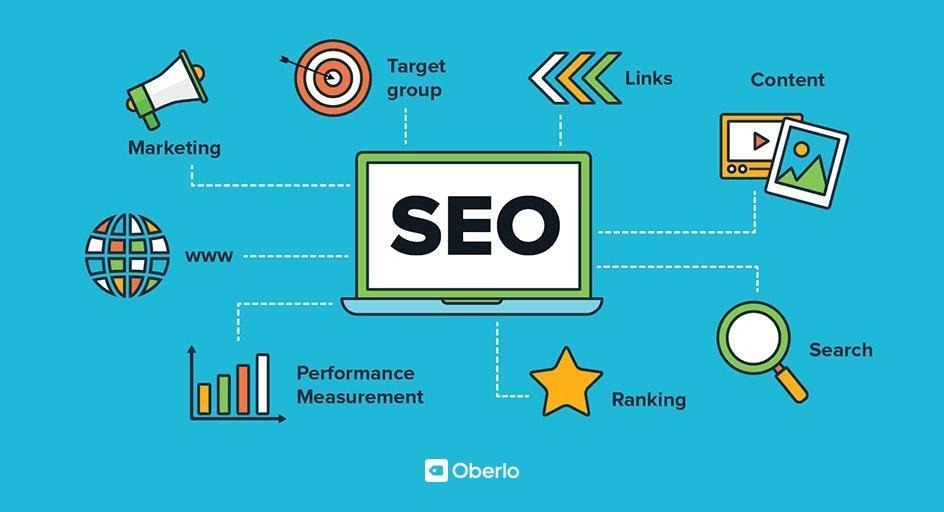
Why Good Sites Stall: The Off-Page SEO Blindspot
Most business owners have heard the advice. Publish great content. Optimize your title tags. Improve your page speed. They follow it. Then they check their rankings six months later and find they’ve barely moved.
What nobody tells them clearly enough is this: on-page optimization is table stakes. It gets you in the game. But without a strong backlink profile, you’re essentially shouting into a room where Google can’t hear you.
Google’s algorithm treats backlinks as votes of confidence. A link from a high-authority, relevant website says to Google: “This content is worth reading.” The more credible those votes, the more Google listens. According to research published through Stanford’s InfoLab, the original PageRank concept — the foundation of Google’s algorithm — was built entirely on the idea that links between pages carry measurable trust signals. That hasn’t changed. It’s only gotten more nuanced.
Nearly 2,000+ SEO specialists worldwide actively invest in managed link building today. That’s not a vanity statistic. That’s a market signal. The professionals who do this for a living have already run the numbers. They outsource because it works and because doing it well in-house is genuinely hard to scale.
So what happens to businesses that ignore this? They plateau. Competitors with average content but strong backlink profiles outrank them. Their paid traffic costs increase because organic never matures. The marketing budget bleeds quietly, month after month.
The Quality Gap: What Most Backlinks Actually Deliver
Not all backlinks are equal. That’s not a cliché. It’s the most important sentence in this entire article.
A link from a genuine, high-traffic publisher in your niche carries real weight. A link from a spammy directory that exists only to sell links is worse than useless — it’s actively harmful. And the gap between these two outcomes is often invisible to buyers who don’t know what to look for.
Here’s a concrete framework. When evaluating any backlink placement, three metrics should move together:
- Domain Authority (DA): A score representing the strength of a site’s overall backlink profile. Aim for donor sites at DA 50 or above. Below that threshold, the ranking impact diminishes sharply.
- Trust Flow (TF): Developed by Majestic SEO, Trust Flow measures how closely a site connects to a set of trusted seed websites. A TF of 30 or higher signals a genuinely authoritative domain — not a link farm dressed up with borrowed credibility.
- Organic Traffic: This one gets overlooked. A site can have high DA and acceptable TF but receive no real visitors. Links from sites with at least 10,000 monthly visitors carry both SEO equity and the possibility of actual referral clicks.
Most cheap link packages fail all three tests. They use Private Blog Networks (PBNs) — clusters of sites owned by the same entity, designed specifically to pass link juice artificially. Google has been dismantling PBN networks since its Penguin algorithm update in 2012, according to documentation from Google’s own Search Central blog. Each subsequent update has gotten more precise at identifying unnatural link patterns.
The Austin retailer mentioned earlier? Their 500 links came from a single PBN. Google’s algorithms flagged the pattern. The site got hit. Recovery took nearly two years and cost more in consulting fees than the original campaign ever would have.
White-hat link building avoids this entirely. Manual outreach. Real editorial placements. Actual humans writing content for actual websites with actual audiences. It takes more time and costs more per link, but the math works out differently when you factor in penalty recovery costs.
The Hidden Cost of “Free” Shortcut Links
Let’s put a number on the downside. A Google manual penalty can take anywhere from three months to over a year to recover from, according to the Search Engine Journal’s analysis of Google’s disavow and reconsideration process. During that time, a site losing even modest organic traffic — say, 5,000 monthly visitors — at a conservative $2 cost-per-click equivalent loses roughly $120,000 in traffic value annually. For an e-commerce site converting at 2%, that’s real revenue gone.
The $299 link package suddenly looks a lot more expensive.
What Managed Link Building Actually Looks Like
Here’s where most articles about link building fail their readers. They describe the problem well. Then they stop. What people actually need is a clear picture of what a legitimate, managed link building process involves day-to-day.
A proper managed workflow moves through distinct phases:
- Strategy and audit: Before any outreach starts, your existing backlink profile gets reviewed. You find out what you have, what’s hurting you, and what gaps exist in your authority relative to competitors.
- Donor selection: Potential websites for placements get vetted manually against DA, TF, and traffic benchmarks. No automation. No scraped databases. No recycled lists from three years ago.
- Client pre-approval: This step separates serious providers from shortcuts. You see the proposed donor sites before anything gets placed. You can approve or reject them. You stay in control.
- Content creation and placement: Original, contextually relevant content gets written by native-speaking writers and submitted to editorial teams at approved publishers.
- Reporting and replacement guarantee: After placement, links get monitored. If a link disappears within the guarantee window — typically one year — it gets replaced at no additional cost.
That last point deserves more attention than it usually gets. Links do disappear. Sites go offline. Content gets restructured. Editors change their minds. A one-year replacement guarantee treats link decay as a known variable rather than an acceptable loss.
Compare that to the typical experience with low-cost providers: you get a report with URLs, you check the links six months later, and roughly a quarter of them are gone. No replacement. No refund. No accountability.
The Case for a Multi-Channel Backlink Strategy
A single tactic — even great guest posting — isn’t enough to build a durable backlink profile. Google’s algorithms assess link diversity. A natural backlink profile looks like a mix of placements across different site types, different content formats, and different traffic sources.
That means guest posts on editorial blogs, yes. But also crowd marketing placements on active forums and community platforms. Contextual answers on question-and-answer platforms like Quora, where your link sits inside a genuinely useful response. Authentic contributions to Reddit threads in relevant communities. Foundation links from social profiles, business directories, and web 2.0 platforms that establish baseline domain presence.
Each channel contributes something different. Guest posts build authority. Forum and community placements build topical relevance and send real referral traffic. Foundation links stabilize the baseline. Together they create what Google reads as an organic, earned backlink profile — not a manufactured one.
For local businesses, this also extends to geographically targeted placements. A dental practice in Denver doesn’t benefit as much from a guest post on a national lifestyle blog as it does from placements on regional health and wellness sites that Google associates with local search intent.
The Agency Scaling Problem Nobody Admits Out Loud
There’s a conversation that happens inside almost every growing SEO agency, usually around the time they land their fourth or fifth client. Someone does the math on what it actually costs to run link building in-house.
It’s not pretty. You need an outreach specialist. A content writer. Subscriptions to Ahrefs, Majestic, and Moz. Time to build publisher relationships. Time to manage workflows. Time to track placements. At a fully-loaded cost, in-house link building for a small agency typically runs $8,000–$15,000 per month in labor and tools alone — before you’ve placed a single link.
Then client volume grows. You take on three more accounts. Now the in-house team can’t keep up. You hire another writer. Then another outreach specialist. Your margins compress. The work that was supposed to be a profit center starts feeling like an operational burden.
This is exactly why managed outsourcing has become the standard model for agencies that scale well. You pay for placements only when you need them. Pricing starts as low as $0.65 per link for foundation placements, scaling up to guest posts on high-authority domains. No minimum monthly commitment. No long-term contract tying you to a fixed cost regardless of client churn.
The math becomes very straightforward. You bill your client for link building. You outsource execution to a vetted provider. Your margin is the difference. Your team focuses on strategy, client communication, and retention — the things that actually grow an agency.
Agencies that use this model don’t have smaller link building operations. They have bigger ones. Because removing the operational ceiling lets them take on clients they previously had to turn away.
How to Vet Any Link Building Provider Before Spending a Dollar
The market is crowded and the range of quality is extreme. Here’s a practical checklist based on what separates providers who build durable rankings from those who eventually get their clients penalized:
- Do they publish minimum quality thresholds for donor sites — specific DA, TF, and traffic floors — or do they just promise “high quality” without defining it?
- Is every step of the process manual, or does automation enter anywhere in donor selection, outreach, or content creation?
- Can you see and approve donor sites before any content gets placed?
- Do they offer a link replacement guarantee? For how long?
- Are there contracts or minimum commitments, or can you start and stop based on your needs?
- Do they work across multiple industries and languages, or are they locked into a single niche?
- Can they show you examples of placed links on real, live publisher sites rather than PDFs of domain metrics?
If a provider hesitates on any of these, that hesitation is data. Legitimate white-hat operations don’t have anything to hide in their process. The ones that do tend to hide behind vague language like “proprietary network” or “established relationships” — which frequently means PBN or link farm.
Red flags worth treating as dealbreakers: guaranteed placements within 24 hours, pricing dramatically below market rate with no quality transparency, and refusal to share donor site lists before placement. Any one of these should end the conversation.
What Realistic Campaign Timelines Look Like
One more expectation that needs recalibration. Link building is not a 30-day fix. Businesses that expect to see ranking movement within the first month usually end up disappointed and convinced that “SEO doesn’t work” — when the reality is that it just hasn’t had time to work yet.
In practice, measurable keyword movement typically begins showing up somewhere between 60 and 120 days after sustained link acquisition begins. Domain authority and referring domain counts move earlier, often within 30–60 days. Full compounding effects — where a mature backlink profile starts lifting rankings across dozens or hundreds of keywords simultaneously — happen over six to twelve months of consistent effort.
This is why consistent monthly volume outperforms one-time link bursts. A campaign that places 20 quality links per month for six months builds compounding authority. A one-time order of 120 links followed by nothing often produces a temporary spike and then stagnation.
The Bottom Line on Backlinks and Business Growth
The businesses that rank on the first page of Google for competitive keywords almost never got there by accident. They invested in their backlink profiles the same way they invested in their products and their teams. Strategically. Consistently. With clear quality standards and a willingness to treat link acquisition as a long-term growth asset rather than a one-time expense.
The businesses that got burned — like the Austin retailer who lost two years of organic growth to a $299 shortcut — share a different common trait. They treated link building as a commodity purchase rather than a strategic decision. They bought the cheapest option available without understanding what they were actually buying.
The good news is the evaluation framework is genuinely simple. Find a provider that enforces real quality thresholds. Verify they use manual processes only. Confirm you can approve donor sites before placement. Make sure there’s a replacement guarantee. Start without a long-term commitment so you can verify results before scaling.
That checklist eliminates most of the bad actors in the market before you spend a dollar. What’s left are the operators who understand that the only link building worth doing is the kind that compounds over time — the kind that builds domain authority steadily, resists algorithm updates, and turns organic traffic into a durable business asset rather than a fragile one.
Organic search still accounts for more than half of all trackable web traffic, according to BrightEdge’s annual channel performance research. That share isn’t shrinking. The businesses that treat backlink building seriously are the ones capturing it. The ones that don’t are watching competitors take those clicks instead.
The choice is pretty straightforward when you lay it out like that.