
An internal link audit on a 500-page Australian e-commerce site will typically surface 40 to 75 URLs that no other page on the domain links to. These orphaned pages sit in the index, occasionally crawled via XML sitemaps or old external backlinks, but structurally cut off from the rest of the site. Google can find them. But without internal links signalling their importance, they receive almost no crawl priority and rank far below their potential.
This is the single biggest finding most businesses miss during routine technical SEO work. Broken links and redirect chains get attention because they throw visible errors. Orphaned pages don’t. They fail silently, which makes them worse.
Why Orphaned Pages Drain Rankings
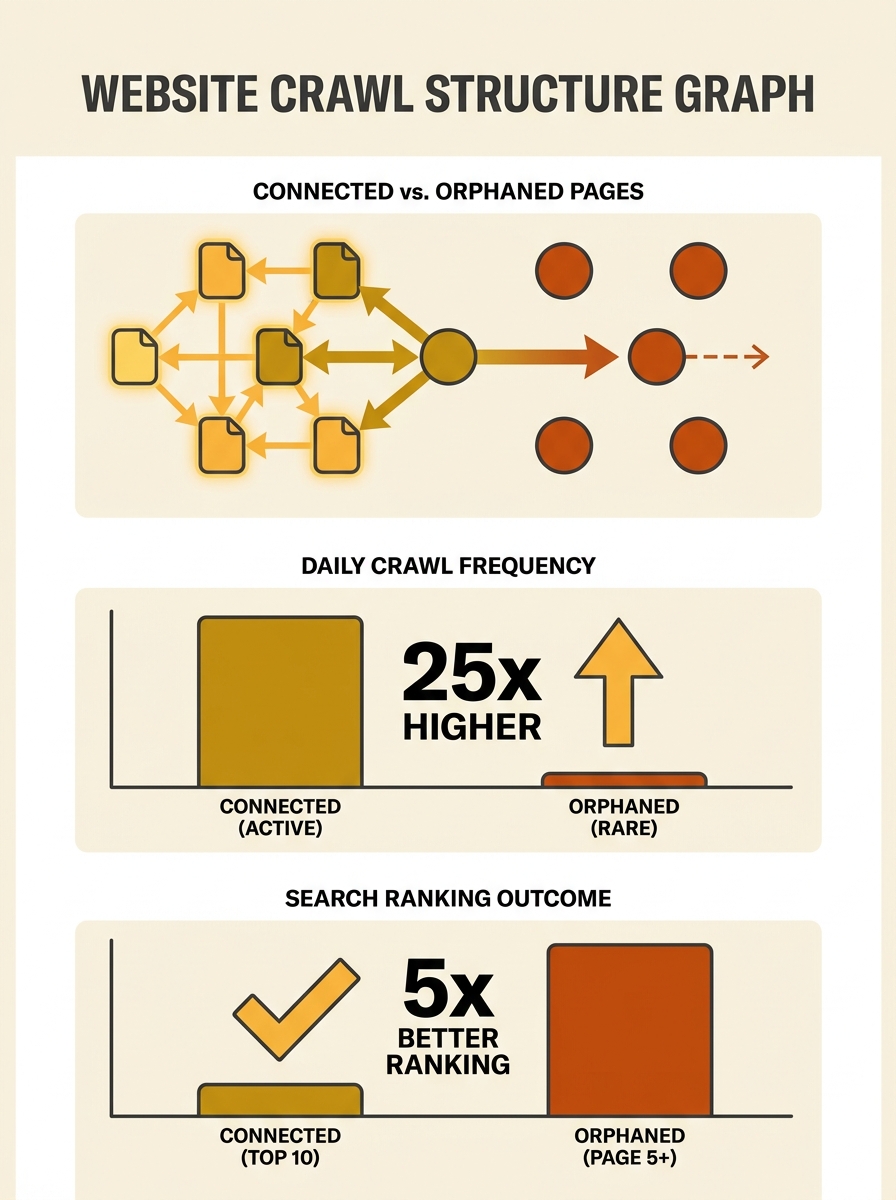
When Google crawls your site, it follows internal links to discover and evaluate pages. Pages with many internal links pointing to them get crawled more frequently and receive more internal authority (what SEO practitioners still loosely call “PageRank flow”). Pages with zero internal links get crawled incidentally, if at all.
The practical effect on your rankings is substantial. Sites that conduct regular internal link audits see an average 23% increase in organic traffic within six months, according to SEO specialists who’ve documented before-and-after data. That’s because fixing orphan pages SEO issues does two things simultaneously: it feeds link equity to pages that were starving, and it strengthens the topical clusters search engines use to evaluate your site’s authority on a subject.
For Australian businesses competing in smaller domestic markets, this matters more than it might for a US-based competitor with 10x the domain authority. When your authority budget is limited, wasting it on structural inefficiency costs you rankings you can’t afford to lose.
How to Find Orphaned Pages
The detection method is straightforward in concept: compare what’s in your site structure against what Google actually knows about. Any page that exists in one dataset but not the other is a candidate.
Step 1: Crawl Your Site
Screaming Frog remains the standard tool here. Run a full crawl of your domain and export the list of all discovered URLs. As InLinks notes in their internal link audit guide, Screaming Frog tracks all internal links it finds and lets you sort by inlinks count. Filter the results to show pages with zero incoming internal links. These are your structural orphans.
Step 2: Cross-Reference with Sitemaps and Search Console
Crawling alone won’t catch everything. Some orphaned pages aren’t in your navigation or linked from any page, but they do appear in your XML sitemap or in Google Search Console’s indexed pages list. As Botify explains in their guide to orphan page detection, you can compare your sitemap URLs against your crawl data to find pages Google is discovering but that aren’t part of your site structure.
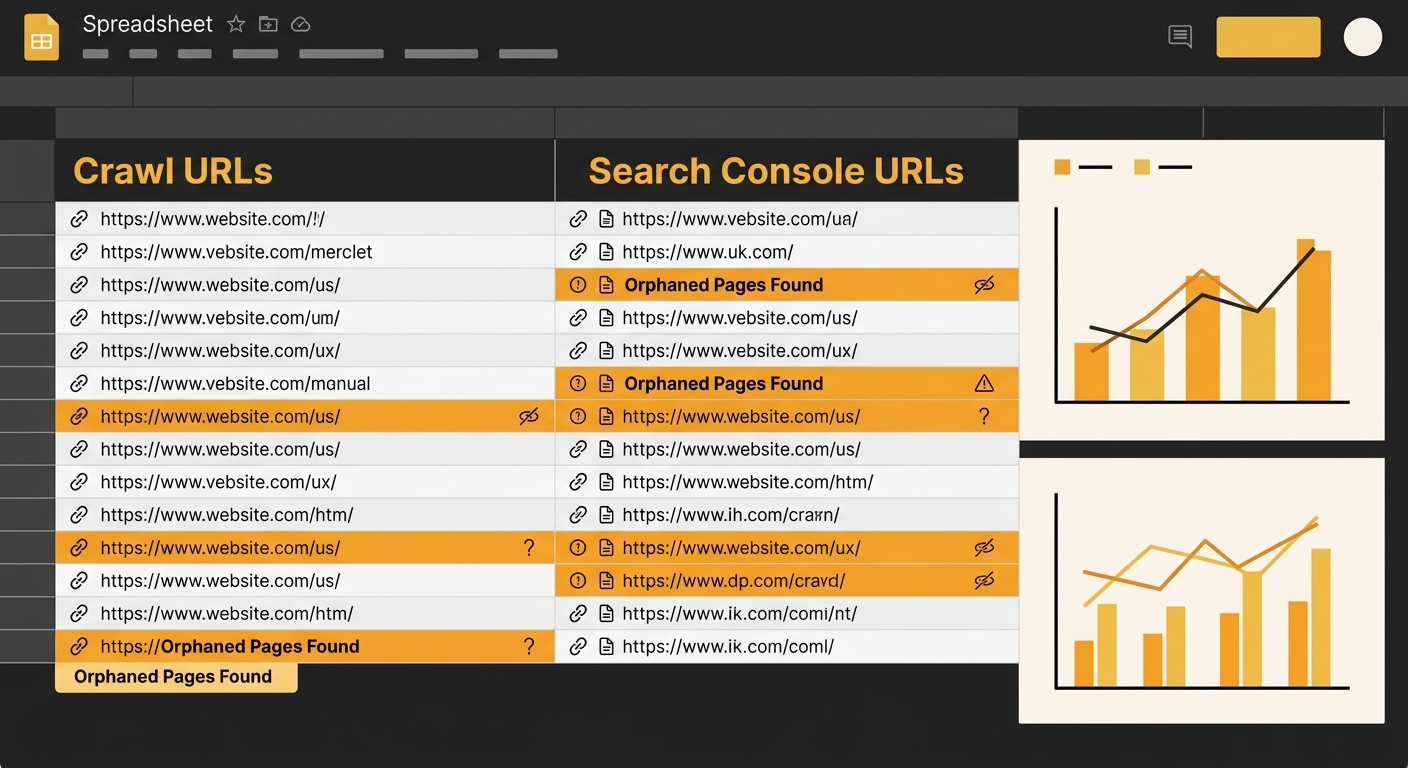
Pull your full URL list from Search Console, overlay it against your crawl export, and flag any URLs that appear in Search Console but not in the crawl. Those pages are live, indexed, and completely disconnected from your internal link graph.
Step 3: Prioritise by Value
Not every orphaned page needs fixing. Some should be deindexed or redirected. Others are high-value service pages or blog posts that accidentally lost their internal links during a redesign or content restructure. Use Google Analytics data to identify which orphaned pages still receive organic traffic or conversions, and prioritise those for reintegration.
If you’ve recently been through a site redesign and aren’t sure what changed structurally, our website migration SEO guide walks through the audit process for catching exactly this kind of breakage.
Broken Link Chains and Redirect Loops
Orphaned pages are the invisible problem. Broken links are the noisy one, and redirect chains sit somewhere in between.
A broken internal link (pointing to a 404 page) does two kinds of damage. It wastes the crawl budget Google allocated to following that link, and it creates a dead end for users. Research from RankWithLinks found that 88% of users are less likely to return to a website after encountering broken links, with direct impacts on bounce rates, session duration, and conversion rates.
Redirect chains are subtler. A chain forms when Page A links to Page B, which 301-redirects to Page C, which 301-redirects to Page D. Each hop adds latency and dilutes the link equity being passed. As Nuwtonic documents in their comparison of broken links versus redirect chains, high bounce rates from broken navigation signal to search engines that your content lacks value, while redirect chains increase page load times and risk crawl abandonment on longer sequences.
The biggest link structure problems don’t announce themselves. They accumulate quietly across dozens of content updates, redesigns, and CMS changes until a rankings drop forces someone to look.
The fix is a two-phase process:
- Update internal links to point directly to final destination URLs. Don’t rely on redirects to do the work. If Page A needs to link to Page D, change the href to Page D’s URL.
- Keep redirect rules in place as a safety net for external links. You can’t control what other sites link to, so the 301 chain should still resolve correctly. But your own internal links should never depend on it.
This kind of structural decay builds up gradually, especially on sites that have been through multiple redesigns or CMS migrations. We’ve written about how this accumulates in our piece on technical SEO debt for Australian businesses, and the pattern holds: the longer you wait, the more tangled the chain becomes.
The Audit Checklist
Here’s the practical sequence for a complete internal link audit. This works whether you’re doing it yourself or handing it to an agency as a technical SEO checklist for your Australian site.
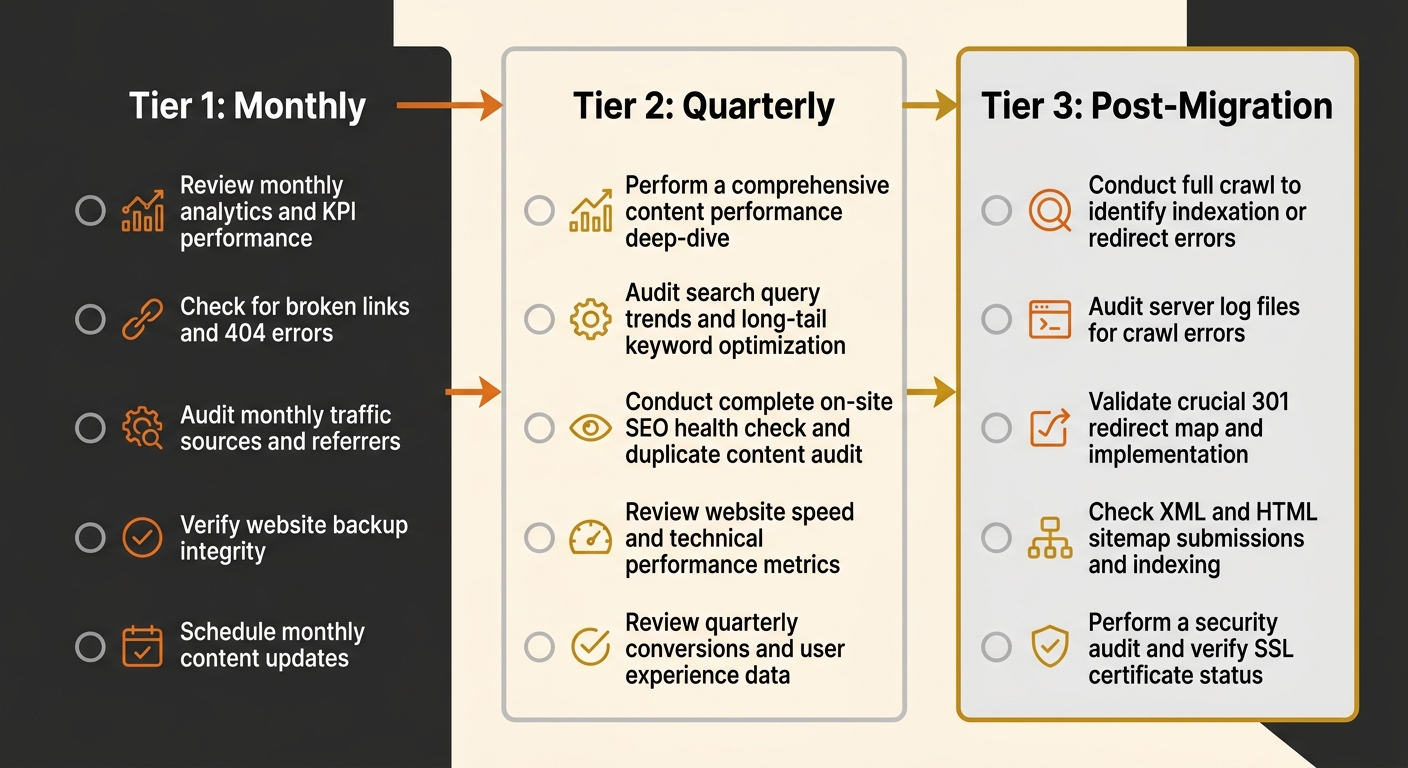
Monthly checks:
- Run Screaming Frog or Sitebulb and filter for internal links returning 4xx status codes
- Check for any new pages added without internal links (common when blog posts or product pages are published in draft then forgotten)
- Review redirect chains longer than two hops
Quarterly checks:
- Full orphan page detection using the three-step method above (crawl, Search Console comparison, Analytics overlay)
- Click depth analysis: identify important pages that sit more than three clicks from the homepage
- Anchor text review: ensure internal links use descriptive, varied anchor text rather than generic phrases like “click here” or “read more”
- Topic cluster integrity: confirm that related pages link to each other and to their parent pillar page
If you’ve been building content clusters but haven’t audited whether the internal links actually connect them, our content architecture blueprint covers how the structural and strategic layers fit together.
Post-migration or post-redesign:
- Compare pre-launch and post-launch crawl exports for link count changes on key pages
- Check that all old URLs either resolve correctly or redirect to appropriate equivalents
- Verify that XML sitemaps have been updated to reflect the new URL structure
After every check, log what you found and what you fixed. A spreadsheet works. Link structure optimisation is a cumulative process, and if you’re fixing the same category of issue every quarter, the root cause is probably in your publishing workflow rather than in the links themselves.
Where These Audits Typically Fall Short
The tools are good. Screaming Frog, Sitebulb, Ahrefs Site Audit, and even free options like Seomator all catch the mechanical problems: broken links, redirect chains, pages with zero inlinks. Where audits tend to fail is in the interpretation layer.
Finding an orphaned page is easy. Deciding what to do with it requires context. Should you add internal links to it from existing content? Should you merge it into a more authoritative page? Should you deindex it entirely? The answer depends on whether the page serves a genuine search intent, whether it has external backlinks worth preserving, and whether it fits within your broader site taxonomy.
For businesses running search engine optimisation services across multiple properties or locations, this interpretation challenge scales quickly. A 200-page brochure site is manageable by hand. A 5,000-page e-commerce catalogue with seasonal product pages, expired promotions, and legacy blog content requires automated detection paired with human decision-making about what actually deserves to stay.
And the audit itself has a shelf life. Every new page published, every URL changed, every redirect added shifts the internal link graph. A site that scores perfectly on a structural audit in January can develop orphaned pages by March if the content team publishes without linking, or if the CMS generates paginated archives that dilute link equity.
Tip: If your orphan page count grows every quarter despite regular fixes, audit your CMS templates and publishing workflow. The problem may be that new content is being created without any internal links by default, turning your publishing process into an orphan factory.
If you’ve run your own checks and the findings look concerning, an independent SEO consultation can help you separate the structural issues worth fixing from the noise. The goal is to get the diagnosis right so you’re spending effort where it actually moves rankings, rather than chasing every 404 in the crawl log.
What Still Isn’t Settled
Internal link auditing has matured as a practice, but a few questions don’t have clean answers yet.
How much internal link equity actually flows through navigation elements versus body content links? Screaming Frog and most crawlers treat all internal links equally, but SEO practitioners have long suspected that contextual links within page body content carry more weight than header, footer, and sidebar links. The data on this remains anecdotal rather than definitive, and Google hasn’t clarified.
How often is “often enough” for structural audits on a mid-sized Australian site? The monthly-quarterly-post-migration framework above is a reasonable starting point, but the right cadence depends on how frequently your site changes. A business publishing two blog posts a week needs more frequent checks than one updating quarterly.
And as AI-driven search systems place increasing weight on entity relationships and topical coherence, the connection between internal links and how your URL structure communicates with search engines is likely to become more consequential over time. Getting the structural foundation right now gives you a better starting position for whatever comes next, because structural entropy doesn’t pause while you figure out the theory.