

Google’s head of search revealed how AI-powered queries fragment into multiple smaller keyword searches behind the scenes, according to comments made on the Bloomberg Odd Lots podcast published today. The technical process, called query fan-out, has direct implications for how Australian businesses should approach keyword optimization.
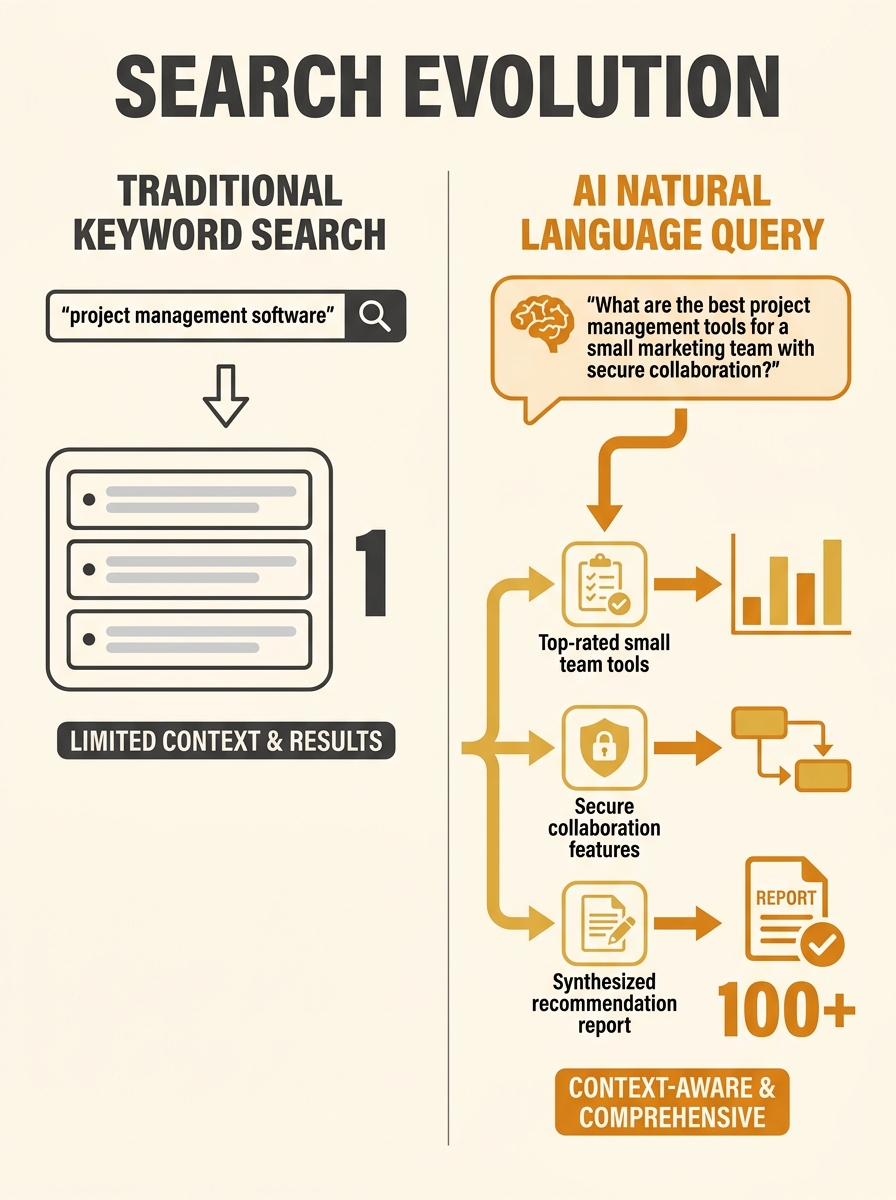
Liz Reid, Google’s vice president overseeing search, explained that when users type longer natural language queries into AI Mode or encounter AI Overviews, the system doesn’t search for that entire phrase. Instead, Google decomposes the complex query into smaller, highly specific keyword phrases, runs each through traditional search infrastructure, selects from the top three results for each component query, then synthesizes those into a single AI-generated response.
The insight challenges the assumption that businesses need to optimize for long-tail conversational queries. Query fan-out brings the process back to specific keyword phrases that traditional organic search already handles.
The Shift From Keywords to Natural Language
Reid described how search behavior has fundamentally changed with AI capabilities. Users no longer compress their actual information needs into short keyword strings like “restaurants New York.” They now type the full problem: a restaurant in a specific location for five people, moderately priced, with vegan options and kid-friendly.
“In the old world of keyword-ese, that information would be spread throughout the web,” Reid said. “And so you wouldn’t feel confident you could just put in the question. And now with AI Overviews and AI Mode, you can start to actually, and you see people do this, they tell you the real problem.”
Google has observed meaningfully longer queries and more natural language patterns in AI-assisted search compared to traditional keyword searches, according to Reid’s comments. The shift represents users expecting the system to translate their actual need rather than translating their need into computer language.
Technical Implications for Query Processing
The query fan-out process creates quality and infrastructure challenges Google hasn’t faced with cached keyword searches. When every user types slightly different natural language versions of similar needs, the system can’t cache results the way it does for repeated identical keyword queries.
“If everyone uses the same keyword and it’s not personalized, then you can cache it all,” Reid explained. “If all of a sudden the queries get much more diverse, you know, it has consequences there.”
The technical architecture means businesses competing for visibility in AI Overviews face a different optimization challenge than classic search. A single web page rarely answers all components of a complex query. Multiple sites typically share space in AI Overview results, each contributing information for different query fragments.
The fragmentation pattern mirrors what Google’s data on AI Overviews showed earlier regarding longer queries and reduced bounce clicks, suggesting the shift in user behavior is consistent across Google’s AI search products.
What Changes for Keyword Strategy
Reid’s explanation suggests that traditional keyword research remains foundational despite the natural language interface users now see. Query fan-out converts conversational queries back into specific keyword phrases before fetching results, meaning optimization targets haven’t fundamentally changed—only the user’s input method has.
The volume and diversity of one-off complex queries does create a strategic question: how much time should businesses invest optimizing for rarely-repeated long-tail phrases versus strengthening core keyword coverage that query fan-out will surface repeatedly across many different conversational queries?
The shared AI Overview space increases competition for visual elements. Reid’s comments point to brand icons, relevant images, and video content as factors that help sites claim more real estate within synthesized answers when multiple sources appear together.
Australian businesses already working through AI search visibility frameworks will recognize query fan-out as reinforcing the importance of comprehensive topic coverage rather than betting on specific long-tail query matches.
The Takeaway
Google’s confirmation of query fan-out architecture settles a key strategic question for Australian businesses investing in organic search: keyword research hasn’t become obsolete in the AI search era. The natural language interface users type into simply masks the traditional keyword matching happening underneath.
For marketing managers evaluating SEO priorities, Reid’s technical explanation suggests resources remain better spent deepening coverage of core topics than chasing every possible conversational query variation. Query fan-out will decompose those variations back into the specific keyword phrases strong content already targets.
The insight also confirms why AI-generated summaries dominating search results hasn’t eliminated the need for traditional on-page optimization. Google’s AI synthesis layer sits on top of classic search infrastructure—it doesn’t replace the ranking signals that determine which pages surface for each component query.