

A technical guide published today by St. Louis Media outlines three core requirements for business websites seeking visibility in AI search results: server-side rendering for machine readability, nested JSON-LD schema graphs defining business entities, and definition-first content architecture answering direct user intent, according to the guide posted on stl.news.
TL;DR: St. Louis Media’s guide positions AI search optimization as requiring fundamental technical redesign—server-side rendering, structured schema, and deep content—rather than incremental SEO adjustments.
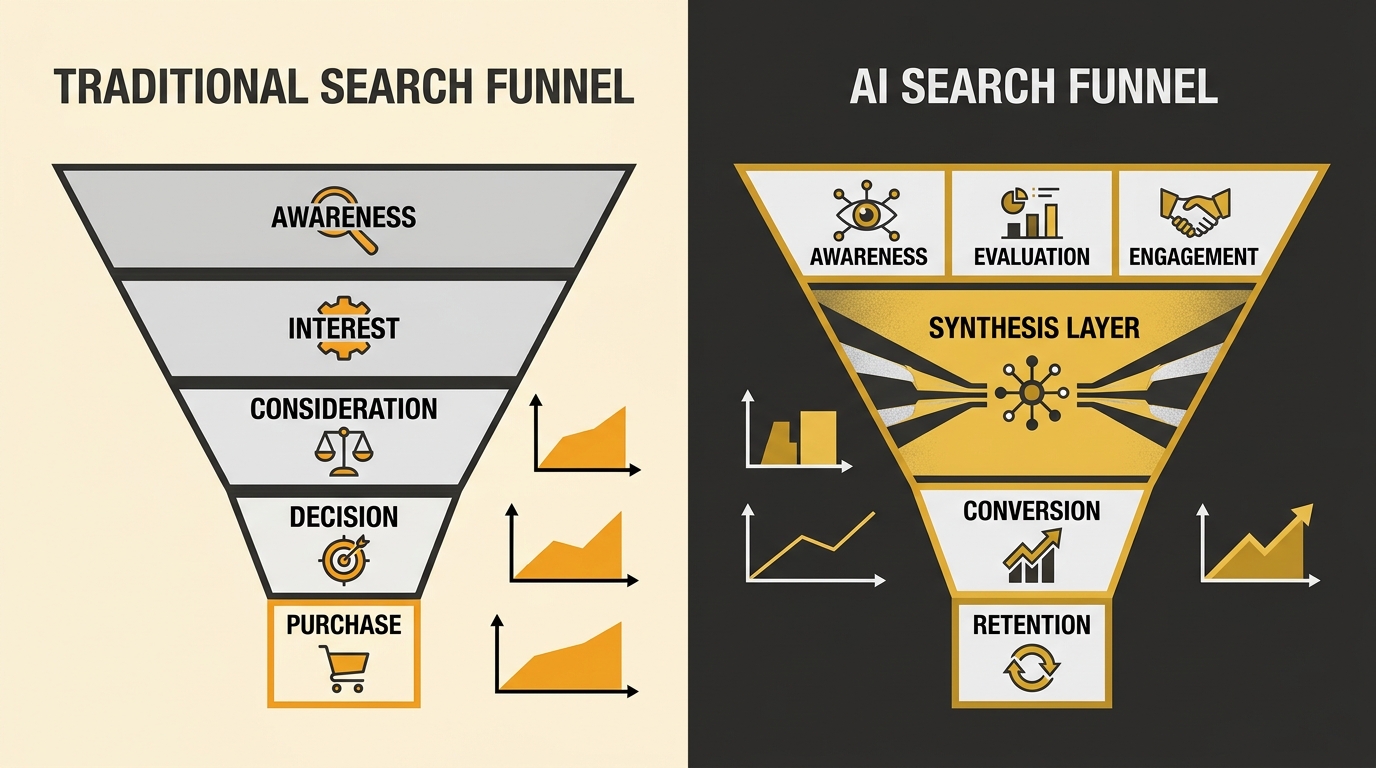
The guide frames the shift as a replacement of traditional search’s “ten blue links” funnel with AI-mediated results surfacing one to three synthesized citations per query. The publication claims “hundreds of millions of consumers” have abandoned keyword searches for conversational AI interfaces that read recommendations aloud rather than display ranked website lists.
Four-Stage Retrieval Process Requires Machine-Readable Data Layers
The guide describes AI search engines as executing a four-stage Retrieval-Augmented Generation (RAG) cycle: prompt analysis, multi-source data retrieval, factual filtering, and citation generation. Unlike traditional search indexing based on keyword density and backlink counts, the RAG architecture parses conversational prompts averaging fifteen to twenty-five words, extracts semantic concepts, and evaluates upstream sources before generating responses.
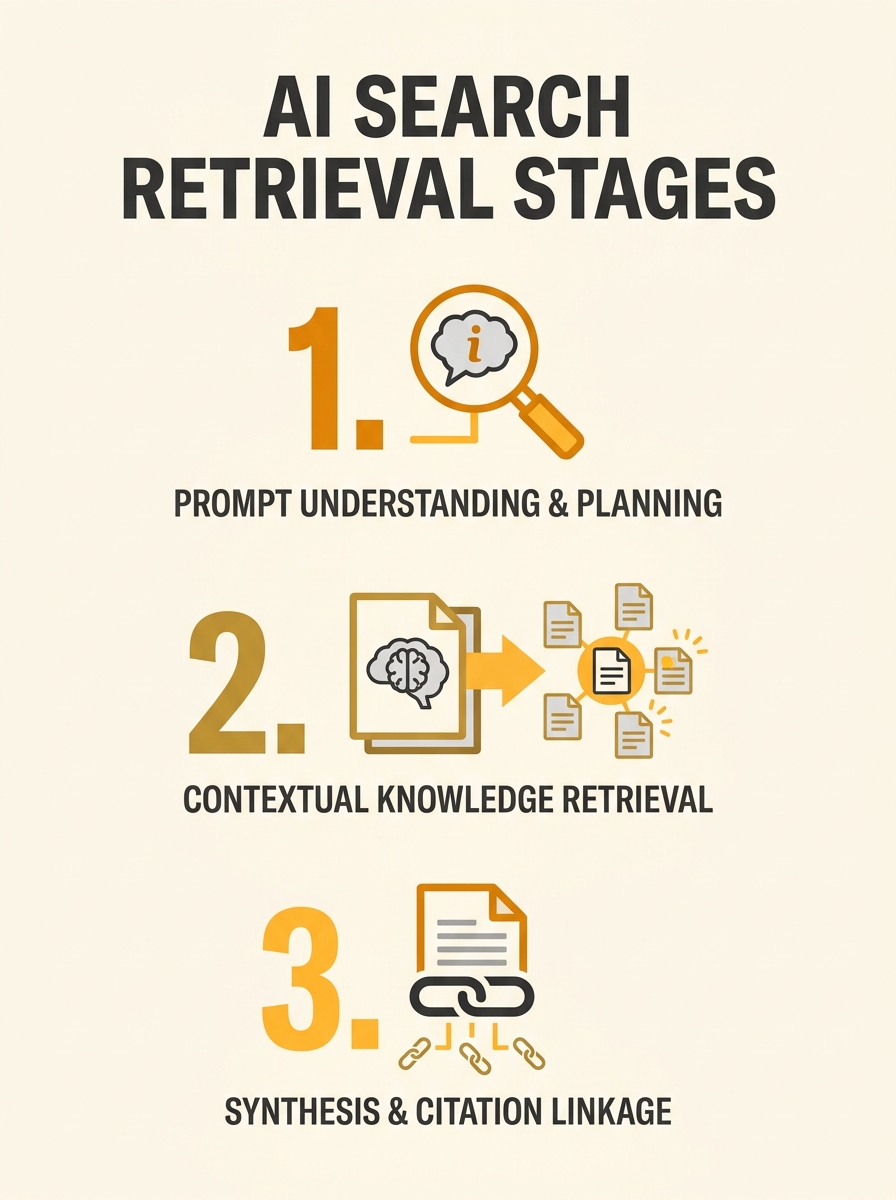
Sites built with client-side JavaScript rendering fail this retrieval stage because AI crawlers cannot execute JavaScript at scale, the guide states. Server-side rendering delivers pre-rendered HTML to crawlers on initial request, eliminating the lag traditional search engines tolerated. The guide positions SSR as mandatory rather than optional for AI visibility, contrasting with the baseline technical requirements Google enforces for traditional search where rendering method carries indirect weight.
The second technical requirement centers on JSON-LD structured data implementing multi-tiered schema graphs. The guide recommends nesting LocalBusiness, Service, Product, Review, and FAQPage schemas within a single Organization graph to “explicitly define business entities” for AI parsers. Traditional schema markup focused on individual page types; the guide argues AI search demands interconnected entity definitions mapping relationships across the site architecture.
Definition-First Content Replaces Keyword-Optimized Pages
The guide’s content strategy shifts from keyword distribution to what it terms “definition-first” architecture. Each page must open with explicit answers to user intent rather than introductory paragraphs building toward conclusions. The publication contrasts traditional SEO content averaging 800-1,200 words with its recommended “deep topical authority” threshold of 2,500-4,000 words per core service page.
The guide prescribes embedding hard statistics, citing authoritative external sources, and including credentialed expert quotations as signals AI engines use during factual filtering stages. It recommends maintaining a “strict 30-day content freshness cycle” to signal active expertise, positioning content recency as a trust filter AI platforms apply before citation.
St. Louis Media frames E-E-A-T signals—expertise, experience, authoritativeness, trustworthiness—as verification layers AI search evaluates through co-citation analysis and external reference patterns. The approach mirrors Google’s documented E-E-A-T evaluation framework, extended to conversational AI platforms that synthesize answers rather than rank pages.
Technical Checklist Targets Developer Implementation
The guide includes a four-section technical checklist: server configuration and access control, frontend code optimization, schema implementation, and content hierarchy. Specific line items include verifying robots.txt permits AI user agents, implementing lazy loading for non-critical assets, and structuring content with H1-H6 hierarchies matching semantic question flow.
The publication positions traditional SEO and AI search optimization as requiring “complete structural contrast” rather than additive strategies. Where traditional SEO optimized for user click-through from search result pages, AI search optimization targets machine extraction for direct answer synthesis, fundamentally shifting the content production model.
St. Louis Media offers the guide as part of its service positioning for small business website redesign. The publication asserts legacy web designs face “severe consequences” and “complete invisibility” in AI search results, framing the technical requirements as survival-level rather than competitive-edge strategies.
Businesses Implications
Australian SMEs evaluating whether AI search visibility demands immediate technical overhaul face resource allocation questions the guide’s prescriptive stance intensifies. Server-side rendering migration, comprehensive schema implementation, and 2,500+ word content production carry developer hours and ongoing maintenance costs that exceed traditional SEO budgets. The guide provides no cost-benefit analysis or timeline projections for ROI.
The claimed behavioral shift—”hundreds of millions” abandoning traditional search—lacks geographic specificity or citation to measurement sources. Australian businesses must evaluate whether local search behavior mirrors the US-focused assumptions underpinning the guide’s urgency framing. The March 2026 Core Update’s emphasis on information gain and verifiable specifics suggests traditional search ranking still rewards depth, potentially reducing the gap between “legacy” and AI-optimized approaches.
The technical checklist offers actionable starting points for businesses committed to AI visibility: auditing current rendering method, implementing LocalBusiness schema, and restructuring key service pages with definition-first openers. The question remains whether these represent minimum-viable adjustments or whether full technical redesign delivers measurable citation lift in AI search results Australian customers actually use.