
Semrush’s built-in local SEO suite gives it a decisive advantage over Ahrefs for Australian small businesses that depend on suburb-level search visibility, map pack rankings, and Google Business Profile management to generate local leads. Ahrefs remains stronger for backlink research and organic content analysis, but it has no native local tools at all.
TL;DR: For Australian SMEs focused on local search, Semrush wins on local data — map pack tracking, listing management across 70+ directories, GBP integration, and social media scheduling in one dashboard. Ahrefs is the better pick for backlink depth and content-driven SEO. If you’re choosing one platform and local visibility drives your revenue, Semrush is the practical choice.
The Local Feature Gap Is Structural, Not Incremental
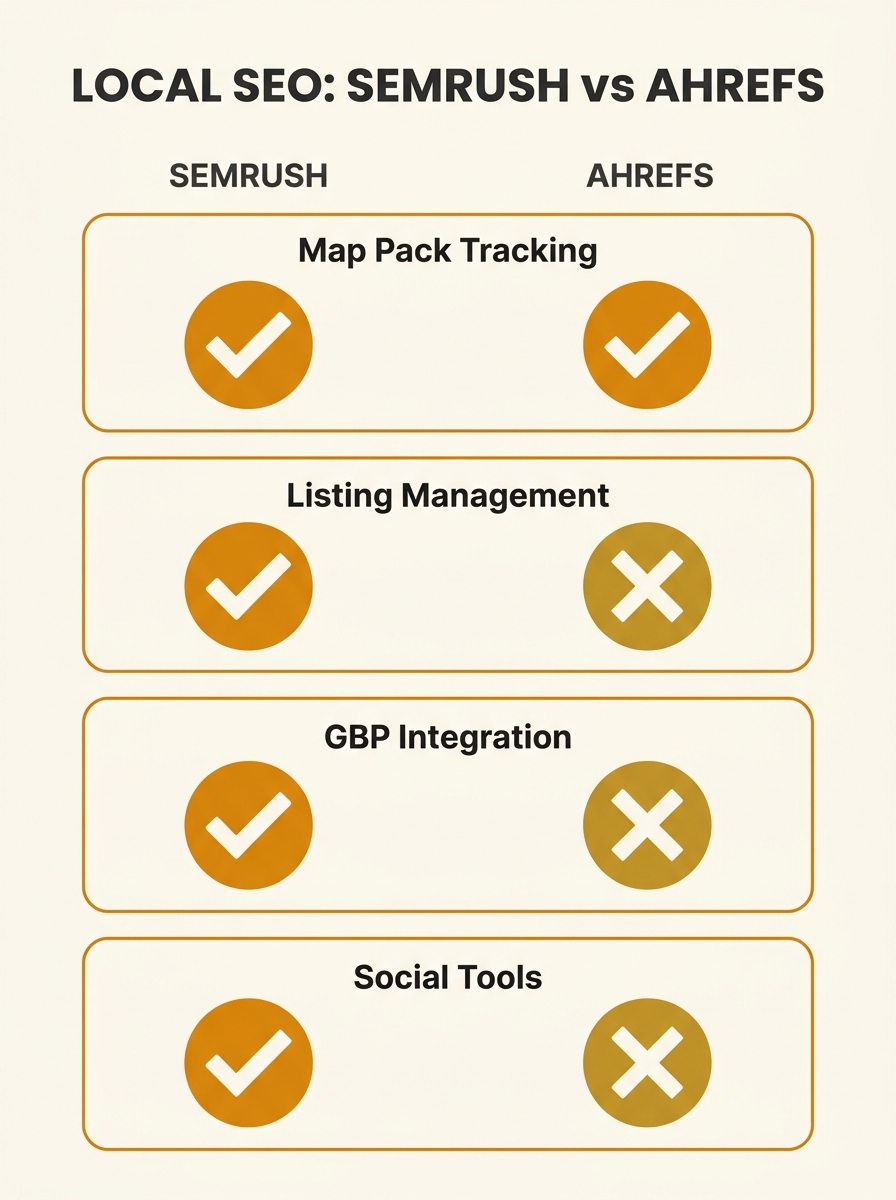
Semrush includes a dedicated Listing Management tool that pushes your NAP (Name, Address, Phone) data to over 70 directories, a Map Rank Tracker with heatmap views of local rankings, and direct Google Business Profile integration. Ahrefs offers none of these. No listing management. No map pack tracking. No GBP connection. If you’re a plumber in Sutherland Shire or a real estate agent in Bondi, this gap defines the platform decision.
An agency comparison published by SEO Growth Australia put it plainly: Semrush has dedicated local SEO tools including map pack tracking, Google Business Profile management features, and suburb-level ranking tracking. Ahrefs requires you to bolt on third-party tools like BrightLocal or Yext to cover the same ground, which adds cost and fragments your workflow.
This matters because local SEO for Australian SMEs is rarely an isolated activity. It connects directly to review management, social proof, and the broader marketing funnel that turns visibility into phone calls. A platform that tracks your map pack position alongside your social media presence and paid ad performance gives you a single view of how your local marketing is working. Ahrefs, by design, doesn’t try to do that.
Keyword Data Accuracy for Australian Searches
Why does Australian keyword data accuracy vary so much between these two platforms? Because they source and estimate search volume differently, and the margin of error widens for low-volume local queries.
According to a comparison on TraderScooter, the keyword difficulty score in Ahrefs tends to be slightly more accurate than Semrush’s estimates, while Semrush delivers more accurate search volume figures. For Australian SMEs targeting suburb-specific or service-plus-location queries, volume accuracy matters more than difficulty precision, because you need to know whether “dentist Parramatta” gets 320 searches a month or 90. That distinction determines whether you invest in a dedicated landing page or fold the term into a broader service page.
Semrush’s database covers 142 geographic markets with strong localisation for Australia. Ahrefs covers 244 locations globally but often lacks the granular local intent data that Semrush’s Keyword Magic Tool surfaces for niche Australian regions. Semrush also offers AI-powered personal keyword difficulty scores (PKDs) that adjust difficulty estimates based on your specific domain’s authority, which is useful for SMEs competing against larger national brands in local SERPs.
Info: If you’re building [topical authority for your Australian business](/blog/topical-authority-map-australian-business), the keyword tool you choose affects which content gaps you identify. Semrush’s local intent filtering surfaces suburb-level opportunities that Ahrefs’ broader dataset can miss entirely.
The Social and Reputation Layer
Here’s where the SEO platform comparison intersects with social marketing strategy, and where Semrush pulls further ahead for locally focused businesses.
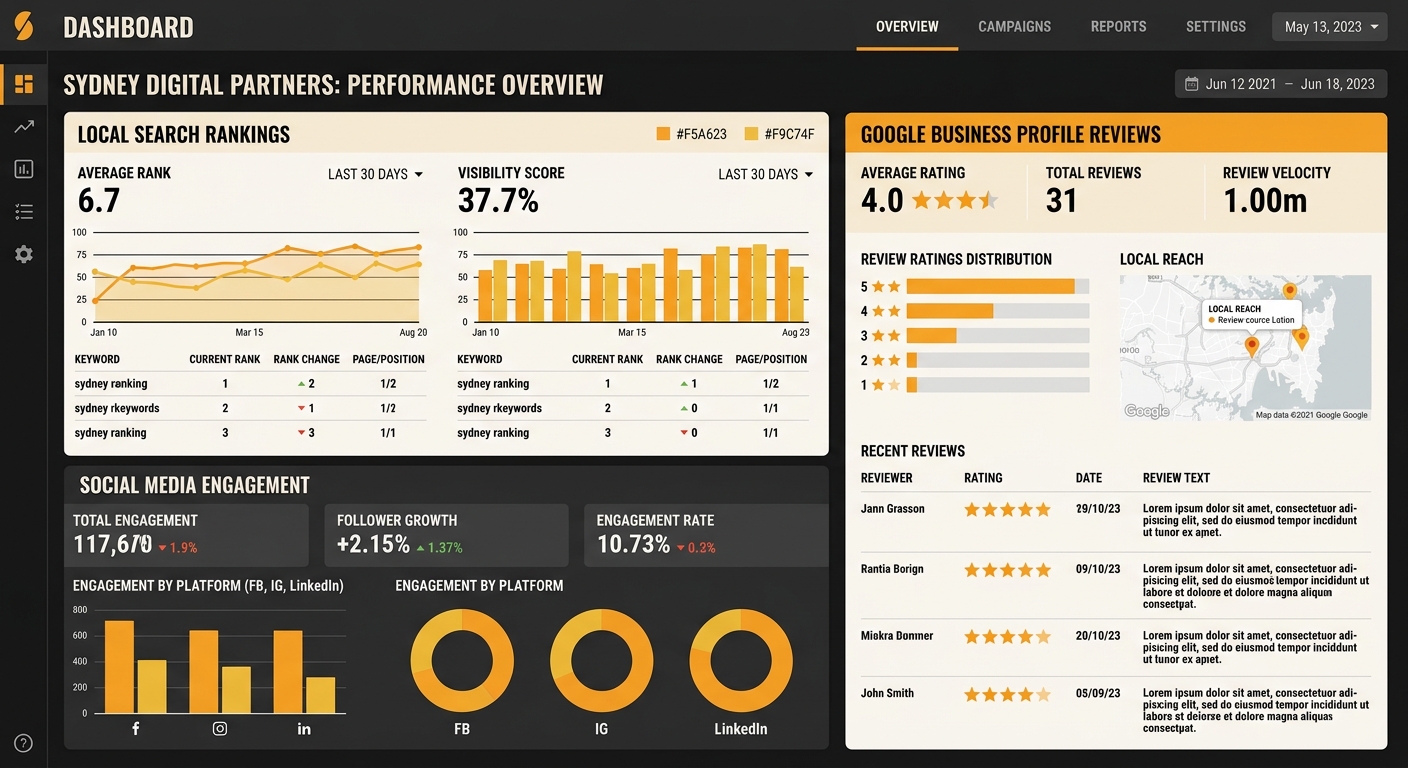
Semrush includes a Social Media Toolkit that lets you schedule posts across Facebook, Instagram, LinkedIn, and Google Business Profile from the same dashboard where you track rankings and manage listings. You can monitor competitor social activity, track engagement metrics, and connect social performance data to your organic search results. Ahrefs has no social media features whatsoever.
For Australian SMEs, Google Business Profile functions as a social channel in practice. Posting updates, responding to reviews, and adding photos to your GBP listing are social marketing activities that directly influence your map pack rankings. Semrush’s GBP integration means you can manage these activities alongside your keyword tracking and citation management. Ahrefs forces you to context-switch between platforms, which in practice means the social and reputation work gets deprioritised.
A review of local SEO tools by sitecentre highlights BrightLocal for citation and review management, Synup and Yext for listings and review tracking, alongside Google Business Profile itself. If you’re using Ahrefs, you need at least one of these supplementary tools. Semrush rolls much of that functionality into its core subscription.
Backlink Analysis: Where Ahrefs Still Leads
Ahrefs maintains the larger and faster-updating backlink index. Its crawler updates link data every 15 minutes for high-authority domains, compared to Semrush’s 5-to-10-day delay for new link discovery. Ahrefs’ total index is smaller in raw count, but Semrush’s 43 trillion link figure (boosted by its Majestic acquisition) includes a higher proportion of historical and inactive links.
For Australian SMEs doing active link building or monitoring competitor backlink profiles, Ahrefs gives you fresher data and more reliable link quality metrics. If a competitor earns a link from a major Australian news site, Ahrefs surfaces it within hours. Semrush might take a week.
That said, backlink analysis is a content and technical SEO activity. It connects to local marketing only indirectly. An SME running a suburban physiotherapy clinic cares far more about whether their GBP listing appears in the map pack for “physio near me” than whether a competitor gained 3 new referring domains. The backlink advantage is real, but its relevance shrinks as your marketing priorities shift toward local visibility and social engagement.
If your revenue comes from customers within a 20-kilometre radius, the platform that tracks your map pack position and manages your business listings delivers more daily value than the one with the better backlink crawler.
Feature Comparison at a Glance
| Feature | Semrush | Ahrefs |
|---|---|---|
| Map pack tracking | Yes, with heatmap views | No native support |
| Google Business Profile integration | Built-in | None |
| Listing management (NAP syndication) | 70+ directories | None (requires BrightLocal/Yext) |
| Suburb-level rank tracking | Yes | Limited |
| Social media scheduling | Facebook, Instagram, LinkedIn, GBP | None |
| Backlink index freshness | 5–10 day discovery delay | 15-minute updates |
| Keyword difficulty accuracy | Good, with PKD adjustment | Slightly more accurate |
| Search volume accuracy (AU) | More accurate for local queries | Less reliable for low-volume terms |
| Geographic databases | 142 markets | 244 locations |
| AI visibility tracking | Tracks brand in AI Overviews, ChatGPT | Limited AI search tracking |
| PPC/paid ads integration | Full Google Ads toolkit | None |
| White-label reporting | Custom PDF, scheduled, branded | Basic reporting |
AI Visibility Tracking Changes the Equation
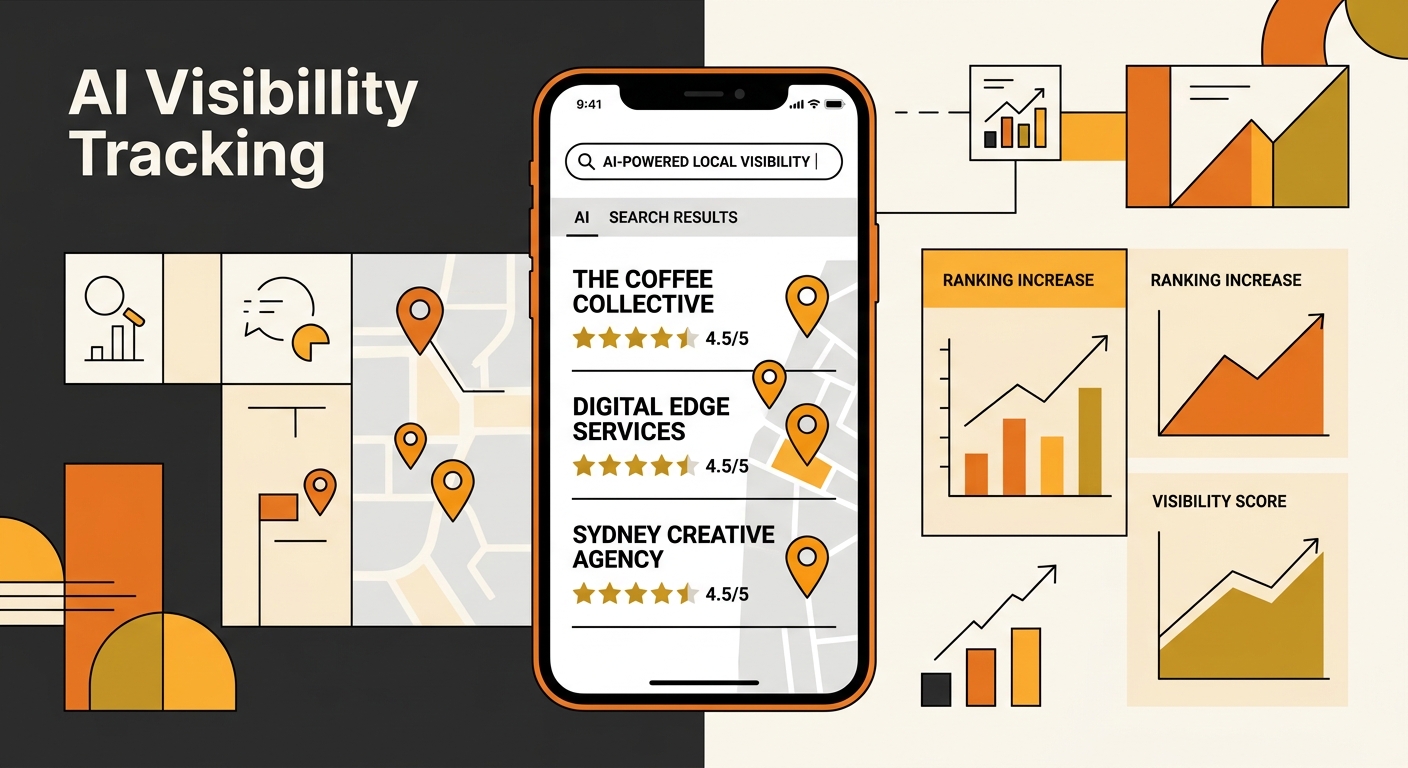
Semrush’s AI SEO Toolkit lets Australian SMEs track where their brand appears in AI-generated responses across Google AI Overviews, ChatGPT, and other generative search surfaces. For local businesses, this matters because AI Overviews increasingly answer queries like “best electrician in Melbourne’s inner west” with direct recommendations pulled from review data and local listings. If you’re auditing your AI visibility, Semrush gives you the data natively. Ahrefs tracks AI search features less directly.
Adobe’s 2025 acquisition of Semrush has accelerated integration with Adobe Experience Cloud, adding AI-driven marketing insights that blend search, social, and content performance data. The practical impact for Australian SMEs is still emerging, but the direction is clear: Semrush is becoming a broader marketing intelligence platform while Ahrefs continues to sharpen its focus on pure search analysis.
Pricing Considerations for Australian SMEs
Semrush’s Pro plan sits at roughly USD $139.95/month (about AUD $215 at current exchange rates). Ahrefs’ Lite plan starts at USD $129/month (about AUD $198). The price difference is modest, but the feature gap at these entry tiers is significant: Semrush Pro includes local listing management, social scheduling, and PPC research. Ahrefs Lite gives you solid keyword research, site auditing, and backlink tracking, but nothing local-specific.
If you add BrightLocal (from AUD $45/month) and a social scheduling tool (from AUD $25/month) to fill Ahrefs’ gaps, the total cost exceeds Semrush’s Pro plan while adding integration friction. For SMEs already stretched thin on marketing tools and workflows, consolidation into a single platform has real operational value beyond the feature checklist.
Many Australian agencies run both platforms. The combined cost — roughly AUD $400–500/month — is justifiable when serving clients across content marketing, local SEO, and paid search. But for a single SME choosing one tool, the decision should follow from where your customers find you. If the answer is local search and social, Semrush. If the answer is organic content and backlinks, Ahrefs.
What Still Isn’t Settled
Australian keyword data accuracy remains imperfect on both platforms. Neither Semrush nor Ahrefs publishes margin-of-error figures for their Australian search volume estimates, and independent testing consistently shows discrepancies between platform data and Google Search Console actuals, particularly for long-tail local queries with fewer than 200 monthly searches.
The AI visibility tracking space is moving fast. SE Ranking, a third competitor, now offers AI search visibility tracking across AI Overviews, AI Mode, ChatGPT, Gemini, and Perplexity, and costs substantially less than either Ahrefs or Semrush. Whether that platform’s Australian data depth matches the two market leaders is an open question that deserves its own comparison.
And Semrush’s post-acquisition direction under Adobe ownership will shape whether the platform stays accessible to SMEs or drifts toward enterprise pricing and complexity. Australian small businesses should watch the next 12 months of pricing and packaging changes before committing to multi-year contracts. The feature advantage is clear today. Whether it stays affordable is the question nobody can answer yet.