
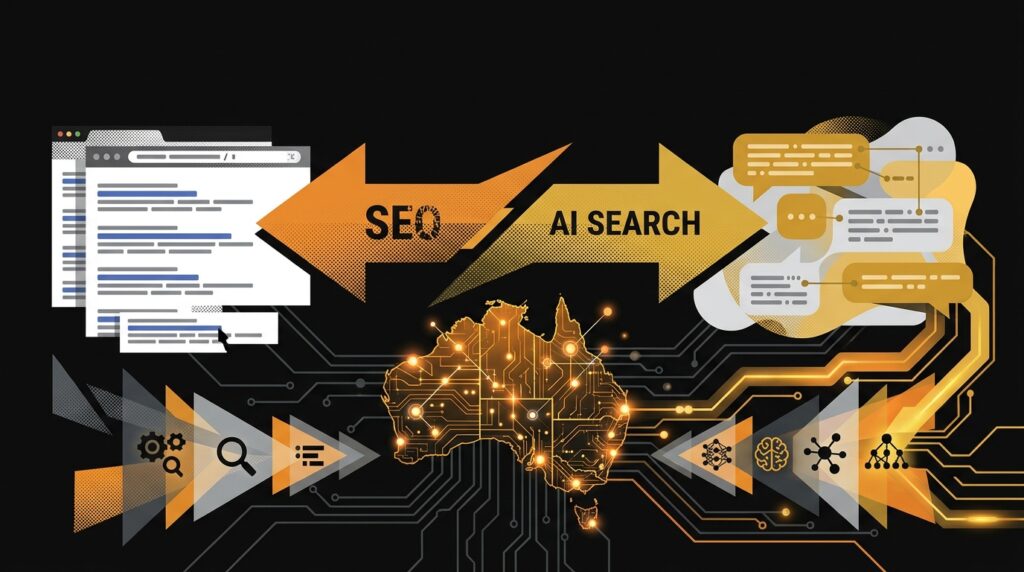
Google activated AI Overviews for Australian search results in mid-2024. Within six months, affiliate sites tracking their referral traffic saw a pattern that traditional rank-tracking tools couldn’t explain: pages holding positions one through three were losing clicks to AI-generated answers displayed above the fold.
That pattern has since been quantified. AI Overviews now appear on 58% of search result pages, and organic click-through rates on affected queries have dropped 61%. For affiliate businesses that live and die on referral clicks, this data point alone should be enough to treat AI search optimisation Australia efforts as a discipline separate from traditional SEO.
The Pre-AI Baseline: When Ranking Equalled Revenue
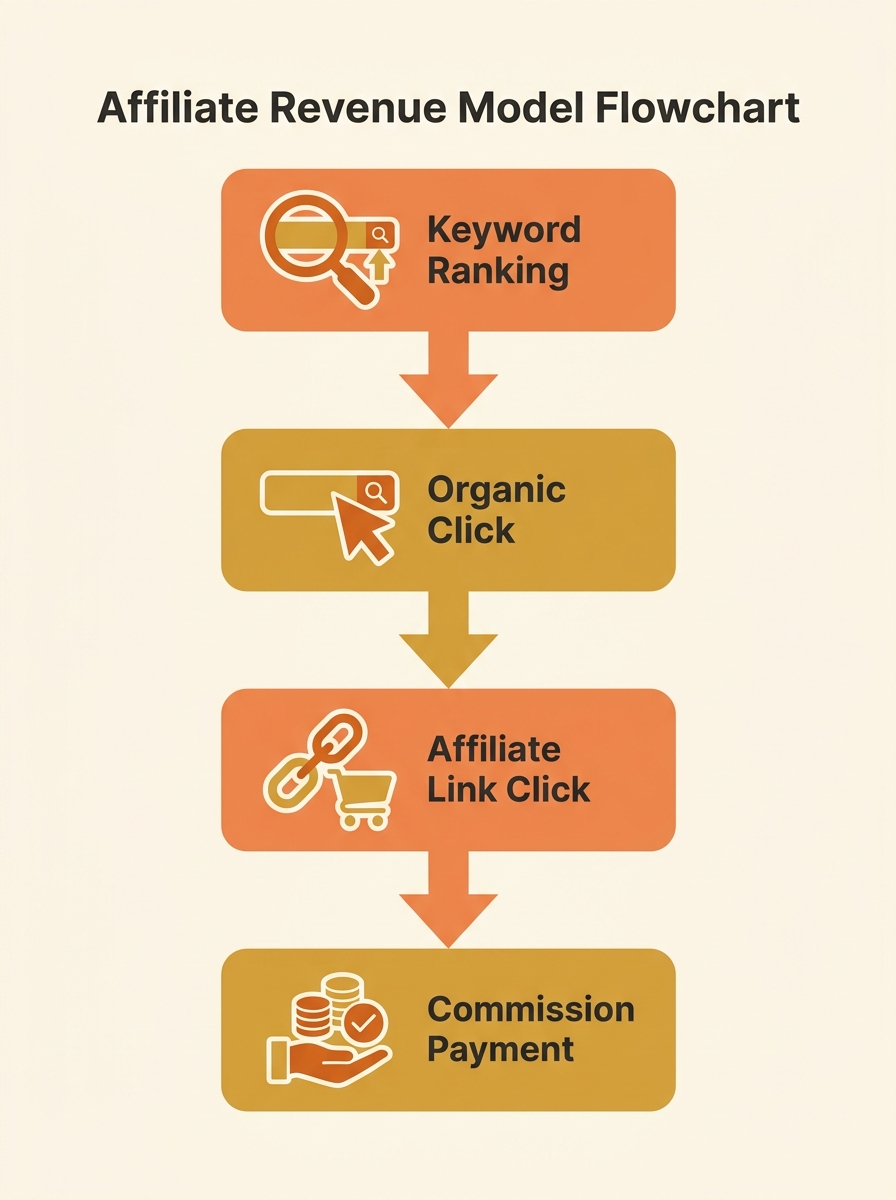
For most of the 2010s and into the early 2020s, the affiliate model ran on a straightforward equation. Rank a product review or comparison page. Earn clicks. Convert a percentage of those clicks into affiliate commissions. The entire value chain depended on one thing: position in Google’s traditional organic results.
SEO work during this era was well-defined. Keyword research, backlink acquisition, on-page optimisation, technical crawlability. Australian affiliate sites competing in niches like financial products, health supplements, and SaaS tools built substantial businesses on this model. A page ranking in the top three for “best home loan rates Australia” could generate thousands of monthly referral clicks, each one carrying commercial intent.
The tools matched the task. Platforms compared in our breakdown of Ahrefs vs Semrush for Australian SMEs gave operators clear visibility into keyword positions, backlink profiles, and competitor gaps. Rank tracking was revenue forecasting.
Mid-2024: AI Overviews Reshape the Click Path
Google’s AI Overviews rolled out broadly to Australian users between May and August 2024. The initial impact was uneven — some query categories were heavily affected while others barely changed. Informational “how-to” and “what-is” queries took the biggest hit. Commercial comparison queries, the bread and butter of affiliate content, were affected more gradually.
But the direction was unmistakable. Research from NP Digital, which we covered when top-ranked Google brands appeared in AI search responses only 31% of the time, showed that traditional ranking authority translated poorly into AI visibility. A site could hold position one in organic results and still be absent from the AI-generated answer sitting above it.
For affiliate operators, this created a specific problem. AI Overviews often synthesised comparison data from multiple sources, presenting users with a summary answer that made clicking through to any single affiliate page feel unnecessary. The zero-click phenomenon, already a concern for informational content, was creeping into commercial queries.
ChatGPT usage added another dimension. Consumers didn’t replace Google with AI chat tools — they used both. ChatGPT adoption actually increased Google search sessions from 10.5 to 12.6 per week, expanding the total search volume. But the nature of those sessions changed. Users arrived at Google having already received an AI-generated summary, making them less likely to click on affiliate comparison pages that repeated what they’d already read.
The Moment GEO Diverged From SEO
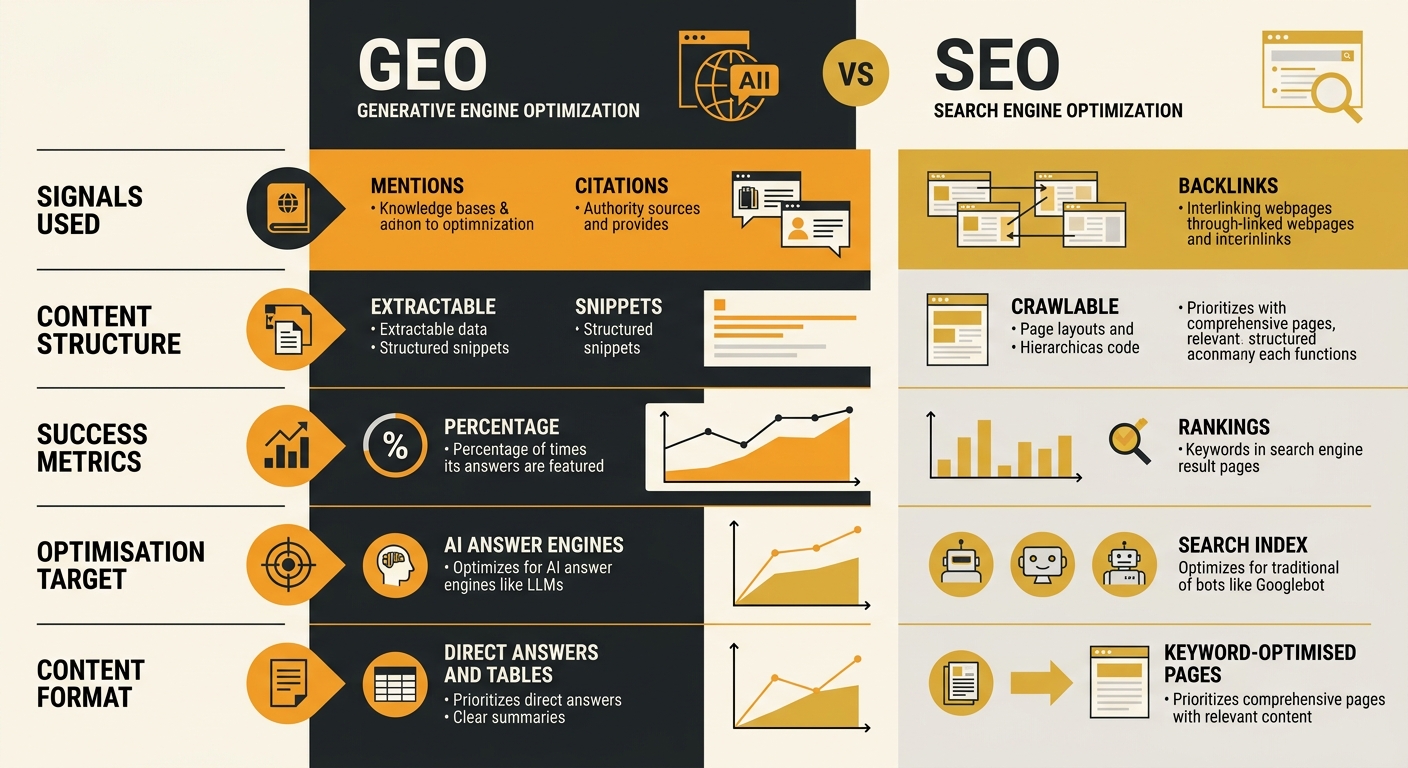
By early 2025, enough data existed to confirm that generative engine optimisation and traditional SEO were producing measurably different outcomes using different mechanisms. The split became visible across three dimensions.
Signal divergence. Traditional SEO weighs backlinks heavily as authority signals. New research from Ahrefs found that web mentions outperform backlinks 3:1 for AI Overview presence. AI systems prioritise whether a brand is being discussed across the web over whether it has accumulated hyperlinks. A niche blog with a domain rating of 30 could outperform established sites in AI citations if it was being referenced in forums, Reddit threads, and industry discussions.
Structural divergence. SEO rewards pages optimised for crawlability — clean HTML, proper heading hierarchy, fast load times. GEO rewards content structured for extraction — direct-answer paragraphs, comparison tables, and entity-rich content with proper schema markup. The same page could rank well in organic results and be completely invisible to AI answer engines because its content wasn’t formatted for machine extraction.
Metric divergence. SEO success is measured by rankings, organic traffic, and click-through rates. GEO success requires tracking citation frequency and brand mentions across AI platforms like ChatGPT, Perplexity, and Google’s AI Overviews. Most Australian affiliate sites in 2025 were only measuring the first set.
As Informa TechTarget’s guide stated: “GEO thrives on clarity, trustworthiness, and rich background detail; SEO rewards structure, discoverability, and technical precision.”
| Dimension | Traditional SEO | Generative Engine Optimisation |
|---|---|---|
| Primary signal | Backlinks and domain authority | Web mentions and citation frequency |
| Content structure | Keyword-optimised, crawlable HTML | Answer-first, extractable paragraphs |
| Success metric | Rankings, organic CTR, traffic | AI citations, brand mentions |
| Target system | Google’s link-based index | LLMs (ChatGPT, Perplexity, AI Overviews) |
| Authority model | Domain rating, link equity | Source trustworthiness, entity recognition |
| Revenue path for affiliates | Click → page visit → affiliate link | Citation → brand trust → direct search |
What Affiliate Sites Changed (and What Didn’t Work)
Through 2025 and into 2026, Australian affiliate operators experimented with various approaches to the GEO vs SEO strategy split. The results sorted into clear patterns.
What worked: Sites that restructured existing comparison content to lead with direct, citable answers saw improved AI citation rates. Instead of burying the verdict at the bottom of a 3,000-word review, they moved it to the first 150 words. W3era’s AI Overview optimization framework documented this approach — answer-first formatting paired with entity-rich content gave AI systems something clean to extract.
Original data performed disproportionately well. Affiliate sites that published their own pricing surveys, user satisfaction benchmarks, or feature-by-feature test results — data that couldn’t be found elsewhere — became preferred citation sources for AI engines. One MarketingProfs analysis compared AI search optimisation to a credit score, where platforms evaluate “creditworthiness” based on the uniqueness and reliability of your content over time.
What failed: Attempts to optimise purely for AI by abandoning traditional SEO fundamentals. Sites that stopped building topical authority, neglected E-E-A-T signals, or let their technical SEO degrade saw organic traffic decline without a corresponding increase in AI visibility. GEO builds on SEO — as seo.com’s analysis noted, “GEO enhances SEO by ensuring visibility on the fast-rising AI-powered search engines.” Ditching one for the other leaves revenue on the table.
AI search visitors convert at 4.4 times the rate of average organic visitors — but only if those visitors can find their way back to your site from the AI-generated answer.
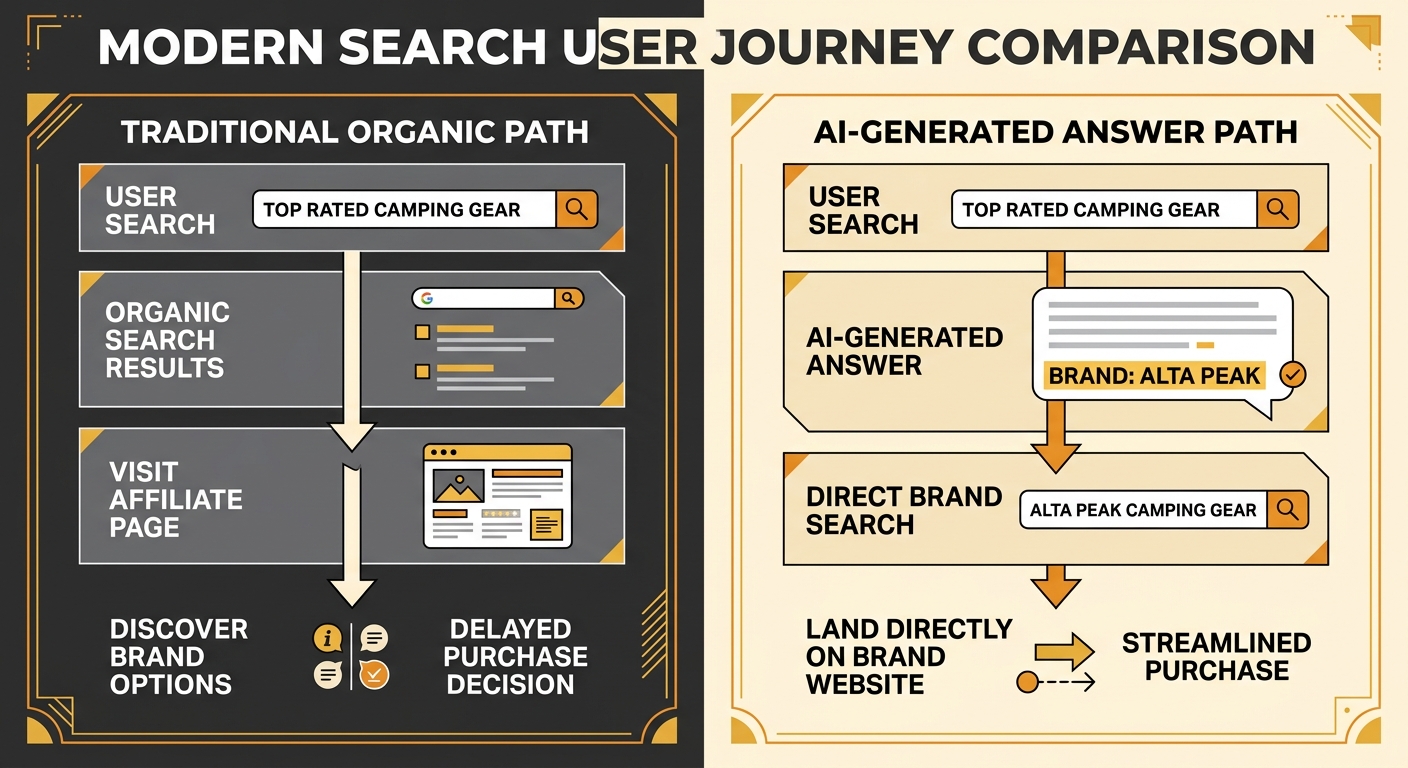
The conversion data here matters enormously for affiliate businesses. AI search visitors are 4.4 times more valuable in conversion terms than average organic visitors because they arrive further down the purchase funnel with higher intent. But capturing that value requires your brand to be cited in the AI answer with enough specificity that users seek you out directly — a fundamentally different mechanism from traditional click-through.
Where This Lands Now
The Australian search landscape in 2026 demands dual optimisation. Treating AI search optimisation and traditional SEO as one strategy means under-investing in one of two distinct revenue channels. This shift has also given rise to specialist AI SEO agencies. Earned Media is one example, helping brands improve visibility within AI-generated answers through services such as entity optimisation, citation engineering, AI Overview optimisation and AI visibility tracking across platforms including ChatGPT, Gemini, Claude and Perplexity.
For affiliate businesses specifically, the practical split looks like this:
SEO work continues. Technical health, internal linking, content freshness, backlink profiles — these still drive organic rankings, and organic still delivers the majority of affiliate referral traffic. An independent SEO consultation focused on traditional ranking factors remains the foundation. Sites that misdiagnose their ranking problems as algorithm penalties when the real cause is content decay will lose ground in both channels.
GEO work layers on top. Structured, answer-first content. Comparison tables that AI systems can extract directly. Original research and proprietary data that makes your site the primary source rather than a secondary aggregator. Citation tracking across ChatGPT, Perplexity, and Google’s AI Overviews. Active participation in forums and communities where AI models pull source material — Australian business directories, Reddit threads, and industry-specific discussion boards all feed into AI training and retrieval.
Warning: Affiliate sites that measure only traditional rankings are flying blind on 58% of search result pages where AI Overviews now appear. Add citation monitoring to your reporting stack.
The businesses getting this right aren’t choosing between GEO and SEO. They’re running both as parallel disciplines with separate KPIs, separate content requirements, and separate optimisation workflows. The affiliate sites still treating AI visibility strategy as a subset of their SEO program are the ones watching their click-through rates erode quarter after quarter, unable to explain why pages that rank well keep generating less revenue. The explanation has been visible since mid-2024. The two systems reward different things, and the gap between them keeps widening.