
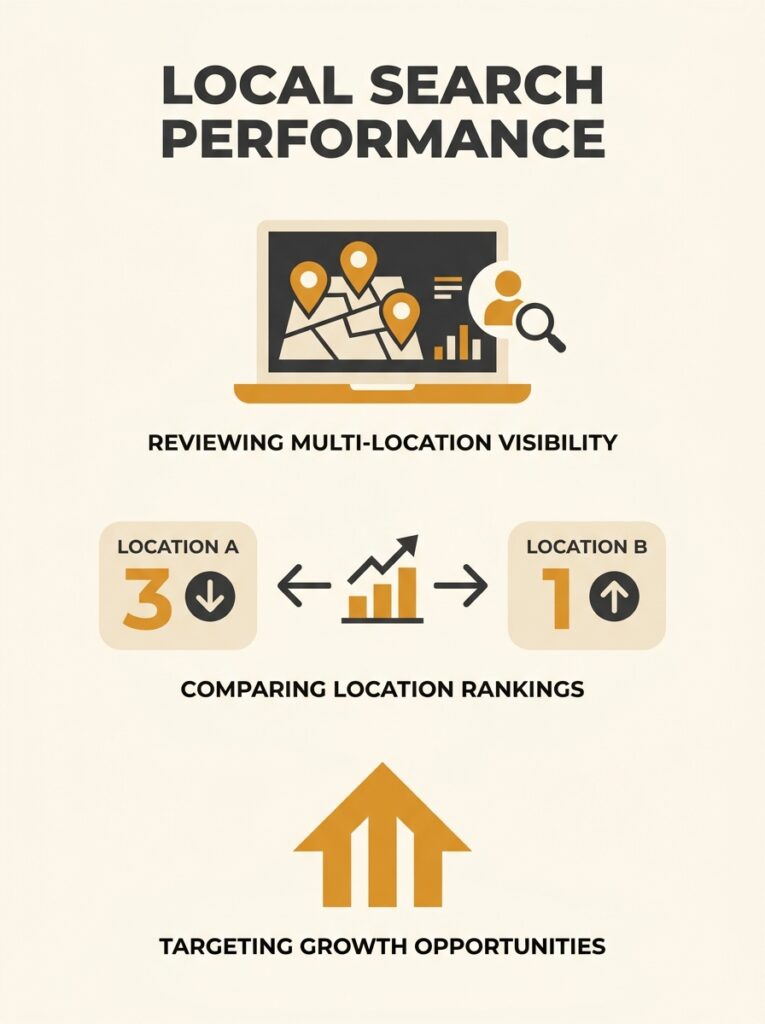
Search Engine Journal announced a webinar addressing AI Overview integration with local search, targeting brands managing multiple storefronts as Google’s generative features shift citation patterns for local businesses. The session, scheduled to examine technical signals and content requirements, responds to visibility challenges emerging across location-based portfolios.
The webinar tackles what Search Engine Journal describes as “a new standard” in local SEO, where AI-powered search systems synthesise answers from site content, schema markup, listings data, and reviews before determining which locations merit citation in generative results. For Australian businesses operating chains, franchise networks, or multiple service locations, the shift represents a structural change to how local visibility gets distributed across search results.
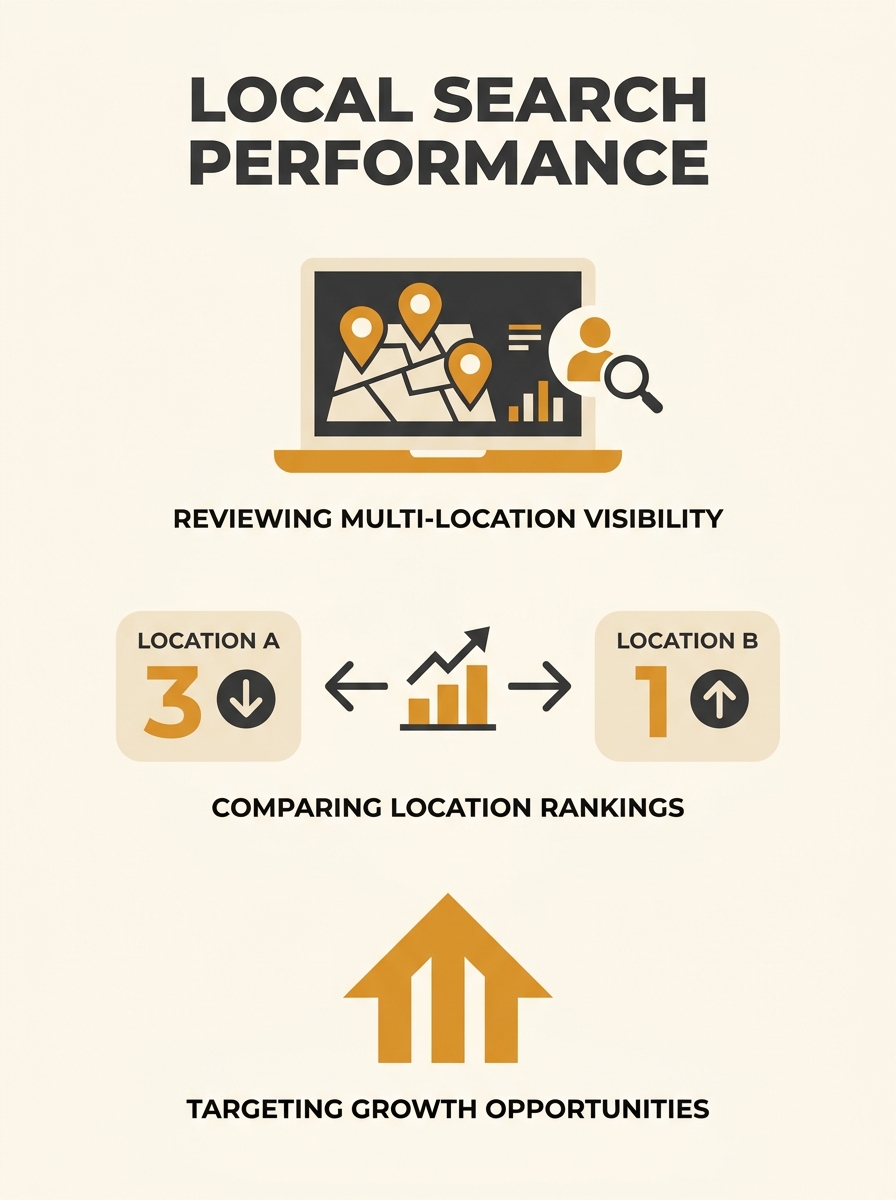
Changed Signal Hierarchy in AI Search
AI search experiences now draw on expanded signal sets to determine local business surfacing, according to the session description. Listing accuracy, structured data implementation, review signals, and location page quality all factor into visibility calculations. Inconsistency or thin content in any area reduces exposure before customer clicks occur.
The shift affects businesses managing 10 locations differently than those operating 100-plus storefronts. Scale introduces consistency challenges across listing platforms, schema deployment, and content quality that single-location operators avoid. AI systems appear to penalise inconsistency more severely than previous ranking algorithms, the announcement indicates.
Google’s AI Overviews and competing generative answer engines evaluate whether location pages deserve inclusion in synthesised responses. The decision happens upstream of traditional ranking factors, changing the sequence in which technical and content signals get assessed.
Session Framework and Coverage Areas
The webinar will address four operational areas, according to the published agenda. First, how AI-powered search engines extract local business data and where current configurations show gaps. Second, the technical and content elements separating high-performing location pages from those AI systems bypass. Third, which technical signals carry greatest weight in local AI search evaluation. Fourth, prioritisation frameworks for improvement across large location portfolios without complete rebuilds.
Nick Larson, Product Manager and Local Pages Expert at Alchemer, leads the session. Larson’s background includes work with multi-location brands on scaled local search visibility, the announcement states. The session targets marketers and operators managing location-based brands rather than single-storefront businesses.
The framework approach suggests practical implementation pathways rather than theoretical exploration. For Australian businesses operating under different regulatory requirements for business listings and consumer reviews than US counterparts, the technical signal discussion holds particular relevance. Schema.org markup, Google Business Profile management, and review aggregation operate within Australia’s consumer law framework, which affects data handling and display practices.
Portfolio-Scale Implementation Challenges
Multi-location brands face implementation barriers that workshop-style sessions typically address more effectively than written guides. Prioritising improvements across dozens or hundreds of locations requires resource allocation models that balance quick wins against systematic fixes. The webinar’s focus on avoiding “starting from scratch” acknowledges budget and timeline constraints Australian SMBs managing growth face.
Location page quality standards shift when AI systems synthesise rather than rank. A page that ranked acceptably under traditional algorithms may lack the structured content, entity clarity, or schema completeness that generative systems require for citation. That gap affects franchise systems, retail chains, and service businesses with territory-based operations differently based on how location content gets generated and maintained.
Review signals carry different weight in AI-synthesised answers than in traditional local pack rankings. The volume, recency, sentiment distribution, and response patterns all feed into whether an AI system considers a location citation-worthy. For businesses managing reviews across Google, Facebook, industry platforms, and aggregators, the signal complexity increases substantially at scale.
The Takeaway
Australian businesses operating multiple locations face a technical inflection point where AI systems evaluate local search eligibility before traditional ranking factors take effect. The shift places premium value on listing consistency, schema completeness, and location page depth that many multi-storefront operators have deferred as “nice to have” rather than visibility-critical.
For marketing managers allocating organic growth budgets, the session signals that local SEO investment may need frontloading in 2026 rather than spreading evenly across quarters. AI Overview citation patterns appear less forgiving of partial implementation than previous search features, raising the stakes for businesses competing in local markets against better-structured rivals.
The framework focus suggests implementation pathways exist that don’t require complete rebuilds, which matters for businesses managing location portfolios on constrained budgets. Whether those pathways deliver competitive visibility in Australian markets operating under different data regulations and consumer protection frameworks than US counterparts remains the practical test multi-location operators will run post-session.