

Google continues to enforce HTTPS as a baseline technical SEO requirement in 2026, even though the protocol carries minimal direct ranking weight as a standalone signal, according to a migration guide published by W3era on May 30. Sites without SSL/TLS encryption trigger browser warnings that reduce click-through rates and conversions, while proper migration requires coordinated changes across redirects, canonicals, sitemaps, and Search Console properties.
TL;DR: HTTPS remains a confirmed Google ranking factor and browser trust indicator in 2026, requiring Australian SMEs to complete multi-step migrations that extend beyond simple certificate installation.
The 2014 Ranking Signal That Became a 2026 Baseline
Google confirmed HTTPS as a ranking signal in August 2014, initially describing it as a lightweight factor affecting fewer than 1% of global search queries, according to the W3era technical guide. The announcement marked the start of a decade-long industry shift toward encrypted connections.
By 2026, the protocol has evolved from optional enhancement to mandatory baseline. Chrome browser updates now display “Not Secure” labels on HTTP pages, Google integrated HTTPS into its Page Experience framework, and secure browsing became part of Googlebot’s evaluation of technical site quality. The minimal 2014 ranking weight remains unchanged, but the absence of HTTPS now triggers compounding penalties through browser warnings, reduced user trust, and failed Page Experience checks.
W3era head of digital marketing Vikash Bharia stated in the guide that “HTTPS and SSL/TLS encryption are fundamental to technical SEO, not optional extras” in 2026.
Migration Requirements Extend Beyond Certificate Installation
A complete HTTP-to-HTTPS migration involves five mandatory technical steps, according to the guide. Sites must implement 301 redirects from HTTP to HTTPS versions of every URL, update canonical tags to point to HTTPS versions, submit a fresh XML sitemap with HTTPS URLs to Search Console, verify both HTTP and HTTPS properties in Search Console, and monitor for mixed content warnings across all pages.
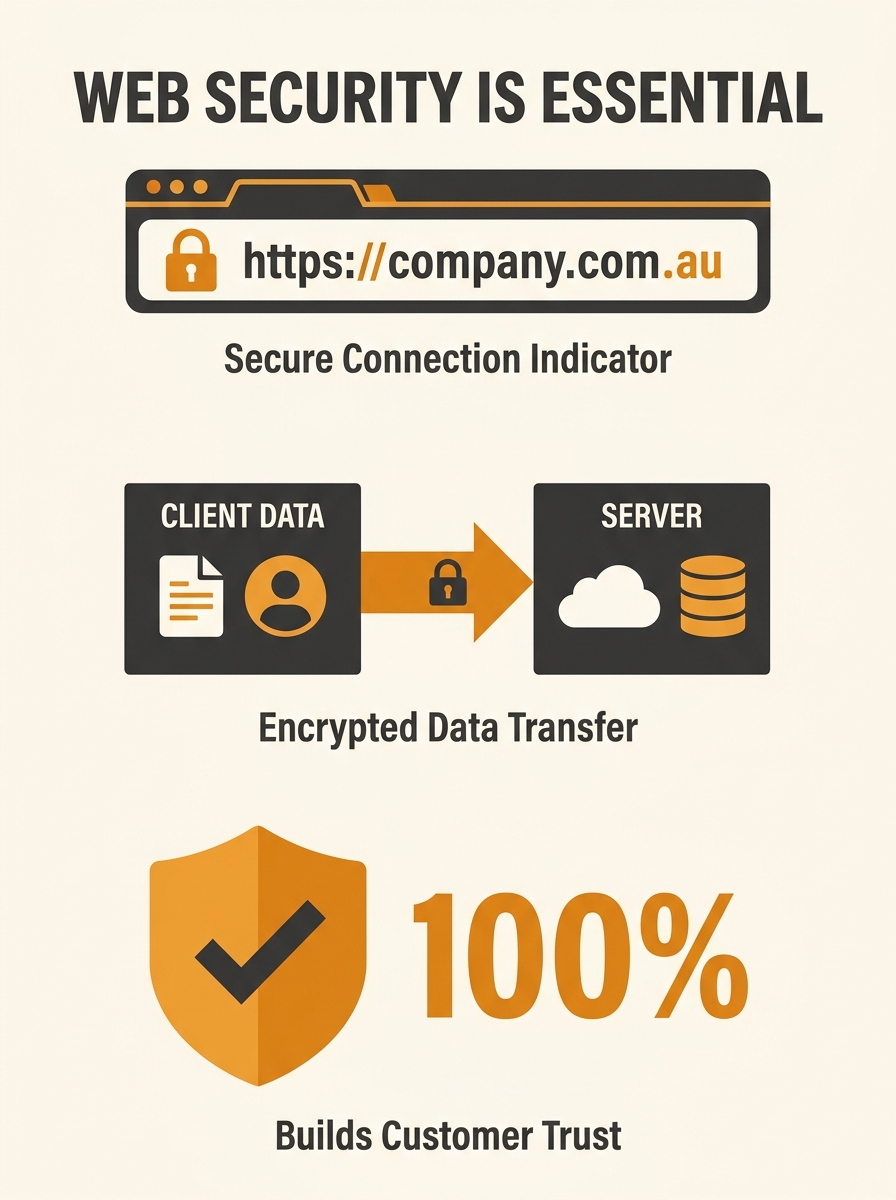
Mixed content errors occur when HTTPS pages load resources such as images, scripts, or stylesheets over HTTP connections. These errors weaken browser security indicators and appear most frequently on checkout pages, lead forms, and user login screens. The guide notes that browsers downgrade the padlock icon or display warning messages when mixed content is detected.
Certificate expiration represents the most common post-migration failure point. Standard SSL certificates expire annually or every two years, requiring renewal before expiration to avoid security warnings. Sites using Let’s Encrypt certificates face 90-day renewal cycles.
Security Headers Complement Encryption Protocol
Four HTTP security headers strengthen HTTPS implementations beyond the encryption layer itself, the guide documents. HTTP Strict Transport Security (HSTS) forces browsers to request only HTTPS versions of a site after the first secure visit. Content Security Policy (CSP) prevents cross-site scripting attacks by whitelisting approved content sources. X-Frame-Options blocks clickjacking attempts by restricting how a page can be embedded in frames. X-Content-Type-Options stops browsers from MIME-sniffing responses away from declared content types.
These headers do not directly affect Google’s ranking algorithms but improve technical site quality scores and protect users from common attack vectors. The guide recommends implementing all four headers on sites handling customer data, ecommerce transactions, or user accounts.
Search Console Monitoring Tracks Migration Health
Google Search Console provides three monitoring tools for HTTPS migrations, according to W3era’s documentation. The Security Issues report flags malware infections, hacked content, and phishing attempts. The Coverage report shows indexing errors including mixed content warnings and certificate problems. The Core Web Vitals report tracks page experience metrics that deteriorate when browsers display security warnings.
Sites should monitor Search Console daily for the first two weeks following migration, then weekly for 90 days. Common post-migration errors include incomplete 301 redirect chains, lingering HTTP URLs in XML sitemaps, and canonical tags pointing to old HTTP versions.
The guide notes that HTTPS does not override weak content quality, missing E-E-A-T signals, or poor topical authority. The protocol functions as one component within broader technical SEO foundations rather than as a standalone ranking boost.
Context and Outlook
Australian SMEs operating ecommerce platforms, lead generation sites, or membership portals face regulatory and competitive pressure to complete HTTPS migrations in 2026. Browser warnings on HTTP pages directly reduce conversion rates by signaling insecurity at the moment customers reach checkout or contact forms. The technical complexity of migrations—particularly for sites built on older CMS platforms—creates implementation bottlenecks that delay projects by weeks or months.
The ranking weight Google assigns to HTTPS as a standalone signal remains minimal, but the compounding effects through Page Experience scoring, browser trust indicators, and Core Web Vitals performance make migration non-negotiable for sites pursuing organic visibility. Sites that delay migration face growing disadvantages as browser security warnings become more prominent and user expectations around data protection continue rising.
For Australian businesses evaluating organic growth strategies, HTTPS migration represents infrastructure work rather than growth work—necessary for maintaining baseline competitiveness but insufficient to drive ranking improvements alone. The protocol must pair with strong content architecture, clean crawl paths, and optimized ecommerce SEO implementations to deliver measurable organic gains.