

Organic outreach consistently outperforms paid link building for Australian business websites when penalty risk is the primary concern. Paid links deliver faster results in competitive niches, but Google’s penalty enforcement has intensified since 2012, and Australian sites face the same manual action triggers as any other market.
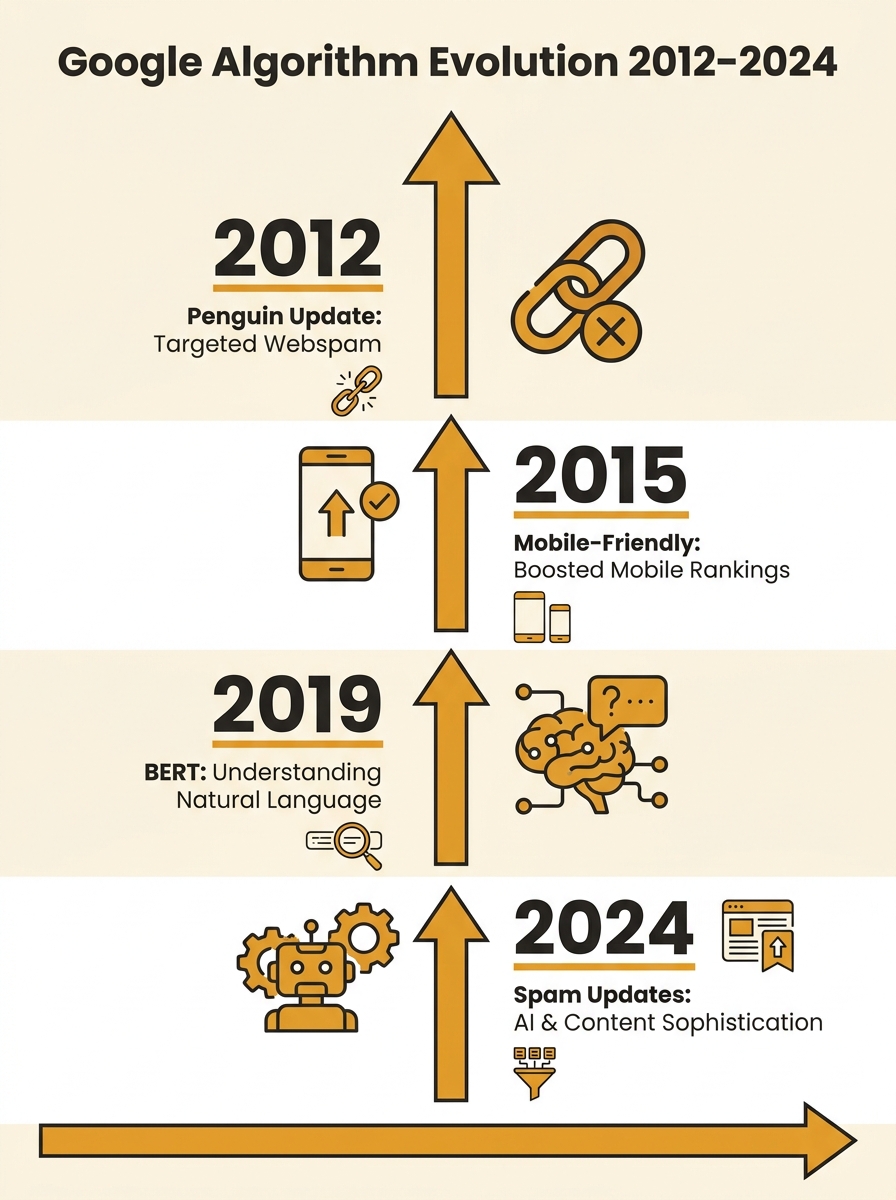
Google Penguin Changed the Rules in April 2012
Before Penguin, paid link building Australia agencies offered was standard operating procedure. Packages of 50 or 100 links per month, placed across directories, blog networks, and article submission sites, sold for $500 to $1,000 a pop. The economics were straightforward: spend the money, receive a batch of backlinks, watch rankings climb within weeks.
Google’s Penguin algorithm update, launched on 24 April 2012, rewrote those economics overnight. The update specifically targeted link schemes, including paid link networks, exact-match anchor text manipulation, and automated link building tools. Sites that had been buying links at scale saw ranking drops of 20, 30, or 50+ positions in a single update cycle.
For Australian businesses that had invested heavily in these packages, the damage was immediate. E-commerce sites lost seasonal traffic. Service businesses dropped out of local results entirely. Google penalty risk in Australia became tangible for the first time for many site owners who’d assumed search engines couldn’t distinguish paid placements from genuine editorial links.
The Manual Action Wave of 2013–2015
Google followed Penguin with a wave of manual actions. Human reviewers inside Google’s webspam team began issuing penalties directly to sites with unnatural link profiles. Unlike algorithmic penalties, these arrived as notifications in Google Search Console with explicit warnings about “unnatural links pointing to your site.”
Australian agencies that had been reselling link packages from overseas providers were hit particularly hard. Many of the link sources were private blog networks (PBNs), which Google had become increasingly effective at identifying. According to Google’s own penalty guidance, link practices trigger penalties when they manipulate rankings instead of earning trust naturally. Specific triggers include paid link networks, spammy guest posts, exact-match anchor overuse, and automated link building tools.
The recovery process was brutal. Sites had to audit thousands of backlinks, identify which ones were toxic, attempt to contact webmasters for removal, and then submit a disavow file to Google. Many Australian businesses spent more on penalty recovery than they’d originally spent acquiring the links that caused the problem.
This period cemented a critical lesson in the debate over link outreach vs link buying: purchased links offered speed, but the downside risk was existential. A manual action could effectively remove a business from Google for months at a time.
Organic Outreach Emerges as the Industry Default
By 2016, the Australian SEO industry had largely pivoted toward white hat link building techniques. The approach was slower, more labour-intensive, and more expensive per link acquired. But it didn’t carry the same catastrophic risk profile.
Organic outreach works through several established methods. Digital PR involves creating newsworthy content and pitching it to journalists and editors at legitimate publications. The Skyscraper Technique, popularised by Brian Dean, involves finding content that already has links, creating something demonstrably better, and reaching out to sites that linked to the original. Broken link building targets dead links on relevant sites and offers your content as a replacement.
The time investment is significant. Effective outreach campaigns require 10+ hours per week per client, covering prospect research, personalised email drafting, follow-up sequences, and relationship maintenance. Australian agencies that understand local E-E-A-T signals have an advantage here, because they know which publications carry genuine authority in Australian search results versus those that merely look authoritative by domain metrics.
One Australian agency campaign landed links from a key tech publication and boosted a client’s rankings by 15 positions in three months through guest posts on industry blogs and broken link fixes targeting .au domains specifically.
The Paid Link Market Adapted
The paid link building industry didn’t disappear after Penguin. It evolved. By 2020, crude bulk-link packages had been replaced by more sophisticated offerings that blurred the line between paid placement and editorial outreach.
Modern paid link building services in Australia typically charge between $180 and $300 for niche edits (inserting a link into an existing article on an established site) and $300 to $1,000+ for guest posts on high-authority domains. Quality professional link packages run approximately $1,200 per month. Services priced under $30 per link remain overwhelmingly low-quality and carry substantial risk of triggering a manual review.
The more sophisticated providers now verify that linking sites have genuine organic traffic, not inflated Domain Rating scores alone. As one Australian agency notes, the most important acquisition metrics are DR pulled from Ahrefs and organic traffic pulled from Semrush, with minimum thresholds that ensure linking sites actually receive visitors. If you’re evaluating these tools for your own link prospecting, comparing Ahrefs and Semrush for Australian market data is a useful starting point.
But the compliance question hasn’t gone away. Google’s guidelines state paid links must carry rel=”sponsored” or rel=”nofollow” attributes. Links that pass PageRank without these attributes violate the guidelines, regardless of how editorially they’re placed. And 78.1% of SEO professionals report positive ROI from paid links, which tells you the practice remains widespread even as the risk persists. Meanwhile, 91.9% of SEO professionals believe their competitors are buying backlinks too.
For Australian businesses, a DR 20 link from a local industry blog often moves rankings further than a DR 80 link from a generic overseas site.
The Geographic Relevance Factor Australian Sites Overlook
One dimension of Australian backlink strategy that gets overlooked in the link outreach vs link buying debate is geographic relevance. For businesses targeting Australian customers, a DR 20 link from a local community blog or .au industry publication frequently delivers more ranking impact than a DR 80 link from a generic international domain.
This matters because most paid link building providers source their inventory internationally. An Australian plumber buying links from a US tech blog isn’t building the kind of topical and geographic relevance that Google’s algorithms increasingly reward. Local relevance compounds when you’re also building topical authority across your own site’s content, reinforcing the signals Google uses to determine who deserves to rank for location-modified queries.
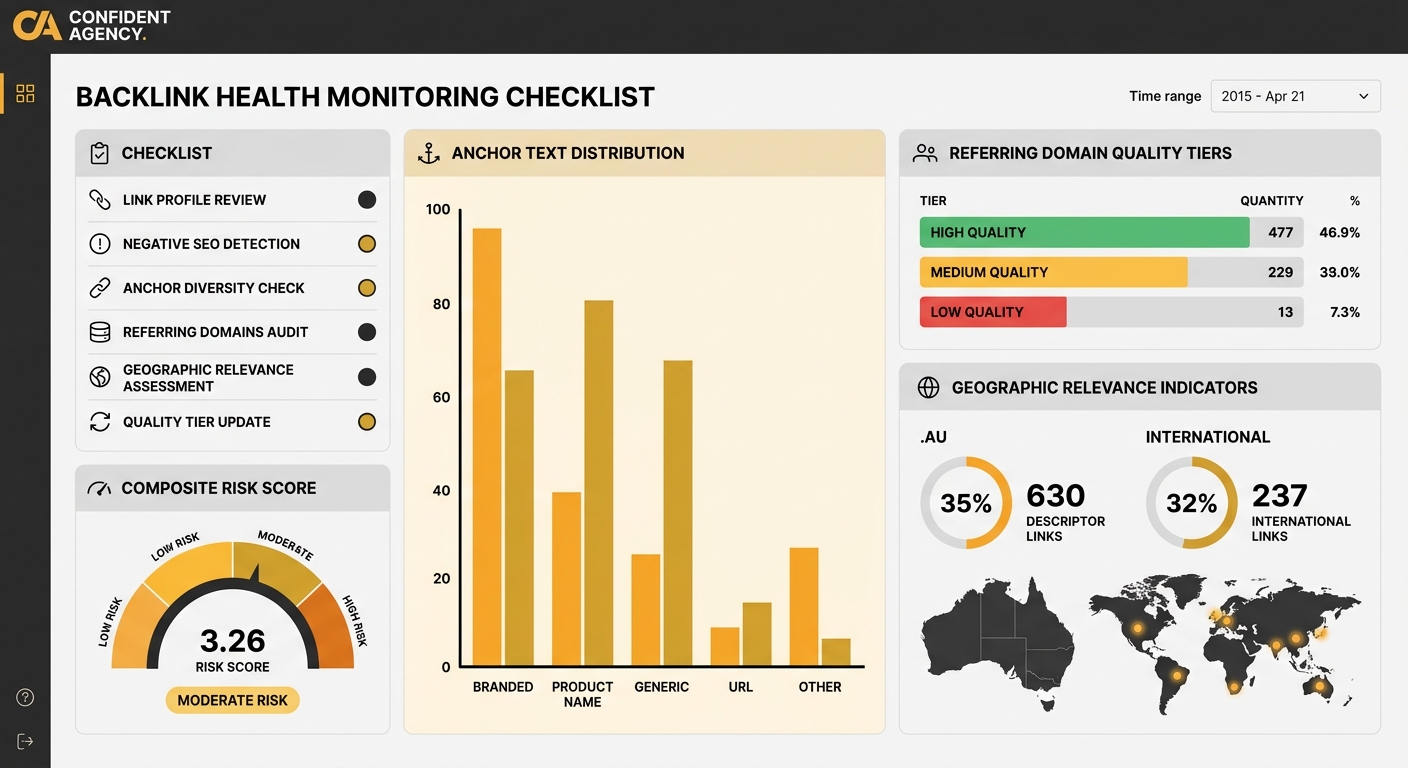
The best-performing Australian link profiles tend to include a mix: links from relevant .au domains, mentions in local news and industry publications, and a smaller number of high-authority international links where the content genuinely matches. According to ThatAgency’s research, regular monitoring of your backlink profile and disavowing any spammy or low-quality links acquired unintentionally is essential for maintaining link profile integrity and preventing penalties from escalating.
The 2024 Spam Update Tightened Everything Again
Google’s March 2024 spam update raised the stakes once more. The update specifically targeted manipulative link practices, and sites that had been skating the line between “sponsored content” and “paid-for-ranking link” saw renewed enforcement. Understanding how Google’s core updates reshape existing strategies became essential for anyone still relying on paid placements as a primary acquisition channel.
Google also began cross-referencing manual actions with paid advertising accounts. As documented by Ignite Visibility, a penalty on organic results can directly impact paid ad campaigns because Google Ads cross-references manual actions affecting organic rankings. For Australian businesses running both SEO and Google Ads, a link penalty doesn’t cost only organic traffic. It can disrupt paid acquisition channels simultaneously.
Warning: If your site receives a manual action for unnatural links, Google may also disapprove ads pointing to the affected pages. Your paid and organic channels share risk exposure.
Where the Data Lands Now
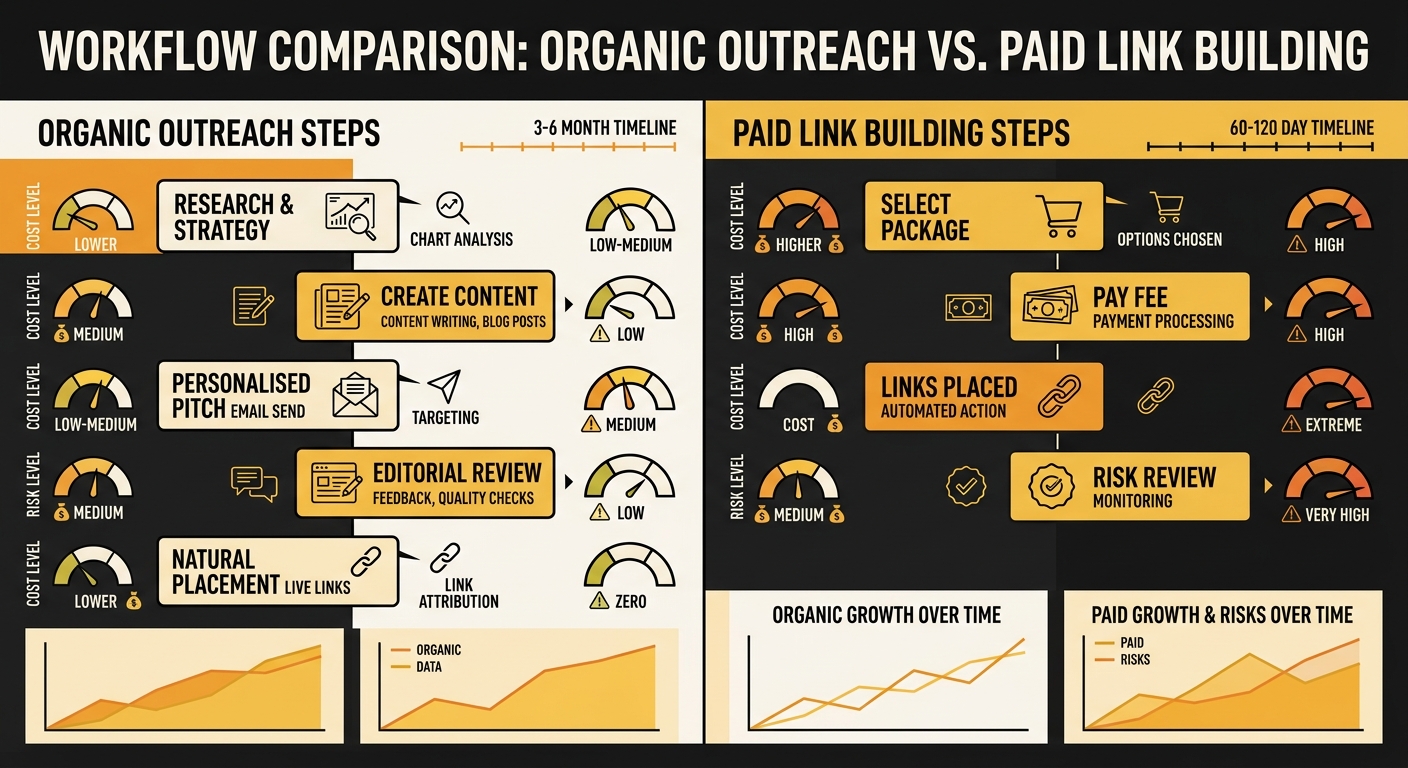
The Australian link building market in 2026 sits in a specific equilibrium. Organic outreach delivers the safest long-term growth profile. A well-run campaign targeting relevant Australian publications, using digital PR and content-led pitching, builds authority without creating the compliance exposure that paid links carry. Ranking improvements from organic campaigns typically appear within 3 to 6 months, while paid campaigns can show movement in 60 to 120 days.
Paid link building remains widely used. The professionals who believe competitors are buying links aren’t wrong, and many paid campaigns do generate measurable ranking improvements. The risk calculation hasn’t changed, though. Every paid link that passes PageRank without proper attribution is a potential trigger for manual review.
The practical framework for managing Google penalty risk in Australia comes down to three variables: the proportion of paid-to-organic links in your profile (keep strategic paid placements at 30–40% against 60–70% earned links), the quality verification applied to every placement (real traffic, topical relevance, geographic alignment with your market), and the ongoing monitoring discipline to catch and disavow problems before they compound. Australian businesses that treat link building as a patient editorial process, building relationships with journalists, creating content worth referencing, and targeting sites their actual customers read, consistently outperform those chasing volume through paid packages. The timeline is longer and the per-link cost is higher, but close-to-zero penalty risk is the metric that matters most when organic traffic underpins your revenue.