
Why Restaurant SEO Matters More Than Ever
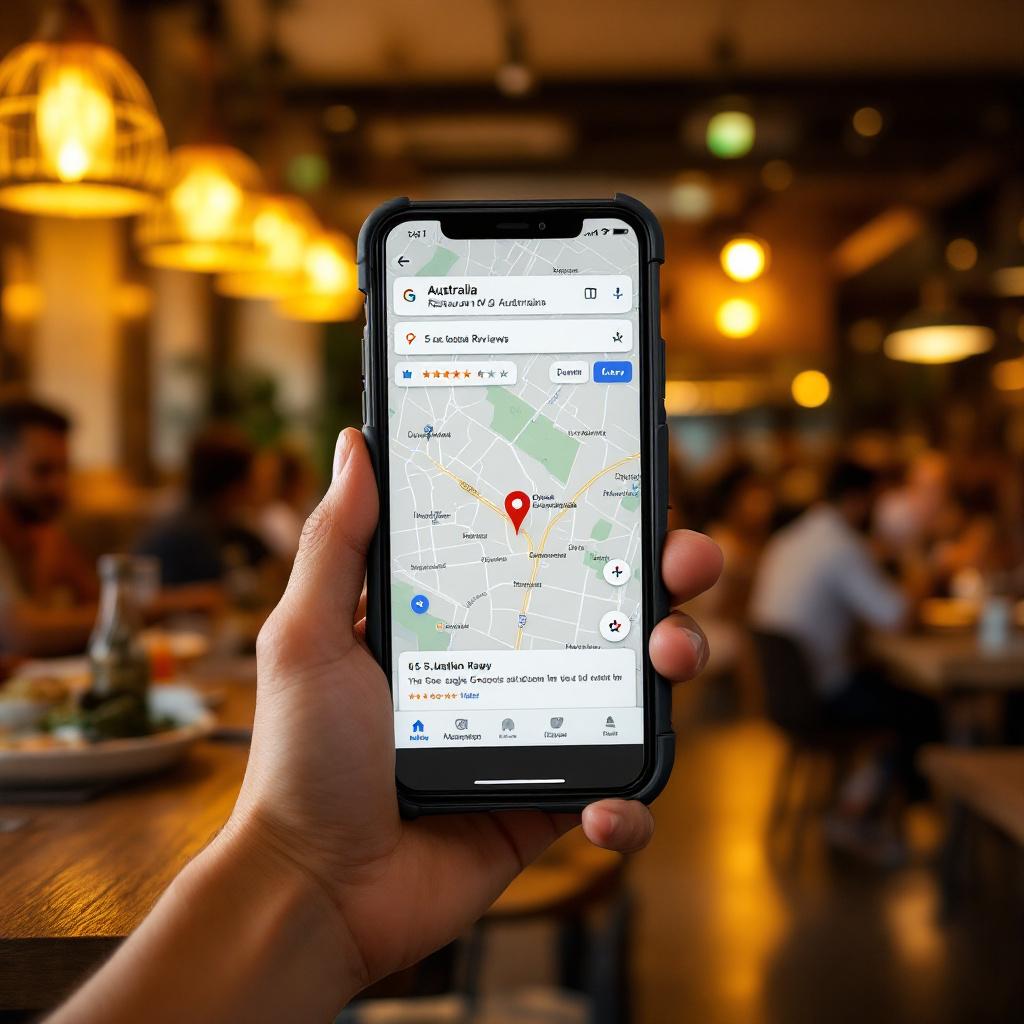
Picture this: It’s 6 PM on a Friday, and someone nearby just typed “Italian restaurant near me open now” into their phone. They’re hungry, they’re ready to spend money, and they’ll decide where to eat within the next few minutes. Will they find your restaurant—or your competitor’s?
This scenario plays out millions of times daily across Australia. According to BrightLocal’s 2025 research, a staggering 70% of consumers use Google products when searching for local businesses, with 15% searching directly in Google Maps. For restaurants, this means your digital presence isn’t just important—it’s essential for survival.
Restaurant SEO (search engine optimisation) is the practice of optimising your restaurant’s online presence to appear prominently when hungry customers search for places to eat. Unlike traditional advertising, SEO targets people who are actively looking for what you offer, right when they want it.
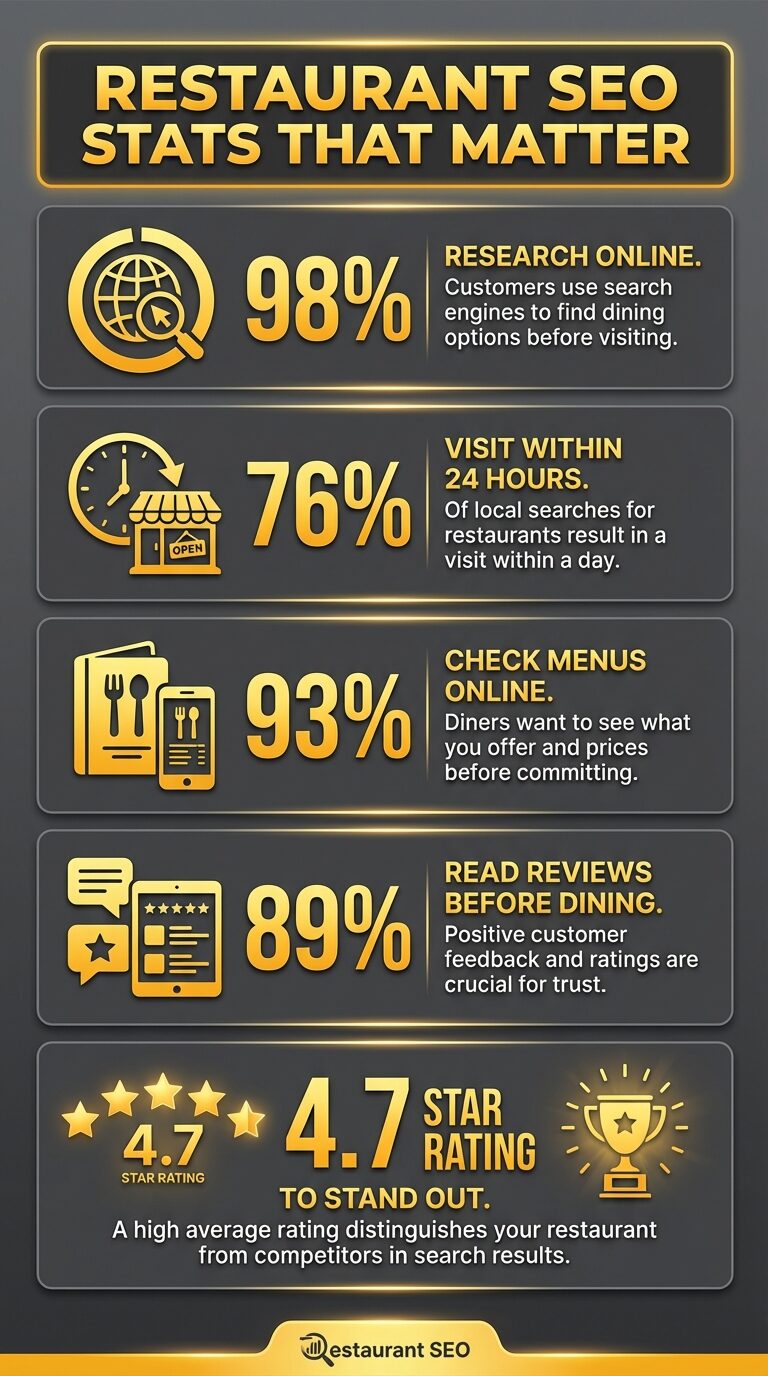
The numbers tell a compelling story: 46% of all Google searches have local intent, and for restaurants specifically, 98% of diners research restaurants online before deciding where to eat. Perhaps most importantly, 76% of people who search for something nearby on their smartphone visit a business within 24 hours.
If you’re serious about growing your restaurant’s customer base, mastering local SEO should be your top priority.
Google Business Profile: Your Restaurant’s Digital Storefront
Your Google Business Profile (GBP) is arguably the most powerful free marketing tool available to Australian restaurants. When someone searches for restaurants in your area, your GBP appears in the coveted “Local Pack”—those three prominent listings with the map that appear at the top of search results.
Setting Up Your Profile for Success
A complete and optimised Google Business Profile can dramatically increase your visibility. According to research from Birdeye, businesses that fully optimise their GBP see:
- 400% increase in phone calls
- 440% increase in direction requests
- 450% increase in website traffic
Yet despite these statistics, more than 50% of businesses have profiles that are only slightly optimised or not optimised at all. This represents a massive opportunity for restaurants willing to put in the effort.
For a comprehensive guide to optimising your profile, check out our detailed Google Business Profile optimisation guide.
Essential GBP Elements for Restaurants
Your GBP should include:
- Accurate NAP information: Your Name, Address, and Phone number must be consistent across all online platforms
- Business hours: Include regular hours, special holiday hours, and happy hour times
- Primary and secondary categories: Select the most specific category (e.g., “Thai Restaurant” rather than just “Restaurant”)
- Attributes: Highlight features like outdoor seating, wheelchair accessibility, free Wi-Fi, and BYO options
- Menu link: Connect your full menu directly to your profile
- Reservation link: Enable direct bookings through your preferred platform
- High-quality photos: Upload professional images of your food, interior, exterior, and team
Notably, “near me open now” searches increased by 875% in recent years. If your hours are wrong online, you’re not just missing potential customers—you might be actively driving them away when they arrive to find you closed.
The Power of Customer Reviews
Reviews aren’t just nice to have—they’re a critical ranking factor and a major influence on dining decisions. 96% of consumers read reviews at least occasionally, and 89% of diners specifically check reviews before choosing a restaurant.
Why Review Ratings Matter
The quality of your reviews directly impacts whether potential customers will give you a chance. Research shows that 71% of consumers won’t consider a business with an average rating below 3 stars, and 63% say mostly negative reviews would make them lose trust in a business entirely.
For restaurants in Australia, the average Google rating sits around 4.29 to 4.5 stars. To stand out from the competition, you should aim for the 75th percentile—a rating of 4.7 stars or higher.
Building a Review Generation Strategy
Don’t leave reviews to chance. Create a systematic approach:
- Ask at the right moment: Train staff to request reviews when customers express satisfaction
- Make it easy: Create a short URL or QR code that links directly to your Google review page
- Include it in receipts: Add a friendly review request with your Google review link
- Follow up via email: If you collect email addresses for reservations, send a post-visit thank you with a review request
- Respond to every review: Google confirms that responding to reviews improves your local ranking
According to industry research, 68% of customers will leave a Google review when asked directly. The key is simply making the request.
Handling Negative Reviews
Negative reviews are inevitable, but they don’t have to be devastating. In fact, 45% of consumers are more likely to visit a business that responds to negative reviews constructively.
When responding to criticism:
- Acknowledge the issue and apologise sincerely
- Take the conversation offline when appropriate
- Offer to make things right
- Thank them for their feedback
- Never argue or become defensive
Menu Schema Markup: Speaking Google’s Language
Schema markup is structured data that helps search engines understand your content better. For restaurants, implementing menu schema can significantly improve how your establishment appears in search results.
93% of people check online menus before visiting a restaurant. By using proper schema markup, you can ensure Google displays your menu items, prices, and dietary information directly in search results.
Key Schema Types for Restaurants
The most important schema types to implement include:
- Restaurant schema: Basic information about your establishment including cuisine type, price range, and payment methods
- Menu schema: Individual menu items with descriptions, prices, and nutritional information
- Review schema: Aggregate ratings that can appear as star ratings in search results
- LocalBusiness schema: Opening hours, address, and contact information
- FAQPage schema: Common questions about reservations, dress codes, or dietary accommodations
When implemented correctly, schema markup can help your restaurant appear in rich snippets, making your listing more visually appealing and informative than competitors who haven’t invested in this technical SEO element.
Implementing Menu Schema
Your menu schema should include:
- Menu section names (Entrees, Mains, Desserts)
- Individual dish names and descriptions
- Prices in AUD
- Dietary information (vegetarian, vegan, gluten-free)
- Allergen warnings
- Availability times (breakfast items, lunch specials)
This structured approach not only helps Google but also improves accessibility for users with screen readers, creating a better experience for all potential customers.
Location-Based Keywords: Targeting Hungry Locals
Generic keywords like “best pizza” are incredibly competitive. Location-based keywords, however, allow you to target customers in your specific area—the people most likely to actually walk through your doors.
Building Your Local Keyword Strategy
Research shows that restaurant bookings from local search increased 654% year-over-year in recent periods. To capture this traffic, you need to rank for location-specific terms.
Consider these keyword categories:
- Suburb + cuisine: “Thai restaurant Surry Hills,” “Italian food Fremantle”
- Neighbourhood + dining occasion: “romantic dinner Brisbane CBD,” “family restaurants Parramatta”
- Near landmarks: “restaurants near Sydney Opera House,” “cafes near Melbourne Cricket Ground”
- Experience-based: “best brunch Bondi,” “late night eats Melbourne”
- Dietary needs + location: “vegan restaurant Adelaide,” “gluten-free Perth”
Use our comprehensive local SEO checklist to ensure you’re covering all the essential elements of location-based optimisation.
Creating Location Pages
If your restaurant has multiple locations, each should have its own dedicated page on your website. According to industry research, nearly 39% of multi-location businesses lack location-specific pages, severely limiting their ability to rank in local search results.
Each location page should include:
- Unique content (not copy-pasted from other locations)
- Embedded Google Map
- Location-specific photos
- Parking information and nearby landmarks
- Staff profiles for that location
- Community involvement and local partnerships
Restaurants with proper hyperlocal location pages have reported visibility increases of up to 107% in local search results.
Food Photography SEO: Making Your Dishes Discoverable
Beautiful food photography does more than make mouths water—it can significantly boost your restaurant’s search visibility when optimised correctly.
Image Optimisation Best Practices
Every image you upload should be optimised for search:
- Descriptive file names: Use “signature-beef-burger-sydney-restaurant.jpg” instead of “IMG_4523.jpg”
- Alt text: Describe the image naturally while including relevant keywords
- Compression: Ensure images load quickly without sacrificing quality
- Dimensions: Size images appropriately for their display context
- Geo-tagging: Add location data to images when possible
Google Business Profile Photos
Your GBP photos are crucial for first impressions. Research indicates that businesses with photos and up-to-date menus see significantly higher engagement.
Include photos of:
- Signature dishes: Your most popular and photogenic menu items
- Interior: Ambiance shots showing your dining room, bar area, and unique features
- Exterior: Help customers recognise your location from the street
- Team: Humanise your brand with chef and staff photos
- Events: Showcase your space for functions and celebrations
Update your photos regularly—seasonal dishes, new menu items, and recent renovations should all be documented. Profiles that post updates weekly receive 3.5 times more visibility than static profiles.
Online Ordering Integration: Meeting Modern Expectations
The way Australians order food has fundamentally changed. Over 80% of online food orders now come from mobile devices, and restaurants offering online ordering see an average of 20% more revenue than those relying solely on dine-in.
The Mobile-First Imperative
Your website and ordering system must work flawlessly on smartphones. With 4 out of 5 mobile searches leading to a purchase, often within just hours, a clunky mobile experience means lost revenue.
Key mobile optimisation elements:
- Click-to-call phone numbers
- Mobile-friendly menu display
- Simple, streamlined checkout process
- Fast page load times (under 3 seconds)
- Easy navigation with thumb-friendly buttons
This integration of digital ordering with SEO creates a seamless path from search to sale. Similar principles apply across the hospitality industry—you can learn more about these strategies in our guide to digital marketing for hotels and travel.
First-Party vs Third-Party Ordering
While platforms like DoorDash and Uber Eats provide exposure, they also charge significant commissions. Consider implementing your own online ordering system to:
- Keep more profit from each order
- Own customer data for remarketing
- Build direct relationships with customers
- Control the entire customer experience
- Reduce dependency on third-party algorithms
Many restaurants use a hybrid approach—maintaining a presence on delivery apps for discovery while incentivising direct orders through their website with exclusive deals or loyalty rewards.
Social Media’s Role in Restaurant SEO
While social media signals aren’t direct ranking factors, they significantly impact your restaurant’s overall online visibility and customer acquisition.
The Social-Local Connection
According to BrightLocal research, 26% of Gen Z consumers use social media as their primary method for finding local businesses. For restaurants targeting younger demographics, this makes social media marketing essential.
Key platforms for restaurants:
- Instagram: 35% of diners use Instagram for restaurant discovery
- Facebook: 59% of diners use Facebook to find restaurants
- TikTok: Rapidly growing as a restaurant discovery platform, especially among Gen Z
- YouTube Shorts: Google is increasingly integrating short-form video into search results
For a comprehensive approach to building your restaurant’s social presence, explore our social media strategy basics guide.
User-Generated Content
Encourage customers to share photos and tag your restaurant. This creates:
- Free, authentic marketing content
- Social proof for potential customers
- Backlinks from social platforms
- Increased brand visibility
- Engagement opportunities
Consider creating “Instagrammable” moments in your restaurant—unique décor, creative plating, or signature presentations that practically beg to be photographed and shared.
Technical SEO for Restaurant Websites
A beautiful website means nothing if Google can’t properly crawl and index it. Technical SEO ensures your restaurant’s website is accessible to search engines and provides a good user experience.
Core Web Vitals
Google uses Core Web Vitals as ranking signals. For restaurants, this means ensuring:
- Largest Contentful Paint (LCP): Main content loads within 2.5 seconds
- First Input Delay (FID): Site responds to user input within 100 milliseconds
- Cumulative Layout Shift (CLS): Visual elements don’t jump around as the page loads
Large, unoptimised food photos are often the culprit behind slow restaurant websites. Compress images without sacrificing quality, and consider using next-gen formats like WebP.
Essential Technical Elements
- SSL certificate: HTTPS is required for trust and rankings
- Mobile responsiveness: Critical with over 68% of restaurant searches happening on mobile
- XML sitemap: Help Google discover all your pages
- Robots.txt: Guide search engines to important content
- Structured data: Implement restaurant and menu schema
- Internal linking: Connect related pages logically
Measuring Your Restaurant SEO Success
What gets measured gets improved. Track these key metrics to understand your restaurant SEO performance:
Google Business Profile Insights
- Search queries: What terms are people using to find you?
- Profile views: How many people are seeing your listing?
- Actions: Calls, direction requests, website clicks, and menu views
- Photo views: Which images resonate with potential customers?
Website Analytics
- Organic traffic: Visitors coming from search engines
- Local keywords: Rankings for location-based terms
- Conversion rates: Reservations, online orders, or contact form submissions
- Bounce rate: Are visitors engaging or leaving immediately?
- Page load times: Speed impacts both rankings and user experience
Review Metrics
- Average rating: Track changes over time
- Review volume: Number of new reviews per month
- Response rate: Percentage of reviews you’ve replied to
- Sentiment trends: Common themes in positive and negative feedback
Common Restaurant SEO Mistakes to Avoid
Even well-intentioned restaurant owners make SEO mistakes that hurt their visibility:
- Inconsistent NAP information: Different addresses or phone numbers across platforms confuse Google
- Neglecting mobile users: A desktop-only focus ignores most potential customers
- PDF menus: Search engines struggle to read PDF content—use HTML menus instead
- Ignoring negative reviews: Unaddressed complaints damage reputation and rankings
- Buying fake reviews: Google penalises this, and customers can tell the difference
- Keyword stuffing: Overusing keywords makes content unreadable and triggers penalties
- Slow website: Unoptimised images and poor hosting drive customers away
- Outdated information: Wrong hours, old menus, or closed locations frustrate customers
Getting Started with Restaurant SEO
Restaurant SEO doesn’t require a massive budget—it requires consistency and attention to detail. Start with these high-impact actions:
- Claim and verify your Google Business Profile: This is non-negotiable for local visibility
- Complete every field in your GBP: Fill out every available section thoroughly
- Upload 10+ high-quality photos: Food, interior, exterior, and team shots
- Implement a review strategy: Start asking every satisfied customer for a review
- Ensure mobile-friendliness: Test your website on multiple devices
- Add schema markup: Implement at minimum LocalBusiness and Restaurant schema
- Create location-specific content: Build pages targeting your neighbourhood and surrounding areas
- Monitor and respond to reviews: Set up alerts and reply to every review
The restaurants that dominate local search aren’t necessarily the ones with the biggest marketing budgets. They’re the ones that consistently optimise their online presence, encourage customer feedback, and provide accurate, helpful information to potential diners.
With 80% of local searches leading to a conversion, restaurant SEO isn’t just about visibility—it’s about putting your restaurant in front of hungry customers at the exact moment they’re deciding where to eat. The question isn’t whether you can afford to invest in SEO. It’s whether you can afford not to.