

Google launched Preferred Sources integration in AI Overviews and AI Mode on May 27, bringing user-selected website preferences directly into AI-generated search responses, according to the company’s announcement. The feature, already active in Top Stories, now highlights preferred websites with visible labels inside AI answers, and introduces “Highly Cited” badges to surface original reporting across traditional search results.
TL;DR: Google integrated Preferred Sources into AI Overviews and AI Mode while adding “Highly Cited” badges to help users identify original reporting and influential coverage in search results.
The rollout addresses growing concerns about source attribution in generative search experiences. Duncan Osborn, Product Manager for Google Search, stated that users are twice as likely to click through to a Preferred Source compared to unlabeled links. More than 345,000 unique sources have already been selected by users through the feature, which supports any website publishing fresh content.
How the Preferred Sources Integration Works
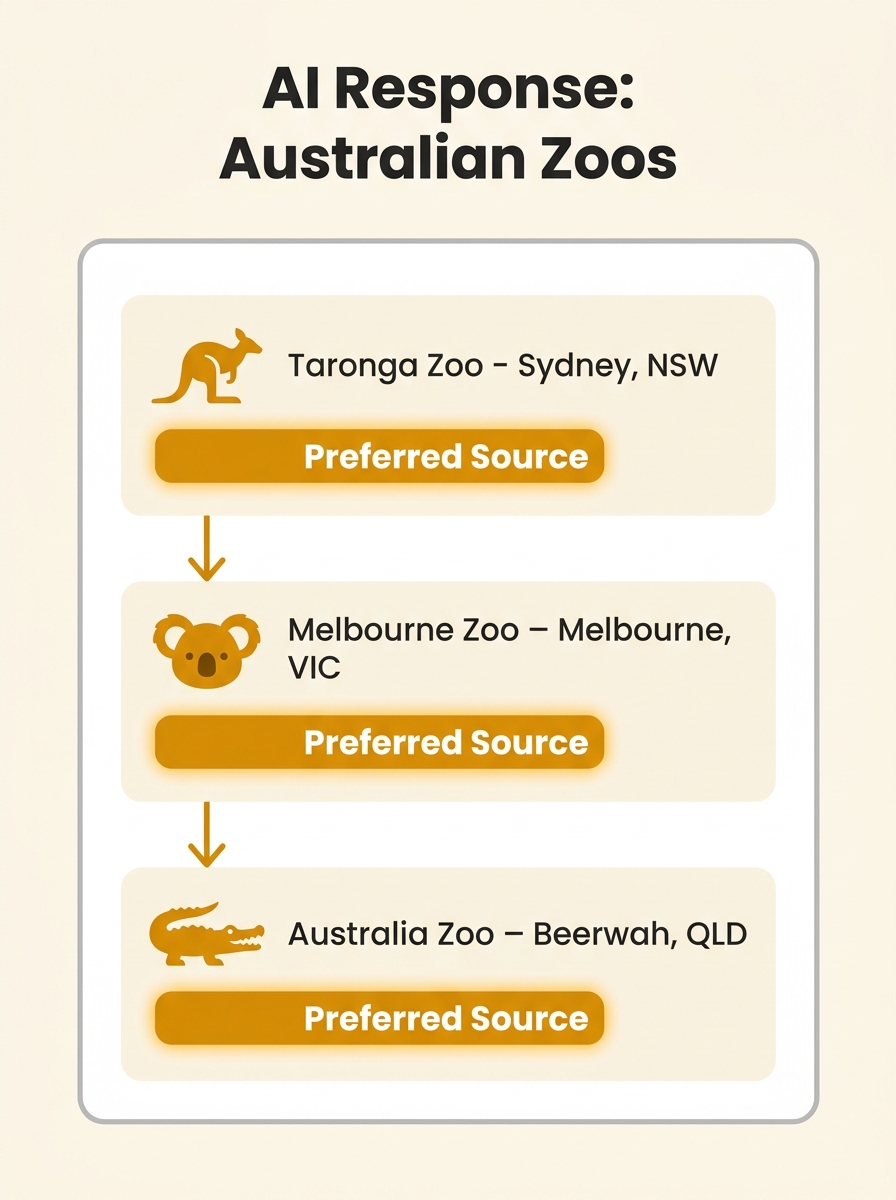
Users add preferred websites through Search personalization settings under source preferences. Once configured, those sources receive visible “Preferred” labels when they appear in AI Overviews or AI Mode responses. The system mirrors the existing Top Stories implementation but extends coverage into AI-generated answer formats where source attribution has historically been less prominent.
The click-through lift is significant for content publishers. Google’s data shows the 2x click rate applies across both traditional and AI-powered search formats, creating a measurable traffic advantage for websites users explicitly select. Australian businesses optimizing for AI search visibility gain a direct channel when users configure their source preferences, bypassing some of the zero-click dynamics that have eroded organic traffic.
New Carousels Surface Fresh Perspectives and Discussions
Google introduced two carousel formats for queries where users seek recent coverage or diverse viewpoints. The first carousel appears on searches about developing topics, displaying a brief AI-generated context followed by a prominent row of timely article links. Preferred Sources receive highlighted placement within these carousels.
The second carousel targets searches where users want insights from others, surfacing content from online discussions, forums, and social media platforms. Both formats prioritize link visibility over extended AI-generated summaries, a shift from earlier AI Overview implementations that often answered queries without requiring click-throughs.
The carousel design addresses the metadata extraction problem many publishers face when AI systems generate answers that don’t drive traffic. By foregrounding links in a scannable row, Google creates a middle ground between traditional search results and fully conversational AI responses.
“Highly Cited” Badges Flag Original Reporting
The “Highly Cited” label now appears on search result pages to identify articles that many other stories have referenced. Google determines the badge based on citation frequency across indexed content, similar to academic citation metrics. The system also indicates when an article explicitly references a Highly Cited source, helping users trace reporting chains back to primary sources.
For Australian publishers investing in original content production, the badge offers a visibility mechanism that rewards investigative work and firsthand reporting. The label applies to traditional search results, not just AI-generated responses, creating dual incentive for original research over aggregation or rewriting.
Google’s documentation for site owners includes guidance on encouraging readers to add their sites as Preferred Sources, though the company has not disclosed whether Preferred Source selection or Highly Cited status directly influence ranking algorithms beyond the user preference signal.
Reading Between the Lines
The timing of this launch matters. Google introduced Preferred Sources as a user-controlled preference layer at the exact moment when AI Overviews and AI Mode became default experiences for billions of queries. The 2x click-through rate Google cites suggests users actively seek branded sources even when AI provides a direct answer—a behavioral signal that contradicts predictions of complete zero-click dominance in generative search.
For Australian SMEs, the Preferred Sources mechanism creates a defensible traffic channel that doesn’t depend on ranking fluctuations or algorithm updates. A business that earns Preferred Source selection from its audience gains labeled visibility inside AI answers, a position that traditional SEO tactics can’t guarantee. The challenge shifts from ranking optimization to audience relationship—users must value the content enough to configure a setting.
The “Highly Cited” badge codifies what publishing strategists have argued for months: in a world where AI can rewrite and aggregate, original reporting becomes the scarcest ranking signal. Google is now surfacing that originality with explicit labels, rewarding the content production investment required for primary research rather than summarization. Australian businesses treating content as a commodity input risk being perpetually unlabeled while competitors who produce citable work collect both badges and backlinks.