

Three distinct strategies dominate topical authority mapping for Australian SMEs: pillar-first, gap-driven, and cluster-up. Each follows the same six foundational steps (identify core topics, research keywords, cluster by intent, build content, wire internal links, monitor rankings) but sequences them differently. Your existing content inventory determines which path protects your brand’s search reputation fastest.
TL;DR: Pillar-first suits new sites building from scratch. Gap-driven works for established businesses losing visibility to competitors. Cluster-up fits teams publishing regularly without structure. All three take 6-12 months to shift rankings meaningfully, and the wrong sequence wastes the first three months.
What All Three Approaches Have in Common
Regardless of which strategy you pick, six steps form the backbone of every topical authority map. Graphite’s research found that pages with high topical authority gain traffic 57% faster than pages with low authority, largely because they capture a wider net of semantic keyword variations. That speed advantage compounds over months of consistent publishing.
The six shared steps are:
- Identify 3-5 core topics tied to your actual business offerings (not broad industry categories).
- Research keywords and intent across short-tail, long-tail, and question-based queries within each topic.
- Cluster keywords by semantic theme, grouping related terms that should live on the same or linked pages.
- Create content with clear hierarchy: pillar pages for broad coverage, cluster articles for specific subtopics.
- Build internal linking architecture so authority flows between connected pieces.
- Monitor and maintain by tracking ranking distribution across topic clusters, not individual URLs.
James Banks, CEO of Rankmax, puts the scoping problem simply: core topics must be “broad enough to support extensive content clusters yet focused enough to demonstrate genuine expertise.” The Rankmax topical authority guide reports client ROI of up to 6,864% when the mapping is done well, and near-zero returns when it isn’t.
Where the three strategies diverge is the order of execution, the resources they demand, and the timeline before search engines recognise your authority. For Australian SMEs managing reputation through search visibility, that timeline matters enormously. When competitors or negative content occupies page one for your core topics, every month without structured content planning costs you brand control.
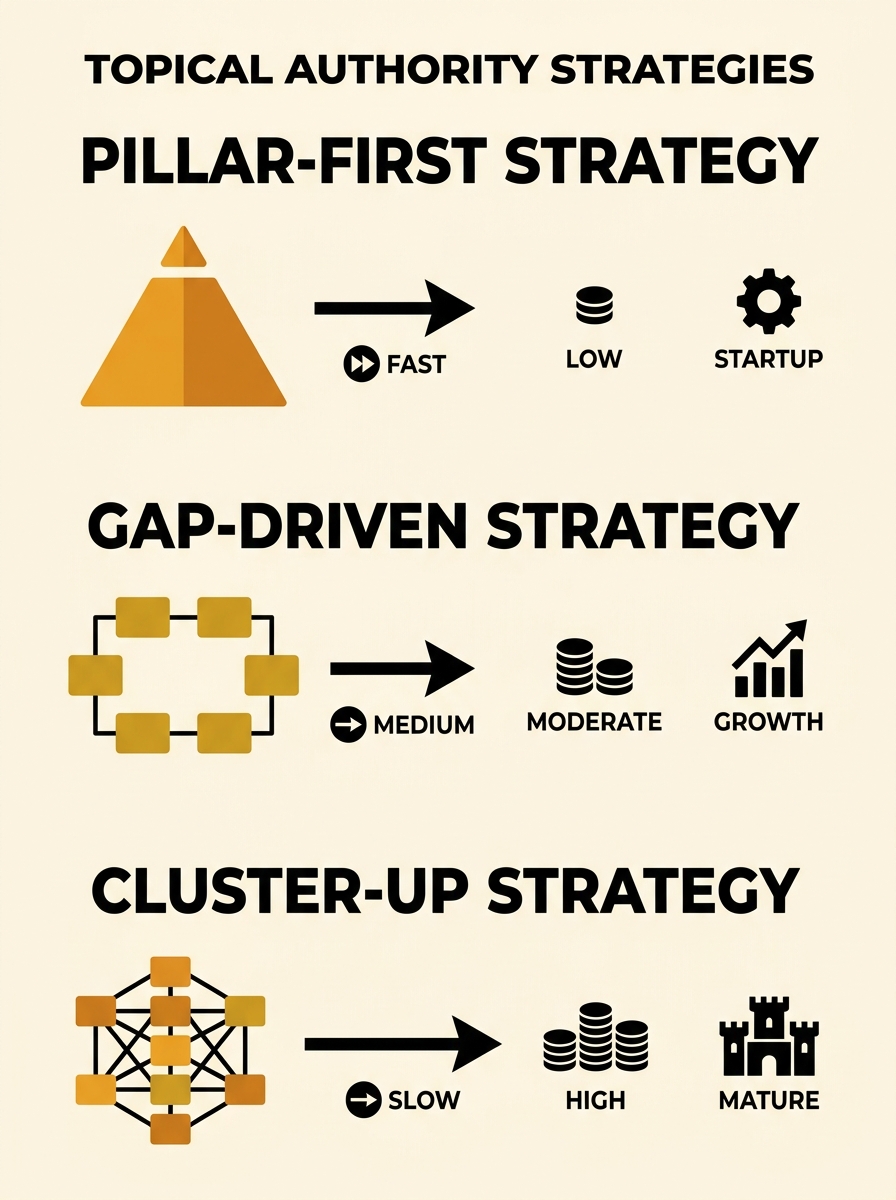
The Pillar-First Path
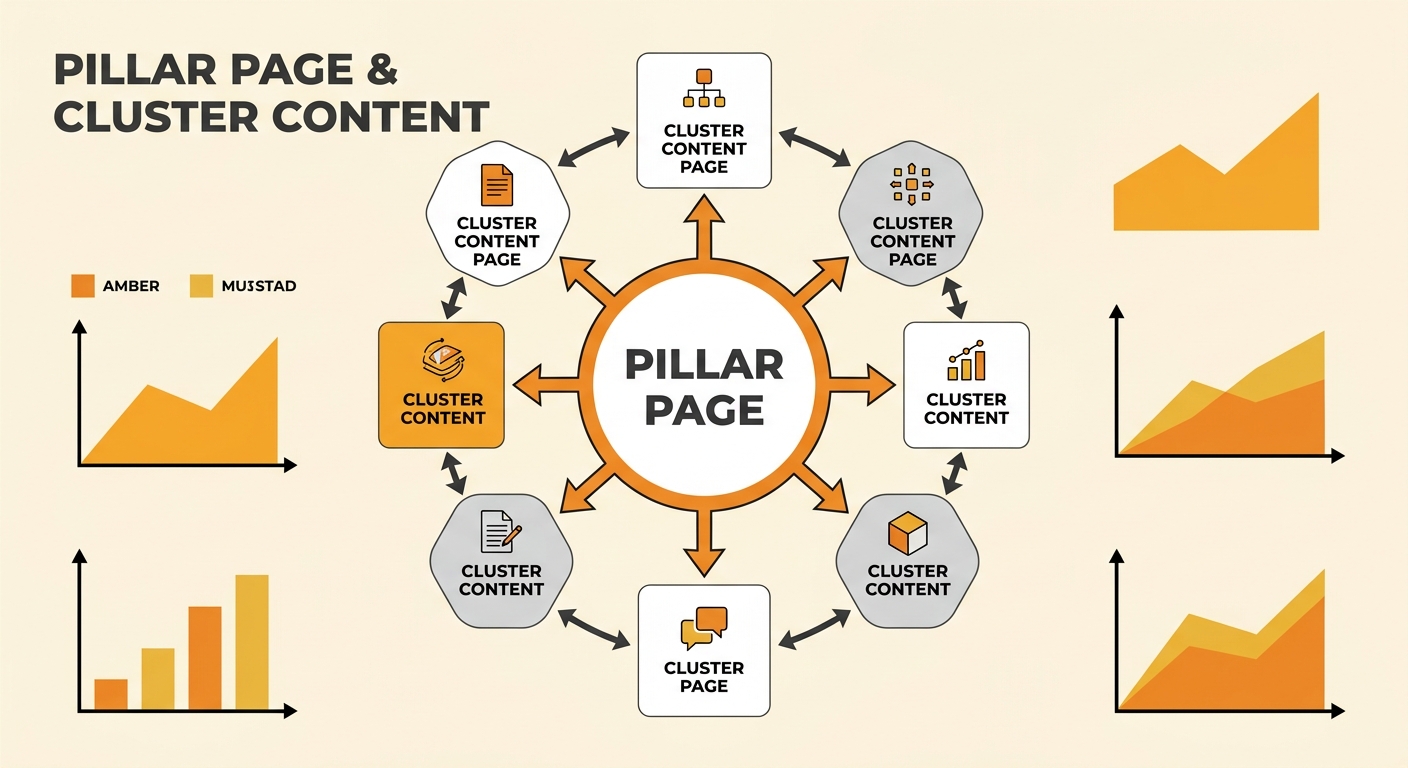
The pillar-first approach builds your semantic SEO structure from the top down. You write 3-5 broad pillar pages (typically 2,000-5,000 words each) covering your core topics before publishing any supporting cluster content.
This is the textbook pillar page strategy. Every cluster page links to its parent pillar with keyword-focused anchor text, while the pillar links out to each cluster, as the 2026 Sudha Solutions pillar page guide explains. Cross-linking related clusters strengthens the overall topic network and reinforces authority signals across the site.
Where it works: New websites or businesses entering a new topic area. If you’ve got fewer than 20 published pages, pillar-first gives search engines an immediate structural signal about your expertise. The Influence Agency’s research confirms that pillar pages with table-of-contents navigation increase dwell time and decrease bounce rates, which means even your earliest pages carry engagement weight.
Where it struggles: Pillar pages take significant time to produce well. A single 3,500-word pillar covering “commercial property maintenance in Brisbane” might take 15-25 hours of research, writing, and review. If your publishing capacity is one article per week, you’ll spend the first month on pillars alone with zero cluster content to support them. Semrush’s topic cluster research confirms that the strategy only works when you’re publishing quality content on relevant topics consistently, and four orphaned pillars sitting without supporting articles won’t move rankings.
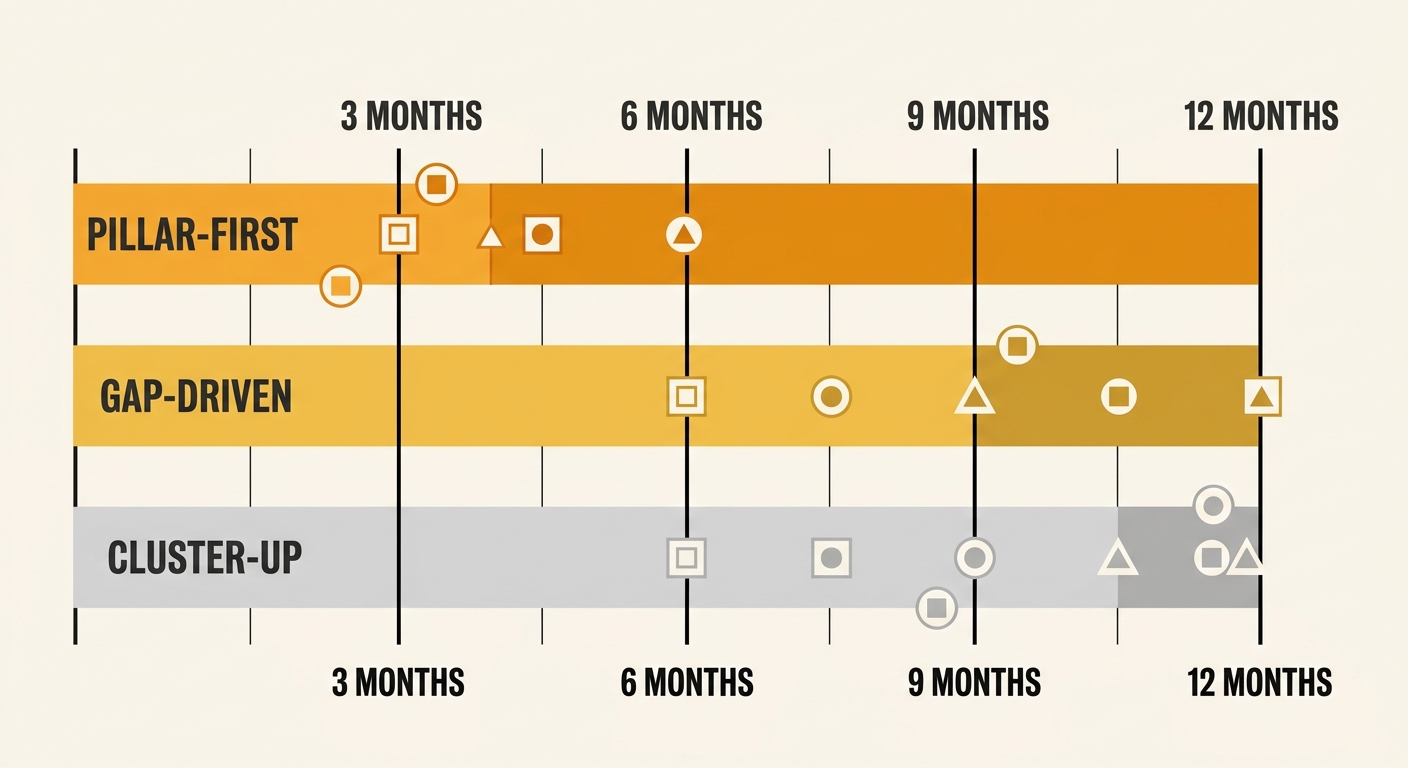
Realistic timeline: 8-12 months for new sites. You’re building the scaffolding and the walls simultaneously, so expect 3-4 months before any meaningful ranking movement.
Resource cost: High upfront, moderate ongoing. Budget for 4-5 high-quality articles per month once the pillars are published, which translates to roughly 40-60 hours of content work monthly for a small team.
Tip: If you’re taking the pillar-first path, don’t launch pillars as standalone pages. Even publishing two supporting cluster articles alongside each pillar gives search engines enough internal linking context to begin associating your site with the topic.
The Gap-Driven Path
Why start with what you want to write when you can start with what’s missing? The gap-driven approach runs content gap analysis Australia-wide before a single new page gets drafted. You audit competitor content, identify subtopics they cover that you don’t, and prioritise those gaps by search volume, commercial value, and reputational impact.
This matters directly for reputation management. Supple Digital’s content gap analysis guide explains that if organic search is your primary acquisition channel and you’re in a competitive niche, gaps in your topic coverage hand visibility to competitors. Digital Nomads HQ, which has worked with over 400 Australian businesses, confirms that addressing missing content improves keyword targeting and rankings across the board.
A 2025 case study illustrates the revenue impact. An Australian meal delivery service stalled at $77,000 in monthly revenue despite heavy content investment. After running a structured gap analysis and closing specific “trust” and “solution” gaps in their content, they achieved 169 AI citations across platforms by building deep authority in meal planning and nutrition. That visibility shift happened because the gap analysis identified exactly where competitors were being cited and the business wasn’t.
Where it works: Established sites with 50+ published pages that have plateaued. If your Australian business already publishes content but rankings have flatlined, the problem is almost always coverage gaps rather than missing pillars. The gap analysis reveals which subtopics Google expects you to cover but can’t find on your site. We’ve written about how content architecture functions as a technical SEO foundation for exactly this reason.
Where it struggles: Gap analysis requires competitive intelligence tools (Ahrefs, Semrush, or similar) and the skill to interpret what’s actually a meaningful gap versus a low-value distraction. An SME without professional SEO services or in-house expertise can spend weeks cataloguing gaps that won’t move the needle.
Realistic timeline: 3-6 months for established sites. You skip the pillar-building phase and go directly to filling specific holes, so Google recognises the improved coverage faster. A B2B property management client achieved a 429% increase in organic search traffic after publishing 12 optimised articles per month on core topics identified through gap analysis.
Resource cost: Moderate upfront (the audit itself takes 20-40 hours), high ongoing. You’re committing to 8-12 articles per month minimum to close gaps at a pace that outstrips competitors.
When competitors occupy page one for your core topics, every month without structured content planning costs you brand control.
The Cluster-Up Path
The cluster-up approach works in reverse. Instead of building pillars first, you start with tight groups of 3-5 supporting articles around specific subtopics, then consolidate the best performers into pillar pages once you have ranking data to guide the structure.
Sticky Digital calls this building “topical moats” that protect Australian SME brands. The logic: smaller cluster articles (1,500-2,500 words targeting long-tail keywords) are faster to produce, rank sooner, and generate real search data you can use to shape your eventual pillar pages. Leaked Google API documentation from 2024 revealed a metric called siteFocusScore, which quantifies how concentrated a site is on a specific topic. Publishing clusters of related content in a focused area lifts that score before you ever write a pillar.
The nano cluster method takes this further. You publish a minimum of three interconnected pages weekly: one commercial page targeting transactional keywords, plus two informational pages (2,000-3,500 words each) answering pre-purchase questions. If you already have a regular content publishing rhythm, this approach plugs into your existing workflow.
Where it works: Businesses already publishing 4+ articles per month without a clear semantic SEO structure. If you’ve got content but it sits in disconnected silos, clustering it retroactively creates immediate authority signals. This is also the strongest approach for Australian SME content planning with limited budgets, since you’re producing smaller pieces that individually cost less.
Where it struggles: Without upfront planning, you risk building clusters around topics that don’t align with your business goals. And without an internal link audit to wire the clusters together, the content won’t pass authority between pages effectively. Cluster-up also delays your ability to rank for high-volume head terms because you won’t have pillar pages competing for those keywords until months into the process.
Realistic timeline: 6-9 months. The early wins come faster (individual cluster articles ranking within 4-8 weeks), but full topical authority recognition takes longer because the pillar consolidation phase adds time at the back end.
Resource cost: Low upfront, moderate ongoing. You’re distributing effort across many smaller pieces rather than front-loading large pillar investments. Budget for 12-48 new or refreshed pages monthly to maintain authority once established.
Quick Comparison
| Attribute | Pillar-First | Gap-Driven | Cluster-Up |
|---|---|---|---|
| Best for | New sites, fewer than 20 pages | Established sites with 50+ pages that have plateaued | Active publishers lacking structure |
| Time to first ranking shifts | 3-4 months | 1-3 months | 4-8 weeks (long-tail only) |
| Time to full topical authority | 8-12 months | 3-6 months | 6-9 months |
| Monthly content volume | 4-5 articles | 8-12 articles | 12+ articles |
| Upfront investment | High (pillar production) | Moderate (audit and tooling) | Low (small articles) |
| Head-term competitiveness | Early (pillars target them immediately) | Depends on gaps identified | Late (pillars come last) |
| Reputation control speed | Slow | Fast for specific gaps | Medium |
How to Choose Between These Three
The decision comes down to three questions. How much content does your site already have? What’s your monthly publishing capacity? And how urgently do you need to reclaim search visibility from competitors?
If your site is new or thin, go pillar-first. You need structural signals before anything else, and building from the top down gives search engines a clear map of your expertise from day one. Accept the slower timeline and invest in fewer, higher-quality pieces.
If your site has content but you’re losing ground to competitors ranking for topics you should own, the gap-driven approach delivers the fastest reputation impact. An SEO strategy review can identify exactly which gaps cost you the most visibility. Then it’s a matter of producing targeted content to fill those holes, starting with the subtopics where competitor content is weakest.
If you’re already publishing regularly but your content sits in disconnected silos, cluster-up is the natural fit. You’ve got the production muscle. What you’re missing is the content clustering structure that turns individual articles into a connected authority signal. Retroactively grouping your existing content into clusters, then wiring internal links between them, often produces ranking lifts within weeks.
And for what it’s worth, most Australian SMEs we see end up running a hybrid. They start with gap analysis to find the highest-priority topics, build pillar pages for those topics, then shift to cluster-up publishing for ongoing maintenance. The six steps stay the same regardless. The sequence is what separates a 3-month win from a 12-month slog.