Documented content strategies deliver effectiveness rates nearly double those of businesses operating without written plans, according to 2023 Content Marketing Institute data cited in a content strategy management framework published June 14 by digital marketing publisher DumbestGeneration.com. The research showed 71% of B2B marketers with documented strategies report effectiveness, versus 38% without.
TL;DR: A content strategy framework published June 14 cites research showing documented strategies achieve 71% effectiveness versus 38% for undocumented approaches, prescribing audit-first workflows and platform-specific formatting.
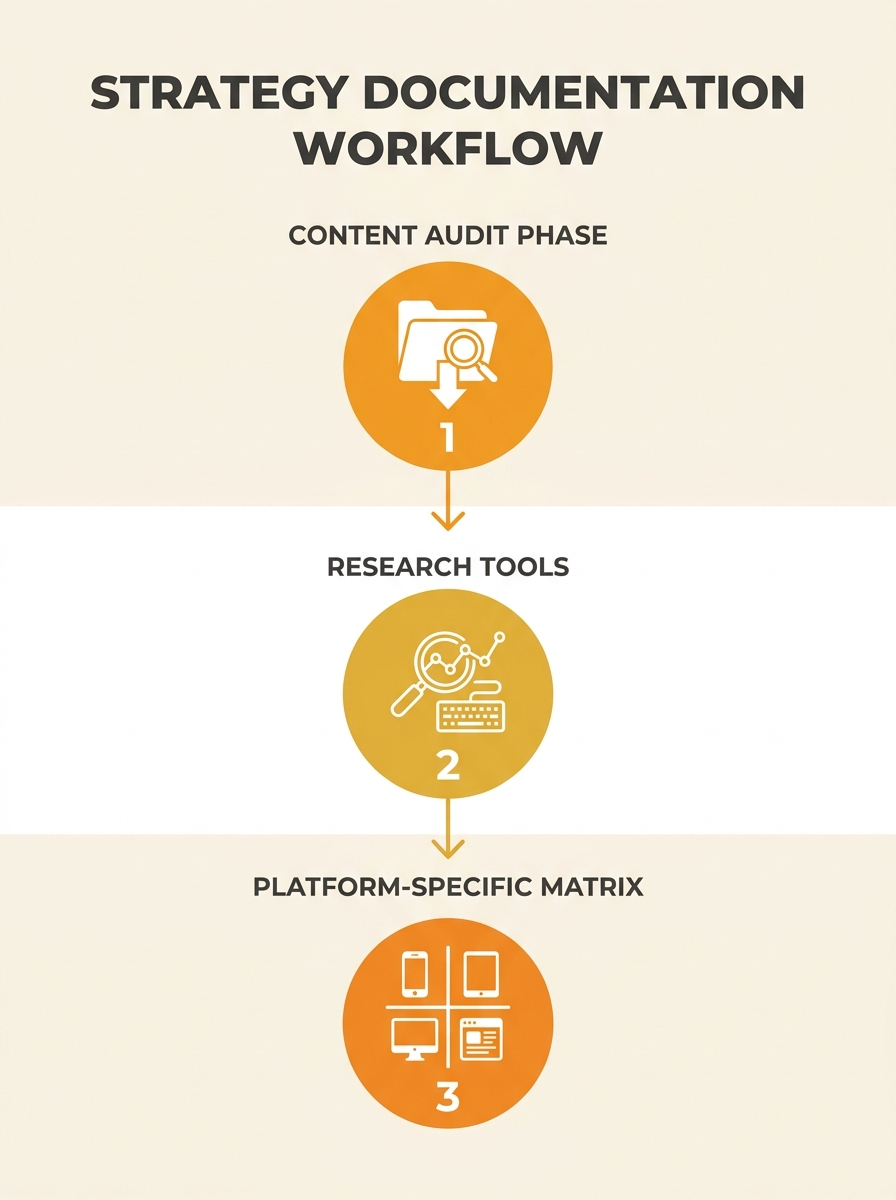
The framework addresses a fundamental execution gap for Australian SMEs managing content marketing internally: the gap between posting activity and strategic documentation. The publication prescribes a three-phase workflow anchored in content audits, audience research tools, and platform-specific format alignment rather than cross-posting identical assets.
Framework Prescribes Audit-First Workflow
The published methodology opens with a content audit phase requiring businesses to export three months of historical posts and tag each by format, topic, engagement rate, and platform performance. The framework identifies pattern analysis as the diagnostic step most businesses skip before creating new content.
The guide prescribes SparkToro for audience research, positioning it as an alternative to demographic guesswork. The tool reveals which influencers target audiences follow, podcasts they consume, and hashtags they use, according to the framework. Reddit communities and customer interviews are flagged as additional research channels for identifying language patterns around pain points.
Platform behavior analysis forms the third prescribed step. The framework states TikTok requires entertainment-first formatting while LinkedIn audiences expect professional insights, positioning identical cross-posting as “digital self-sabotage.” The methodology assigns specific formats to platforms: carousel posts for Instagram education, 60-second video tips for Reels, long-form threads for LinkedIn.
Research Shows Documentation Gap Drives Performance Divide
The Content Marketing Institute data cited in the framework measured self-reported effectiveness among B2B marketers. Organizations with documented strategies reported 71% effectiveness rates; those without documentation reported 38%, representing a 33-percentage-point gap.
The framework does not define the CMI study’s effectiveness criteria or sample methodology. The cited research dates to 2023, predating the March 2024 and March 2026 Google core updates that reshaped organic content performance benchmarks.
Australian SMEs managing content internally face documentation challenges distinct from enterprise marketing teams. Resource constraints typically push small businesses toward execution over planning, creating the conditions the CMI data flagged: activity without strategic anchoring.
What Happens Next
The framework’s emphasis on documented strategy aligns with the structural requirements AI search tools now impose on content. ChatGPT and Perplexity citation algorithms favour content with explicit structure, named statistics, and platform-specific formatting—the same elements the published methodology prescribes for human audiences.
Australian businesses evaluating organic growth should note the framework’s audit prescription addresses a measurable gap. The 71% versus 38% effectiveness divide cited from CMI research suggests documentation itself—independent of execution quality—correlates with improved outcomes. Whether that gap persists under current algorithmic conditions remains untested by the cited study.