
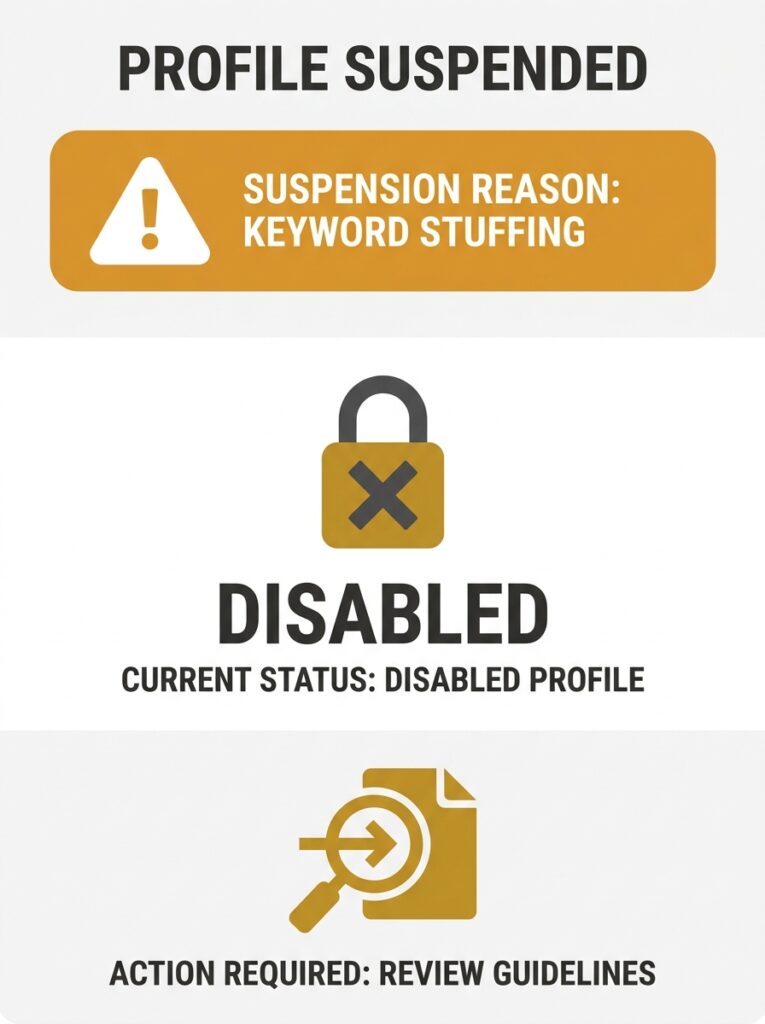
Google suspended thousands of Google Business Profiles across the United States in early 2026 for keyword stuffing violations, according to RS Web Solutions, disrupting local search visibility for small businesses in locksmithing, moving services, and contracting sectors.
The enforcement wave targets businesses that embedded keywords into their business names on Google Business Profiles, a tactic that historically manipulated map pack rankings and “near me” search results. The suspensions affect listings that relied on manipulative techniques to appear in local search results, particularly in high-competition service industries where spam previously dominated rankings.
Enforcement Targets High-Competition Sectors
The crackdown disproportionately affects U.S. small businesses operating in competitive local service markets. Locksmiths, movers, contractors, and plumbers—industries where spam tactics previously skewed search results—faced the highest suspension rates, the report shows.
Suspended profiles must undergo verification processes that require precise category matching and structured data implementation. Business owners without technical SEO expertise face challenges conducting title audits to remove duplicate or excessively long business names that exceed the 60-character limit Google uses for search result display.
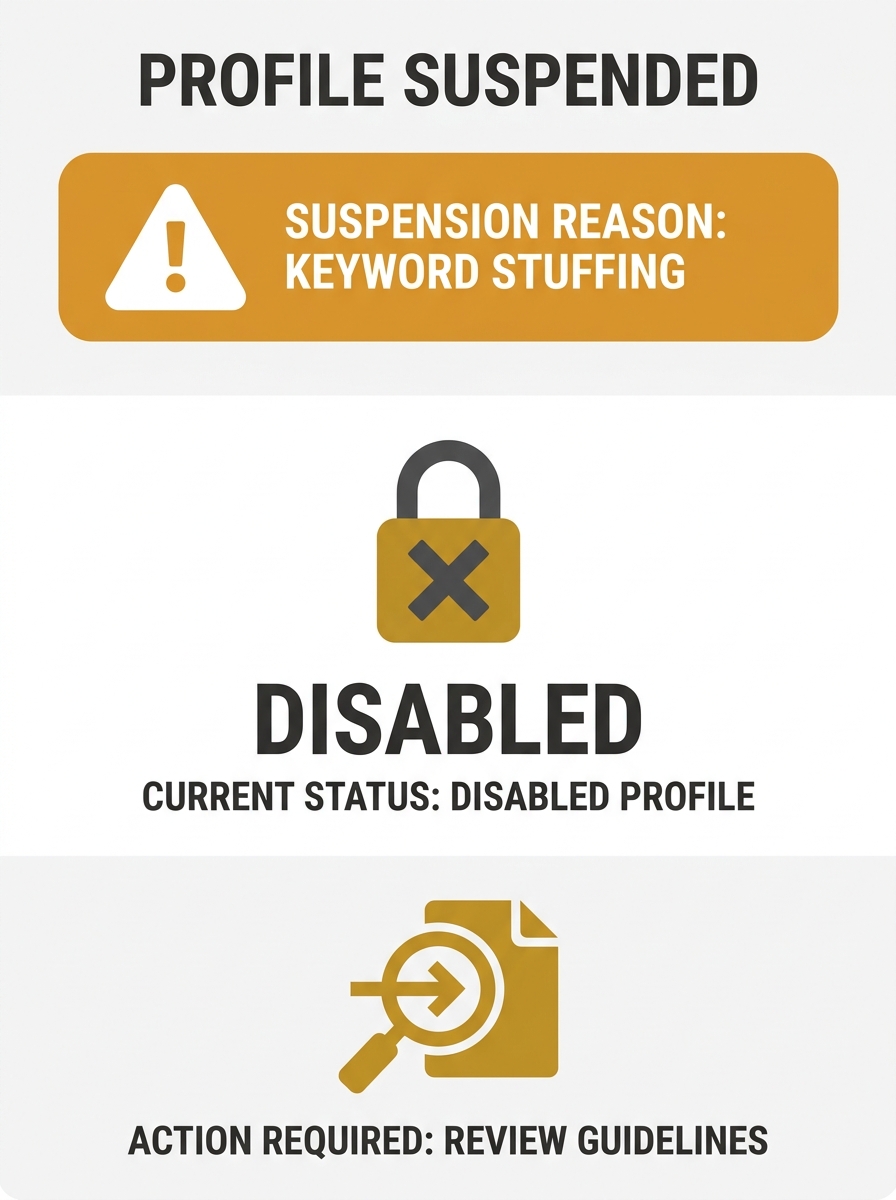
The suspensions coincide with Google’s broader shift toward prioritising authentic signals in local search: verified customer reviews, structured data, and regular profile updates. Businesses that depend on Google Business Profiles for 70-80% of their leads—common in local service sectors—must adapt strategies to maintain visibility.
AI Overviews Reshape Local Search Display
The enforcement arrives as AI-generated summaries increasingly replace traditional map pack listings in mobile search results. Google now prioritises summaries derived from authentic reviews, citations, and structured data over spam-riddled rankings, according to the report.
This shift reduces direct clicks to business listings, placing greater emphasis on trust signals and review quality rather than keyword manipulation. Voice search and AI-driven queries amplify this trend, favouring businesses with verified profiles and structured content.
Legitimate operators using ethical optimisation practices—regular Google Business Profile posts, accurate service categorisation, and genuine review collection—stand to benefit as spam disappears from competitive search results. The suspended profiles previously occupied prominent positions that genuine providers can now claim.
Compliance Requirements and Technical Barriers
Google’s enforcement guidelines mandate business names remain factual and avoid keyword stuffing. Titles must stay within 50-60 characters to prevent truncation in search results and facilitate AI parsing. Duplicate titles or missing core service terms trigger ranking penalties.
The technical requirements create barriers for small business owners lacking SEO resources. Profile verification demands precise category alignment and structured data implementation—tasks requiring time and expertise that many operators don’t possess.
Competitive sectors may experience temporary visibility gaps during the adjustment period. Businesses without monitoring systems to track algorithm changes face heightened risk of suspended profiles going unnoticed until lead volume drops.
National Chains and E-commerce Largely Unaffected
Established national chains with diverse traffic sources beyond local search experienced minimal disruption, the report indicates. Brands with strong recognition and visibility through paid search or social media don’t rely heavily on map pack rankings for customer acquisition.
E-commerce operations and businesses in low-spam sectors—niche retail or professional services—face little pressure to overhaul current practices. The crackdown specifically targets Google Business Profiles driving local intent searches rather than broader organic or paid traffic channels.
Businesses monitoring updates through Google Search Central Blog or industry publications maintained awareness of the enforcement timeline. Those tracking Google Ads performance alongside organic local rankings could shift budget allocation as needed during the transition.
Reading Between the Lines
Australian businesses should interpret this U.S. enforcement wave as a preview of local algorithm tightening likely to reach all English-language markets. Google’s spam detection systems operate globally; tactics triggering suspensions in Denver or Dallas will eventually flag Melbourne or Brisbane listings using identical optimisation methods.
The shift toward AI-generated local search summaries creates immediate implications for Australian SMBs. Businesses relying on Google Business Profiles for mobile and “near me” traffic must prioritise review velocity, structured data implementation, and profile verification over keyword tactics that previously drove map pack visibility. The technical requirements—60-character title limits, category precision, duplicate elimination—apply universally regardless of market geography.
Australian operators in high-competition local services should audit business names and profile optimisation practices now, before Google extends aggressive enforcement beyond U.S. markets. Waiting for local suspensions before adapting profiles risks visibility gaps precisely when competitors scramble to comply. Businesses investing in authentic content marketing services to build review volume and structured citation sources position themselves ahead of algorithm tightening rather than reacting to penalties after implementation.